
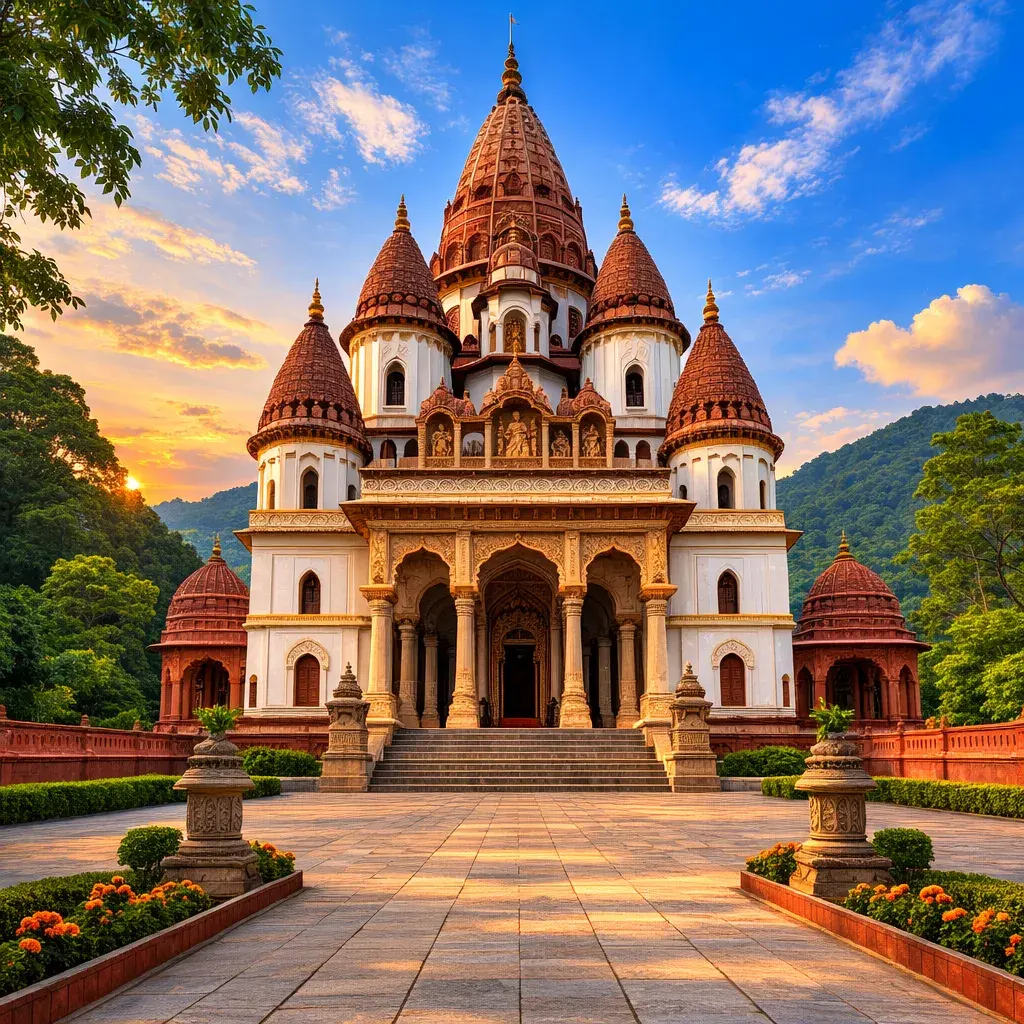
Hanseswari Temple
হংসেশ্বরী মন্দির
Goddess Hangseshwari · Bansberia, West Bengal
✓ VerifiedHeritage★ 4.65,000 reviews2,000 visits
About the temple
Unique architectural representation of the Human Body and Kundalini Chakras Awakening of inner energy, spiritual knowledge
Temple information
- Darshan timings
- 06:00 – 20:00
- Established
- 1814
- Best time to visit
- Early morning
- Entry fee
- Free
Deity
Goddess Hangseshwari · মা হংসেশ্বরী
- Deity form
- Idol carved from blue neem wood; placed on a lotus blooming from the navel of Shiva
- Religious tradition
- Tantra / Kundalini Yoga representation
- Sanskrit name
- हंसेश्वरी मन्दिर
- Also known as
- Hanseswari Temple, Bansberia Temple
Darshan hours
- Daily
- 06:00 - 12:30, 16:00 - 20:00
- Break timings
- 12:30 PM - 04:00 PM
- Special days
- Open later during Kali Puja
- Festival timings
- Extended on Kali Puja
Aarti & rituals
- Morning aarti
- 06:30
- Midday aarti
- 12:00
- Evening aarti
- 18:30
- Night aarti
- 19:45
- Special aarti days
- Tuesdays and Saturdays
- Ritual schedule
- Morning Puja, Bhog, Sandhya Aarti
- Pooja timings
- Morning sessions start at 07:00 AM
- Abhishek timings
- Early morning during special festivals
- Special poojas
- Tantric rituals on special dates
- Online pooja booking
- No
History & heritage
- Historical period
- Ancient
- Built by
- Raja Nrisingha Deb Roy Mahasay (Completed by Rani Sankari)
- Architect / builder
- Specialized Tantric architects
- Construction materials
- Chunar stone and specialized masonry
- Historical events
- Raja Nrisingha Deb studied Tantra in Varanasi before building this
- Renovations
- Maintained by ASI
- Archaeological importance
- High (Archaeological Survey of India)
- Legends
- The temple structure is based on the dream and spiritual study of Raja Nrisingha Deb
- Inscriptions
- Dedication plaque on the main facade
Architecture
- Architectural style
- Dravidian
- Architectural period
- 19th Century Bengal
- Structure
- Multi-towered complex
- Floors
- 5
- Gopuram
- 13 towers representing blooming lotuses
- Mandapa
- Inner sanctum accessible via specialized passages
- Sculptural features
- Symbolic representations of Ida, Pingala, and Sushumna nerves
- Artistic elements
- Blue wood carvings and intricate stone work
- Construction technique
- Tantric symbolic engineering
- Unique features
- The 13 spires correspond to the 13 chakras in a human body
Festivals & events
Kali PujaJanmashtami
- Festival calendar
- Bengali Lunar Calendar
- Special celebration days
- Foundation day of the temple
- Cultural events
- Religious singing
- Annual events
- Annual Mela (fair)
- Peak crowd season
- Winter (Nov - Feb)
Visitor information
- ✓ Parking
- ✓ Restrooms
- ✓ Drinking water
- ✓ Shoe keeping
- ✓ Prasadam counter
- Entry fee
- Free
- Dress code
- Traditional
- Best time to visit
- Early morning
- Parking capacity
- 30 vehicles
- Parking fees
- Minimal
- Donation counters
- Yes
- Donation methods
- Cash
- Prasadam
- Traditional Bengali Bhog