
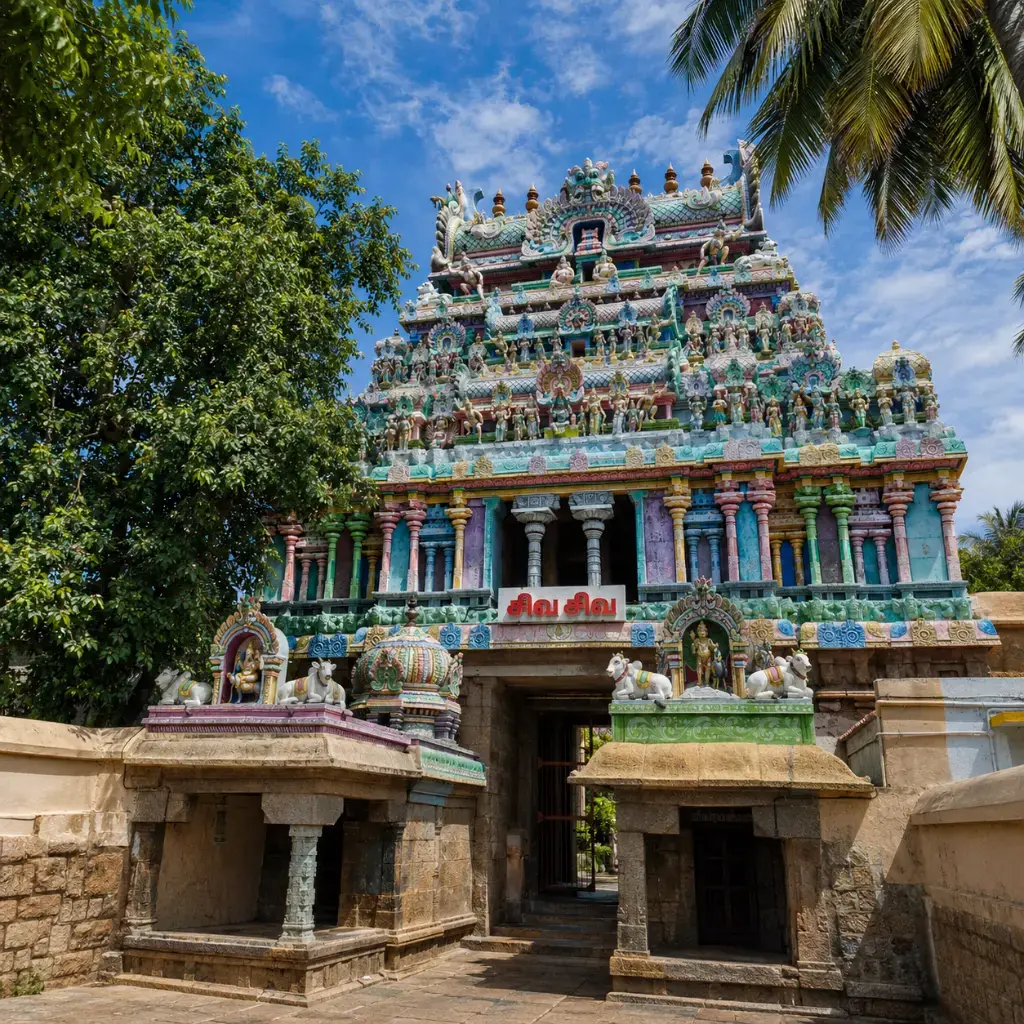
Jambukeswarar Temple (Thiruvanaikaval Akhilandeswari Temple)
திருவானைக்காவல் ஜம்புகேஸ்வரர் கோவில்
Lord Shiva · Tiruchirappalli (Trichy), Tamil Nadu
✓ VerifiedAncient★ 4.828,000 reviews
About the temple
The primary, highly sacred "Appu Sthalam" representing the Water element among the five sacred cosmic Pancha Bhoota temples Bestows profound emotional balance, removes long-standing hurdles, grants domestic harmony, deep wisdom, and professional progress
Temple information
- Darshan timings
- 06:00 – 21:00
- Best time to visit
- Early morning hours on mid-week non-festival days to experience a peaceful darshan atmosphere
Deity
Lord Shiva · ଶିବ (Shiva)Lord GaneshaLord Murugan
- Deity form
- Appu Lingam (Shiva Lingam representing the Water element, where a perennial freshwater spring continuously wells up in the sanctum)
- Religious tradition
- Tamil Shaiva Siddhanta & Vedic Agamic traditions
- Sanskrit name
- श्री जम्बुकेश्वरर मंदिर (तिरुवानैकावल)
- Also known as
- Thiruvanaikoil, Jambukeswaram, Appu Sthalam, Water Element Temple
Darshan hours
- Monday
- 06:00 AM to 01:00 PM and 04:00 PM to 09:00 PM
- Tuesday
- 06:00 AM to 01:00 PM and 04:00 PM to 09:00 PM
- Wednesday
- 06:00 AM to 01:00 PM and 04:00 PM to 09:00 PM
- Thursday
- 06:00 AM to 01:00 PM and 04:00 PM to 09:00 PM
- Friday
- 06:00 AM to 01:00 PM and 04:00 PM to 09:30 PM
- Saturday
- 06:00 AM to 01:00 PM and 04:00 PM to 09:00 PM
- Sunday
- 06:00 AM to 01:00 PM and 04:00 PM to 09:00 PM
- Break timings
- 12:00PM -04:00PM
- Special days
- Extended near continuous operating patterns on Aadi Velli, Navarathri, and New Moon nights
- Festival timings
- Open for extended night durations without mid-day closure intervals during major celebrations
Aarti & rituals
- Morning aarti
- 06:30 AM
- Midday aarti
- 12:00 PM
- Evening aarti
- 06:00 PM
- Night aarti
- 08:45 PM
- Special aarti days
- Fridays feature grand ceremonial processions, signature silver chariot rounds, and elite floral alankaram aartis
- Ritual schedule
- Five systematic daily ritual sessions executed strictly under traditional Kamika Shaiva Agama rules
- Pooja timings
- Public public darshans and customized remedies run systematically throughout all open hours
- Abhishek timings
- Special dynamic abhishekam performed to the processional deities, while the main water Lingam undergoes regular agamic cleaning
- Special poojas
- Appu Lingam special archanas, Uchikala Pooja special entry passes, and career hurdle clearance rituals
- Online pooja booking
- Via portal
History & heritage
- Historical period
- Ancient
- Built by
- Ancient origins with extensive stone structural layers built between the 10th and 13th Centuries CE by Chola and Hoysala kings
- Architect / builder
- King Kocengannan Chola and a succession of brilliant regional traditional Sthapathis
- Construction materials
- monolithic stone framework, deep granite blocks, solid stone walls, and traditional lime mortar plastering
- Historical events
- Celebrated venue visited and highly praised in early medieval Tevaram hymns by Saints Sambandar, Appar, and Sundarar
- Renovations
- Significant structural developments completed by Hoysala rulers; continuously preserved and modernized by the state
- Archaeological importance
- Exceedingly important heritage site protecting thousands of ancient inscriptions and architectural scripts
- Legends
- An elephant and a spider vied in their absolute devotion to worship Shiva here; both achieved dynamic liberation
- Inscriptions
- Lithic etchings detailing historic royal grants of entire villages, gold treasures, water rights, and local festival funding
Architecture
- Architectural style
- Dravidian
- Architectural period
- Imperial Chola, Pandya, and Hoysala Architectural Dynastic Eras
- Structure
- Massive sprawling multi-layered prakaram compound system spanning a vast 18-acre perimeter
- Floors
- 1
- Gopuram
- Features 7 majestic Rajagopurams, with the outer western gate tower dominating the local skyline at over 100 feet tall
- Mandapa
- Houses the magnificent 4th prakaram hall structured with a stunning collection of highly detailed structural stone pillars
- Sculptural features
- Intricate stone-carving craftsmanship displaying historical composite pillars, elephant-spider motifs, and deep structural shapes
- Artistic elements
- Beautiful structural pillars showcasing dynamic historic forms, local saint stories, and royal builders
- Construction technique
- Monolithic dry-granite precision joining engineering traditional to Tamil Nadu heritage builders
- Unique features
- A perennial water spring continuously submerges the floor of the inner sanctum cell where the primary Lingam rests
Festivals & events
Panguni BrahmotsavamAani ThirumanjanamNavarathriand grand Vasanthotsavam celebrations
- Festival calendar
- Adheres precisely to the ancient solar-lunar traditional Tamil almanac cycles
- Special celebration days
- Every single Friday, monthly Pradoshams, and the unique Uchikala hour where the priest worships in a sari
- Cultural events
- Devotional classical carnatic music and traditional dance programs active during festival weeks
- Annual events
- The grand Car Festival (Rathotsavam) where the massive wooden temple car is pulled through the streets by thousands
- Peak crowd season
- Peak visitor surges during winter vacation months, holiday long weekends, and Panguni festival periods
Visitor information
- ✓ Parking
- ✓ Restrooms
- ✓ Drinking water
- ✓ Shoe keeping
- ✓ Prasadam counter
- ✓ Annadanam
- Dress code
- Traditional
- Best time to visit
- Early morning hours on mid-week non-festival days to experience a peaceful darshan atmosphere
- Parking capacity
- 50+ vehicles
- Donation counters
- Yes
- Donation methods
- Cash, UPI, Bank Transfer
- Prasadam
- Traditional sweet rice pongal, tamarind rice, and special laddu options distributed at the counters