
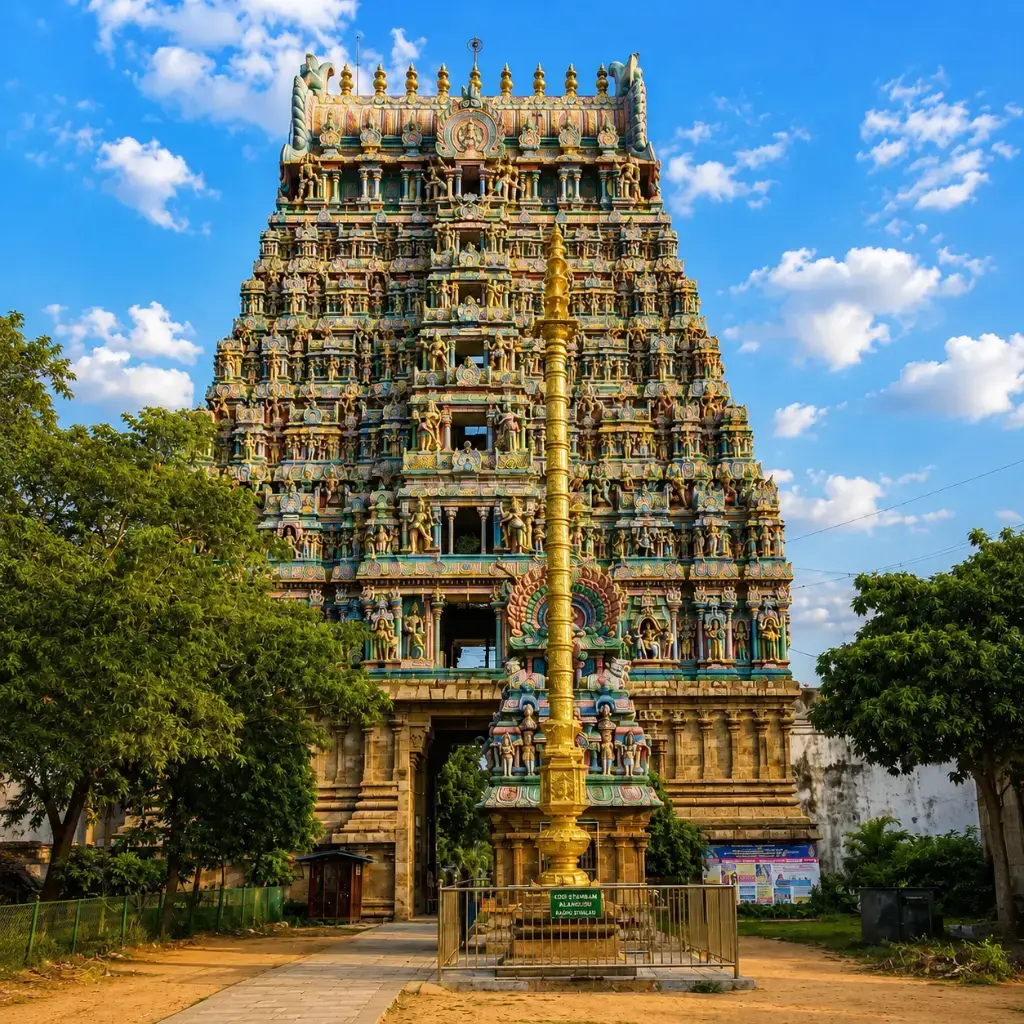
Apatsahayeswarar Temple (Alangudi Guru Sthalam)
ஆலங்குடி ஆபத்சகாயேஸ்வரர் கோவில்
Lord Shiva · Kumbakonam, Tamil Nadu
✓ VerifiedAncient★ 4.74,969 reviews
About the temple
Celebrated Paadal Petra Sthalam and the definitive primary Navagraha Sthalam for planet Jupiter (Guru Bhagwan) Bestows high education, career advancement, dynamic wisdom, wealth, marriage blessings, and remedies Guru Dosha
Temple information
- Darshan timings
- 06:00 – 08:30
- Best time to visit
- Early morning hours on mid-week non-festival days to experience a peaceful darshan atmosphere
Deity
Lord Shiva · ଶିବ (Shiva)Lord DakshinamurthyLord GaneshaLord Murugan
- Deity form
- Shiva Lingam (Primary), Granite south-facing idol of Dakshinamurthy (Guru)
- Religious tradition
- Tamil Shaiva Siddhanta & Vedic Astrology
- Sanskrit name
- श्री आपत्सहायेश्वरर मंदिर (आलंगुडी गुरु स्थलम)
- Also known as
- Alangudi Navagraha Sthalam, Guru Kovil, Tiruvalangudi
Darshan hours
- Monday
- 06:00 AM to 01:00 PM and 04:00 PM to 08:30 PM
- Tuesday
- 06:00 AM to 01:00 PM and 04:00 PM to 08:30 PM
- Wednesday
- 06:00 AM to 01:00 PM and 04:00 PM to 08:30 PM
- Thursday
- 06:00 AM to 01:00 PM and 04:00 PM to 09:30 PM
- Friday
- 06:00 AM to 01:00 PM and 04:00 PM to 08:30 PM
- Saturday
- 06:00 AM to 01:00 PM and 04:00 PM to 09:00 PM
- Sunday
- 06:00 AM to 01:00 PM and 04:00 PM to 09:00 PM
- Break timings
- Closed daily between 01:00 PM and 04:00 PM
- Special days
- Continuous schedules during dynamic Guru Peyarchi (transit) festival cycles and Pradoshams
- Festival timings
- Temple operating shifts extend continuously throughout the entire day during major transits
Aarti & rituals
- Morning aarti
- 06:30 AM
- Midday aarti
- 12:30 PM
- Evening aarti
- 06:00 PM
- Night aarti
- 08:45 PM
- Special aarti days
- Thursdays feature extensive decorative alankaram rituals and special yellow vestment aartis
- Ritual schedule
- Four formal operational pooja sessions daily following regional Shaiva Agama standards
- Pooja timings
- Archana services and regular public lines active throughout the open morning and evening blocks
- Abhishek timings
- Special Guru Abhishekam on Thursdays at 06:30 AM and 10:30 AM
- Special poojas
- Guru Parihara Pooja, Laksharchana during transit shifts, and dynamic career advancement rituals
- Online pooja booking
- Via portal
History & heritage
- Historical period
- Ancient
- Built by
- Initially established by ancient Pallava rulers and fully rebuilt by Imperial Cholas
- Architect / builder
- Medieval Chola Monarchs and regional royal temple builders
- Construction materials
- Traditional dense grey granite blocks, solid stone walls, and lime plaster mortars
- Historical events
- Praised in the holy Tevaram verses by Saint Tirugnana Sambandar during his delta travels
- Renovations
- Structurally preserved by Chola kings, Nayak administrators, and local public endowments
- Archaeological importance
- Features standard stone epigraphs tracking historical dynastic property grants
- Legends
- Lord Shiva consumed the deadly halahala poison here to protect the celestial universe
- Inscriptions
- Wall records describing structural endowments and offerings dating back to Rajaraja Chola era
Architecture
- Architectural style
- Dravidian
- Architectural period
- Imperial Chola Dynastic and Later Nayak Periods
- Structure
- Traditional walled single-prakaram configuration surrounding central dynamic shrines
- Floors
- 1
- Gopuram
- Features a distinctive, colorful five-tiered Rajagopuram facing the eastern main entranceway
- Mandapa
- Features standard pillared assembly halls leading directly toward the central inner sanctum
- Sculptural features
- Ornate granite wall reliefs showcasing icons of Shiva, Vinayagar, and the holy saints
- Artistic elements
- Beautifully stylized representations of Dakshinamurthy and the holy matching Navagraha deities
- Construction technique
- Interlocking dry-granite precision masonry architecture traditional to Thanjavur delta region
- Unique features
- Worshipped famously as the primary "Guru Sthalam" where Lord Shiva acts as the supreme universal teacher
Festivals & events
- Festival calendar
- Adheres precisely to the ancient solar-lunar traditional Tamil almanac cycles
- Special celebration days
- Every single Thursday (Gururam), monthly Pradoshams, and special planetary shifts
- Cultural events
- Devotional music assemblies and traditional dance programs active during transit weeks
- Annual events
- The annual floating festival (Teppotsavam) and grand chariot pull along the inner streets
- Peak crowd season
- Massive pilgrim traffic during the winter travel cycles and specific annual Jupiter transits
Visitor information
- ✓ Parking
- ✓ Restrooms
- ✓ Drinking water
- ✓ Shoe keeping
- ✓ Prasadam counter
- ✓ Annadanam
- Dress code
- Traditional
- Best time to visit
- Early morning hours on mid-week non-festival days to experience a peaceful darshan atmosphere
- Parking capacity
- 30-40 vehicles
- Parking fees
- Approx. 20-50 INR
- Donation counters
- Yes
- Donation methods
- Cash, UPI, Bank Transfer
- Prasadam
- Boiled chickpeas (Kondaikadalai/Mookkadala) garlanded and offered as the prime token for Jupiter