
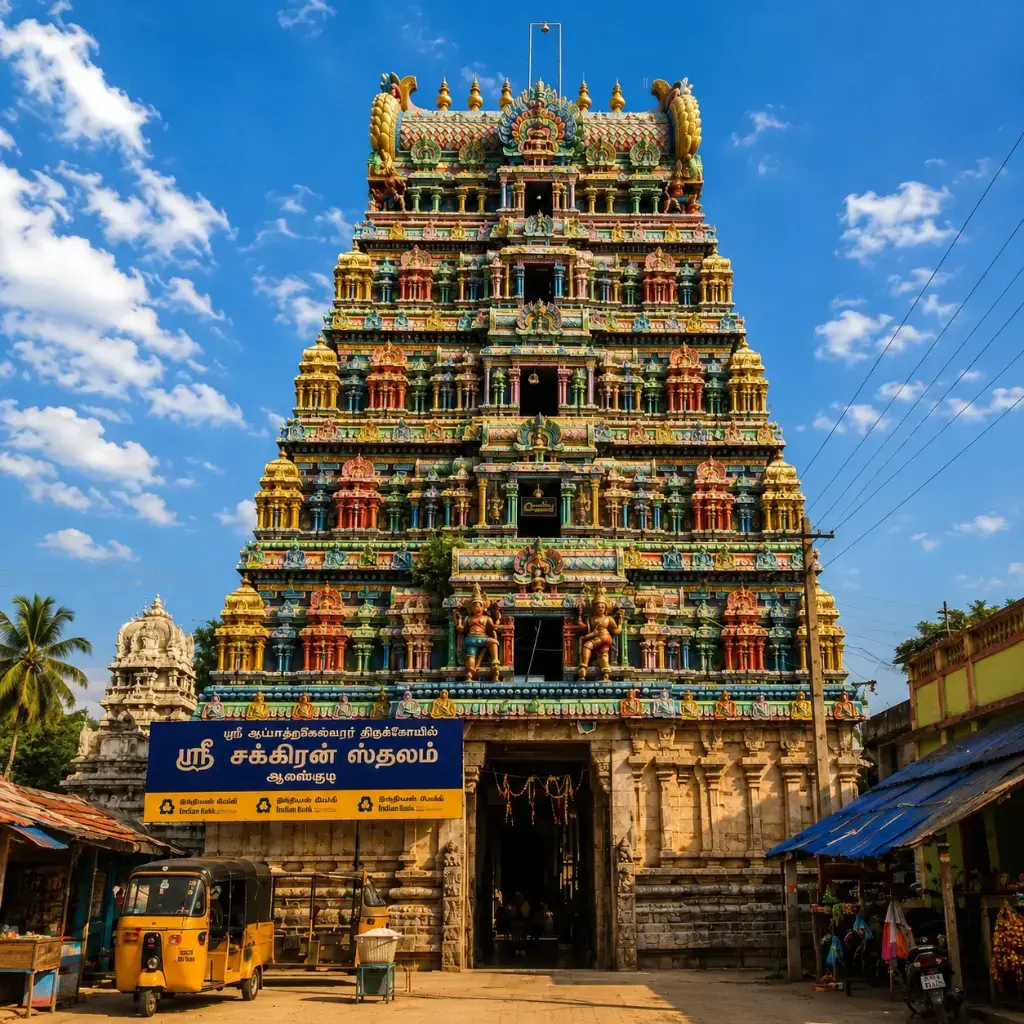
Agniswarar Temple (Kanjanoor Sukra Sthalam)
கஞ்சனூர் அக்னீஸ்வரர் கோவில்
Lord Shiva · Thanjavur, Tamil Nadu
✓ VerifiedAncient★ 4.75,882 reviews
About the temple
Important Paadal Petra Sthalam and the primary designated Navagraha Sthalam for planet Venus (Sukran) Bestows wealth, marital harmony, prosperity, artistic excellence, luxury, and remedies Sukra Dosha
Temple information
- Darshan timings
- 06:00 – 21:00
- Best time to visit
- Early morning hours on mid-week non-festival days to experience a peaceful darshan atmosphere
Deity
Lord Shiva · ଶିବ (Shiva)Lord Vinayaka (Ganesha)
- Deity form
- Shiva Lingam (Primary), Sukra Bhagwan represented dynamically within the main Lingam framework
- Religious tradition
- Tamil Shaiva Siddhanta & Vedic Astrology
- Sanskrit name
- श्री अग्नीश्वरर मंदिर (कंजनूर शुक्र स्थलम)
- Also known as
- Kanjanur Navagraha Sthalam, Sukran Kovil, Bhargava Puri
Darshan hours
- Monday
- 06:00 AM to 12:30 PM and 04:00 PM to 09:00 PM
- Tuesday
- 06:00 AM to 12:30 PM and 04:00 PM to 09:00 PM
- Wednesday
- 06:00 AM to 12:30 PM and 04:00 PM to 09:00 PM
- Thursday
- 06:00 AM to 12:30 PM and 04:00 PM to 09:00 PM
- Friday
- 06:00 AM to 12:30 PM and 04:00 PM to 09:30 PM
- Saturday
- 06:00 AM to 12:30 PM and 04:00 PM to 09:00 PM
- Sunday
- 06:00 AM to 12:30 PM and 04:00 PM to 09:00 PM
- Break timings
- 12:30PM -04:30PM
- Special days
- Continuous schedules during dynamic Sukra Peyarchi (transit) festival cycles and Pradoshams
- Festival timings
- Continuous all-day darshan queue systems operating during high-peak Friday transits
Aarti & rituals
- Morning aarti
- 06:30 AM
- Midday aarti
- 12:00 PM
- Evening aarti
- 06:30 PM
- Night aarti
- 08:45 PM
- Special aarti days
- Fridays feature grand white vestment decorations and special deeparadhana for Lord Sukran
- Ritual schedule
- Four periodic daily pooja sessions conducted by local traditional Shivachariya priests
- Pooja timings
- Archana rituals and standard public darshan rows flow during all operational hours
- Abhishek timings
- Special Sukra Abhishekam on Fridays at 07:00 AM and 10:30 AM
- Special poojas
- Sukra Parihara Pooja, marriage obstacle clearance rituals, and wealth enrichment archanas
- Online pooja booking
- Via portal
History & heritage
- Historical period
- Ancient
- Built by
- Originally structured by Pallavas and thoroughly rebuilt in stone by Medieval Chola Kings
- Architect / builder
- Medieval Chola Monarchs and dynamic regional Sthapathis
- Construction materials
- monolithic stone framework, traditional grey granite blocks, and lime mortar materials
- Historical events
- Celebrated venue visited and hymned by Saint Appar; associated with the absolute devotion of Saint Haradatta
- Renovations
- Significant architectural maintenance by Chola rulers, Vijayanagara monarchs, and state department efforts
- Archaeological importance
- Features standard stone epigraphs tracking historical dynastic property grants and rural governance
- Legends
- Lord Agni (Fire God) worshipped Lord Shiva here to cleanse his impurities and dynamic blocks
- Inscriptions
- Wall records describing structural endowments and land grants dating back to Imperial Chola era
Architecture
- Architectural style
- Dravidian
- Architectural period
- Imperial Chola and Later Vijayanagara Eras
- Structure
- Traditional walled single-prakaram configuration surrounding central dynamic shrines
- Floors
- 1
- Gopuram
- Features a distinctive, five-tiered Rajagopuram facing the eastern main entranceway corridor
- Mandapa
- Small open-pillared gathering hall leading directly to the main sanctum corridor
- Sculptural features
- Ornate granite wall reliefs showcasing icons of Shiva, Parvati, and the legendary Haradatta
- Artistic elements
- Beautifully stylized representations of celestial planetary rays and historic motifs
- Construction technique
- Interlocking dry-granite precision masonry architecture traditional to Thanjavur delta region
- Unique features
- Unlike other Navagraha temples, there is no separate idol for Venus; Lord Shiva himself embodies Sukran here
Festivals & events
- Festival calendar
- Adheres precisely to the ancient solar-lunar traditional Tamil almanac cycles
- Special celebration days
- Every single Friday (Sukravaram), monthly Pradoshams, and planetary transit alignments
- Cultural events
- Devotional classical music and spiritual lectures organized during the annual festival transits
- Annual events
- Special celestial marriage celebrations (Thirukalyanam) for the divine deities
- Peak crowd season
- Peak tourist volumes during winter vacation months and specific annual Venus transit periods
Visitor information
- ✓ Parking
- ✓ Restrooms
- ✓ Drinking water
- ✓ Shoe keeping
- ✓ Prasadam counter
- ✓ Annadanam
- Dress code
- Traditional
- Best time to visit
- Early morning hours on mid-week non-festival days to experience a peaceful darshan atmosphere
- Parking capacity
- 30-40 vehicles
- Parking fees
- Approx. 20-50 INR
- Donation counters
- Yes
- Donation methods
- Cash, UPI, Bank Transfer
- Prasadam
- White field beans (Mochai/Val Bean) prepared and offered as the distinct primary token for Venus