
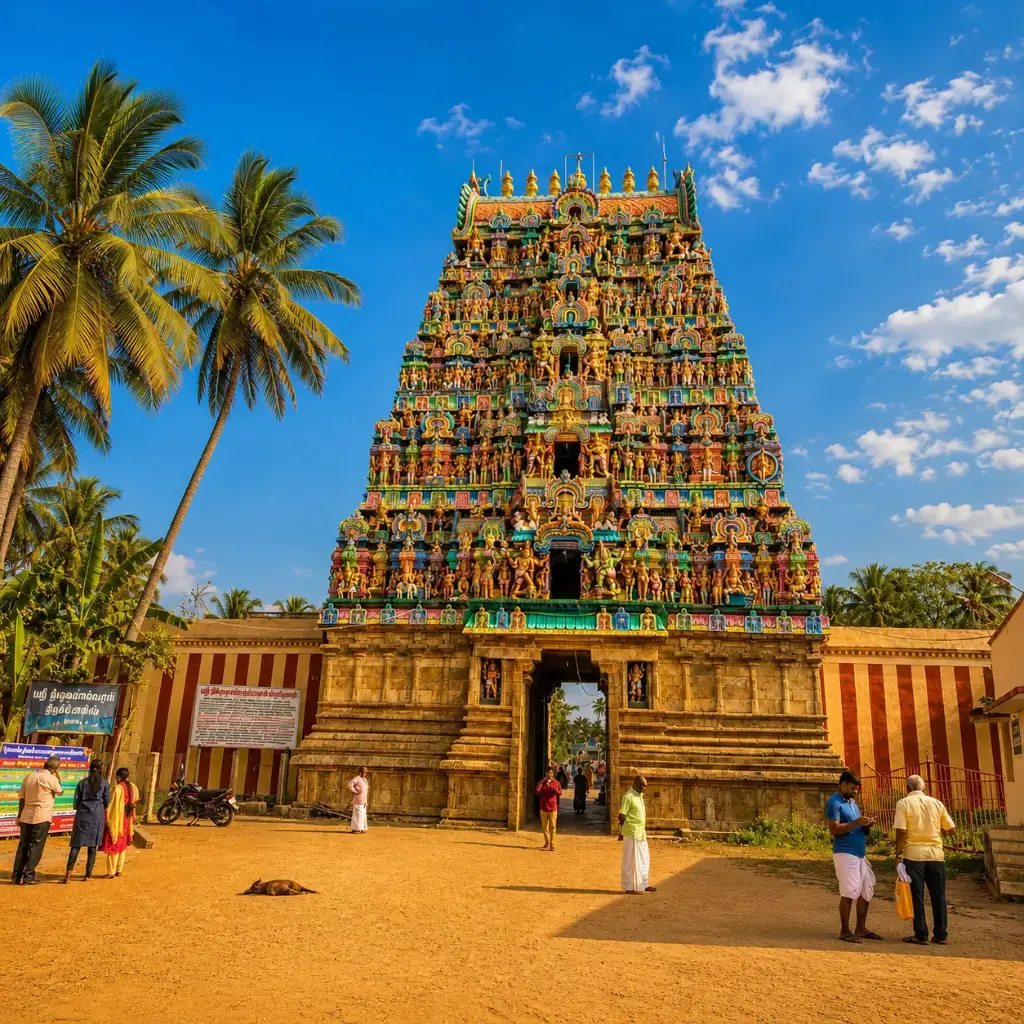
Naganatha Swamy Temple (Thirunageswaram Rahu Sthalam)
திருநாகேஸ்வரம் நாகநாத சுவாமி கோவில்
Lord Shiva · Thanjavur, Tamil Nadu
✓ VerifiedAncient★ 4.76,339 reviews
About the temple
Celebrated Paadal Petra Sthalam and the absolute primary Navagraha Sthalam dedicated to Rahu Bhagwan Alleviates Rahu Dosha, Kalasarpadosha, marriage obstacles, skin ailments, and bestows dynamic wealth and success
Temple information
- Darshan timings
- 06:00 – 21:00
- Best time to visit
- Early morning hours on mid-week non-festival days to experience a peaceful darshan atmosphere
Deity
Lord Shiva · ଶିବ (Shiva)Lord Shiva (Swayambhu Lingam)
- Deity form
- Shiva Lingam (Primary), Granite human form of Rahu Bhagwan alongside his two consorts
- Religious tradition
- Tamil Shaiva Siddhanta & Vedic Astrology
- Sanskrit name
- श्री नागनाथ स्वामी मंदिर (तिरुनागेश्वरम राहु स्थलम)
- Also known as
- Thirunageswaram Navagraha Sthalam, Rahu Kovil, Champakaranya Kshetram
Darshan hours
- Monday
- 06:00 AM to 01:00 PM and 04:00 PM to 09:00 PM
- Tuesday
- 06:00 AM to 01:00 PM and 04:00 PM to 09:00 PM
- Wednesday
- 06:00 AM to 01:00 PM and 04:00 PM to 09:00 PM
- Thursday
- 06:00 AM to 01:00 PM and 04:00 PM to 09:00 PM
- Friday
- 06:00 AM to 01:00 PM and 04:00 PM to 09:00 PM
- Saturday
- 06:00 AM to 01:00 PM and 04:00 PM to 09:00 PM
- Sunday
- 06:00 AM to 01:00 PM and 04:00 PM to 09:30 PM
- Break timings
- Closed daily between 01:00 PM and 04:00 PM
- Special days
- Open extended continuous schedules during Rahu Kaalam timings on Sundays/Tuesdays and planetary transits
- Festival timings
- Open for extended night durations without mid-day closure intervals during major transits
Aarti & rituals
- Morning aarti
- 06:30 AM
- Midday aarti
- 12:30 PM
- Evening aarti
- 06:00 PM
- Night aarti
- 8:30PM
- Special aarti days
- Sundays and Tuesdays feature grand alankaram poojas during the specific daily Rahu Kaalam hours
- Ritual schedule
- Six systematic daily ritual sessions conducted following traditional Kamika Agama parameters
- Pooja timings
- Archana rituals and standard public darshan rows flow during all operational hours
- Abhishek timings
- Special Rahu Milk Abhishekam performed continuously daily during the Rahu Kaalam hour windows
- Special poojas
- Rahu Peyarchi special passes, Rahu Kaala Milk Abhishekam, and dynamic Kalasarpa Nivarana archanas
- Online pooja booking
- Via portal
History & heritage
- Historical period
- Ancient
- Built by
- Originally constructed by Medieval Chola Kings (Aditya Chola I) and expanded by the Tanjore Nayaks
- Architect / builder
- Imperial Chola Monarchs and subsequent regional structural Sthapathis
- Construction materials
- monolithic stone framework, traditional grey granite blocks, and lime mortar plaster
- Historical events
- Praised heavily in Tevaram hymns by Saints Appar, Sambandar, and Sundarar during early medieval centuries
- Renovations
- Structurally preserved by Chola rulers, Nayaks, local philanthropic trusts, and heavily modernized by the state
- Archaeological importance
- Exceedingly rich repository of ancient Chola stone inscriptions and historic bronze icon art assets
- Legends
- The serpent kings Shesha, Takshaka, and Karkotaka worshipped Shiva here to gain relief from curses
- Inscriptions
- Numerous wall records outlining imperial land endowments from Rajaraja Chola I and Rajendra Chola I
Architecture
- Architectural style
- Dravidian
- Architectural period
- Imperial Chola and Tanjore Nayak Dynastic Eras
- Structure
- Massive sprawling multi-prakaram monumental walled compound layout complex
- Floors
- 1
- Gopuram
- Features massive and striking four-directional Rajagopurams, with the main entry tower being five-tiered
- Mandapa
- Vast pillared assembly halls including the grand 100-pillared hall built during the Chola era
- Sculptural features
- Ornate granite wall reliefs showcasing icons of Shiva, Parvati, and detailed serpentine motifs
- Artistic elements
- Beautifully stylized representations of the celestial planetary rays and highly celebrated historic bronze figures
- Construction technique
- Interlocking dry-granite precision masonry architecture traditional to Thanjavur delta region
- Unique features
- During the Rahu milk abhishekam, the poured white milk miraculously turns blue upon touching the deity's body
Festivals & events
- Festival calendar
- Adheres precisely to the ancient solar-lunar traditional Tamil almanac cycles
- Special celebration days
- Sundays and Tuesdays which draw massive pilgrim crowds during the Rahu Kaalam hours, and Pradoshams
- Cultural events
- Devotional classical carnatic music and traditional dance programs active during transit weeks
- Annual events
- The grand Car Festival (Rathotsavam) where majestic temple chariots are pulled by thousands of devotees
- Peak crowd season
- Peak visitor surges during winter vacation months, holiday long weekends, and transit periods
Visitor information
- ✓ Parking
- ✓ Restrooms
- ✓ Drinking water
- ✓ Shoe keeping
- ✓ Prasadam counter
- ✓ Annadanam
- Dress code
- Traditional
- Best time to visit
- Early morning hours on mid-week non-festival days to experience a peaceful darshan atmosphere
- Parking capacity
- 50+ vehicles
- Parking fees
- Approx. 20-50 INR
- Donation counters
- Yes
- Donation methods
- Cash, UPI, Bank Transfer
- Prasadam
- Traditional sweet rice pongal, tamarind rice, and special laddu options distributed at the counters