
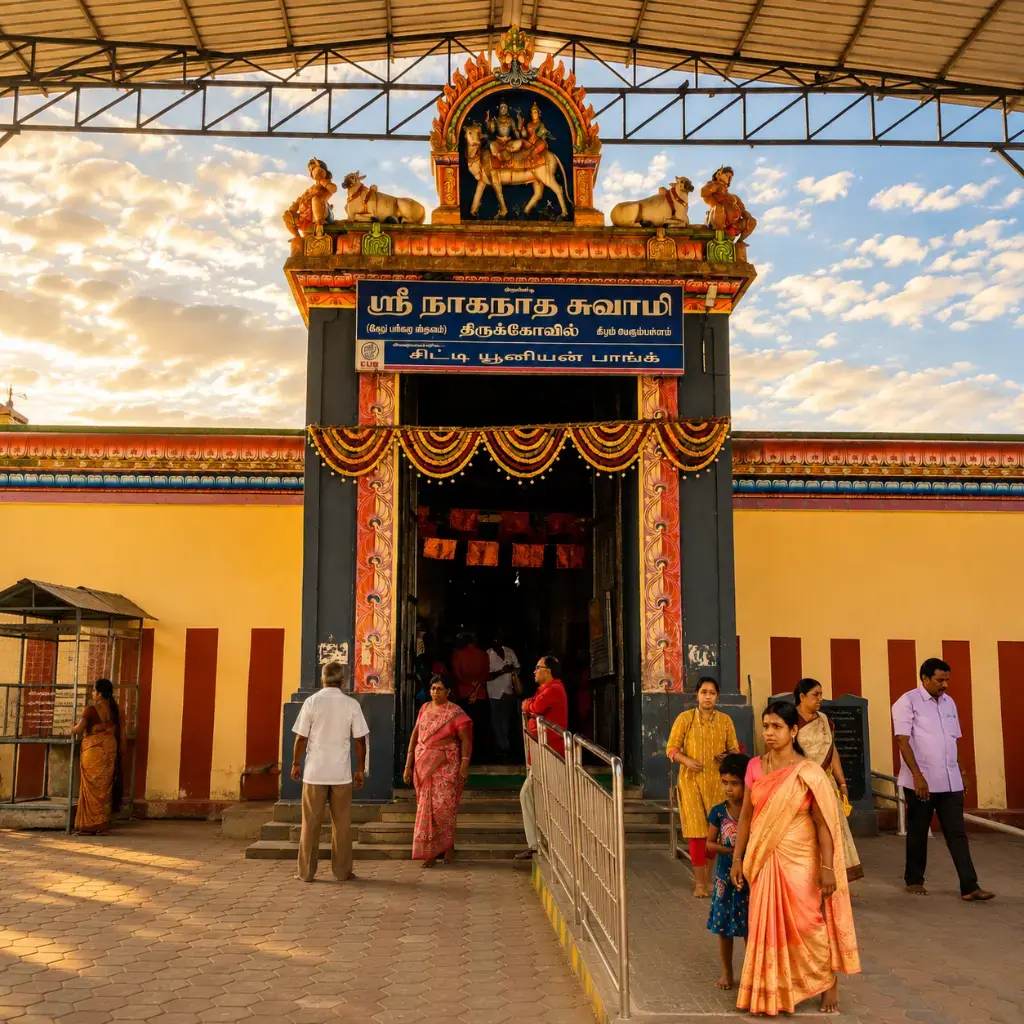
Naganatha Swamy Temple (Keezhaperumpallam Ketu Sthalam)
கீழப்பெரும்பள்ளம் நாகநாத சுவாமி கோவில்
Lord Shiva · Sirkali, Tamil Nadu
✓ VerifiedAncient★ 4.65,277 reviews
About the temple
Prominent historic Vaipu Sthalam and the definitive primary Navagraha Sthalam for planet Ketu Bhagwan Alleviates Ketu Dosha, severe structural obstacles, mental anxiety, property loss, and grants spiritual wisdom and liberation
Temple information
- Darshan timings
- 06:00 – 20:30
- Best time to visit
- Early morning hours on mid-week non-festival days to experience a peaceful darshan atmosphere
Deity
Lord Shiva · ଶିବ (Shiva)Lord GaneshaLord Murugan
- Deity form
- Shiva Lingam (Primary), Granite standing human-serpent form with folded hands in worship (Ketu Bhagwan)
- Religious tradition
- Tamil Shaiva Siddhanta & Vedic Astrology
- Sanskrit name
- श्री नागनाथ स्वामी मंदिर (कीलापेरुम्पल्लम केतु स्थलम)
- Also known as
- Keezhaperumpallam Navagraha Sthalam, Ketu Kovil, Vanagiri Kshetram
Darshan hours
- Monday
- 06:00 AM to 12:30 PM and 04:00 PM to 08:30 PM
- Tuesday
- 06:00 AM to 12:30 PM and 04:00 PM to 08:30 PM
- Wednesday
- 06:00 AM to 12:30 PM and 04:00 PM to 08:30 PM
- Thursday
- 06:00 AM to 12:30 PM and 04:00 PM to 08:30 PM
- Friday
- 06:00 AM to 12:30 PM and 04:00 PM to 08:30 PM
- Saturday
- 06:00 AM to 01:00 PM and 04:00 PM to 09:00 PM
- Sunday
- 06:00 AM to 01:00 PM and 04:00 PM to 09:00 PM
- Break timings
- 12:30PM -04:30PM
- Special days
- Continuous extended schedules operating during Ketu Peyarchi (transit) festival cycles and Pradoshams
- Festival timings
- Continuous all-day darshan queue systems operating during high-peak weekend transits
Aarti & rituals
- Morning aarti
- 06:30 AM
- Midday aarti
- 12:00 PM
- Evening aarti
- 06:30 PM
- Night aarti
- 8:15 PM
- Special aarti days
- Saturdays and Sundays feature grand alankaram poojas during specific daily Ketu prayer frames
- Ritual schedule
- Four periodic daily pooja sessions conducted by local traditional Shivachariya priests
- Pooja timings
- Archana rituals and standard public darshan rows flow during all operational hours
- Abhishek timings
- Special Ketu Abhishekam performed continuously on weekends and during seasonal transit shifts
- Special poojas
- Ketu Parihara Pooja, dynamic obstacle clearance rituals, and spiritual enrichment archanas
- Online pooja booking
- Via portal
History & heritage
- Historical period
- Ancient
- Built by
- Mainly patronized and rebuilt in stone by the Medieval Cholas and regional local chieftains
- Architect / builder
- Medieval Chola Monarchs and regional royal temple builders
- Construction materials
- monolithic stone framework, traditional grey granite blocks, and lime mortar materials
- Historical events
- Ancient site noted as a Vaipu Sthalam celebrated in early Tamil devotional song catalogs
- Renovations
- Significant architectural maintenance by Chola kings, Vijayanagara monarchs, and state department efforts
- Archaeological importance
- Features standard stone epigraphs tracking historical dynastic property grants and rural governance
- Legends
- Ketu Bhagwan prayed to Lord Shiva here to gain relief from the cosmic severing during the churning of the ocean
- Inscriptions
- Wall records describing structural endowments and land grants dating back to Imperial Chola era
Architecture
- Architectural style
- Dravidian
- Architectural period
- Imperial Chola and Later Vijayanagara Eras
- Structure
- Traditional walled single-prakaram configuration surrounding central dynamic shrines
- Floors
- 1
- Gopuram
- Features a distinctive and beautiful two-tiered entrance gopuram gate facing the main street corridor
- Mandapa
- Small enclosed assembly hall leading directly to the primary and Ketu shrines
- Sculptural features
- Ornate granite wall reliefs showcasing icons of Shiva, Vinayagar, and planetary deity panels
- Artistic elements
- Beautifully stylized representations of celestial planetary rays and historic serpentine motifs
- Construction technique
- Interlocking dry-granite precision masonry architecture traditional to Thanjavur delta region
- Unique features
- Ketu Bhagwan stands uniquely with a serpent head and a human body folded in an absolute posture of deep devotion to Lord Shiva
Festivals & events
- Festival calendar
- Adheres precisely to the ancient solar-lunar traditional Tamil almanac cycles
- Special celebration days
- Every single weekend, monthly Pradoshams, and planetary transit alignments
- Cultural events
- Devotional classical music and spiritual lectures organized during the annual festival transits
- Annual events
- Special celestial festival alignments during the planetary transit windows
- Peak crowd season
- Peak tourist volumes during winter vacation months and specific annual Ketu transit periods
Visitor information
- ✓ Parking
- ✓ Restrooms
- ✓ Drinking water
- ✓ Shoe keeping
- ✓ Prasadam counter
- ✓ Annadanam
- Dress code
- Traditional
- Best time to visit
- Early morning hours on mid-week non-festival days to experience a peaceful darshan atmosphere
- Parking capacity
- 20-30 vehicles
- Parking fees
- approx. 20 INR
- Donation counters
- Yes
- Donation methods
- Cash, UPI, Bank Transfer
- Prasadam
- Multi-colored horse gram pulse (Kollu) prepared and offered as the distinct primary token for Ketu