
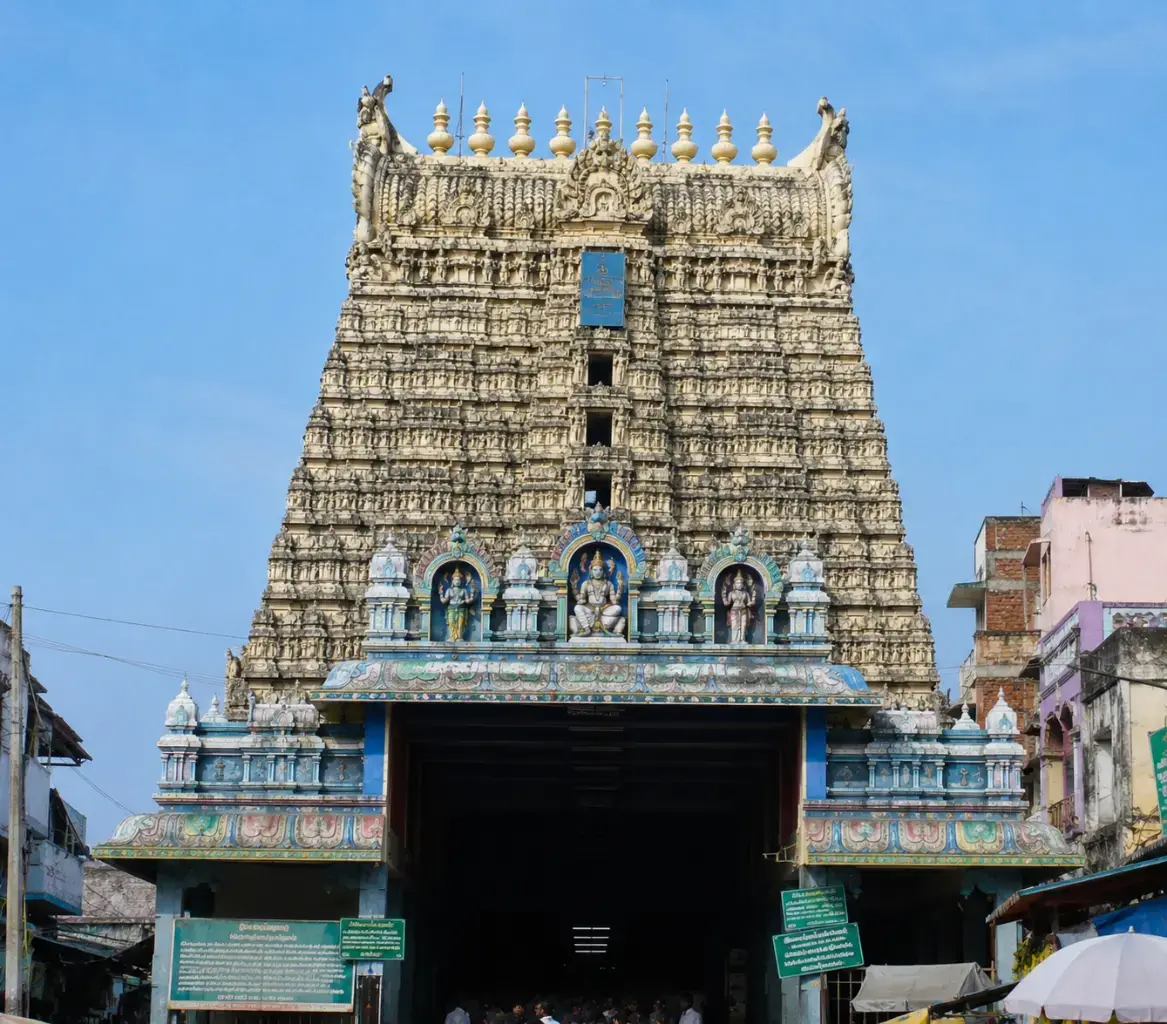
Arulmigu Sankaranarayanaswamy Temple
அருள்மிகு சங்கரநாராயணசுவாமி திருக்கோவில், சங்கரன்கோவில்
Lord Sankaranarayana · Tenkasi, Tamil Nadu
✓ VerifiedAncient★ 4.77,100 reviews
About the temple
Exceptionally High (Premier center for Harihara worship and snake-affliction remedies in South India). Cures chronic skin ailments and physical stomach illnesses, completely removes Naga Dosham (snake curses), and establishes domestic harmony.
Temple information
- Darshan timings
- 05:00 – 22:00
- Established
- 11
- Best time to visit
- Early morning hours on mid-week non-festival days to experience a peaceful darshan atmosphere
Deity
Lord SankaranarayanaLord Murugan
- Deity form
- Sankaranarayanar (A unique 6-foot monolithic idol split vertically: Right side features Shiva's matted hair, Ganga, crescent moon, rudraksha, and tiger skin; Left side features Vishnu's crown, standard jewels, and silk drapery).
- Religious tradition
- Tamil Kamiya Agamic traditions
- Sanskrit name
- श्री शङ्करनारायणस्वामी मन्दिरम्
- Also known as
- Sankarankovil Gomathi Amman Kovil, Sankaranainar Kovil
Darshan hours
- Monday
- 05:00-12:30, 16:00-22:00
- Tuesday
- 05:00-12:30, 16:00-22:00
- Wednesday
- 05:00-12:30, 16:00-22:00
- Thursday
- 05:00-12:30, 16:00-22:00
- Friday
- 05:00-13:00, 16:00-22:30
- Saturday
- 05:00-13:00, 16:00-22:30
- Sunday
- 05:00-12:30, 16:00-22:00
- Break timings
- 12:30PM -04:00PM
- Special days
- 03:30-23:30 (Stays open continuously during the massive Aadi Thapasu festival days).
- Festival timings
- During the Aadi Thapasu festival and Maha Shivaratri, temple doors remain open from 03:30 AM to midnight without afternoon closure.
Aarti & rituals
- Morning aarti
- 06:00 AM
- Midday aarti
- 12:00 PM
- Evening aarti
- 18:30
- Night aarti
- 21:00
- Special aarti days
- Fridays feature extensive floral decoration and royal deepam loops for Goddess Gomathi Amman.
- Ritual schedule
- Six precisely timed historical Agamic ritual services performed by hereditary archakas.
- Pooja timings
- Specialized anti-snake affliction prayers (Sarpa Dosha Nivarani) scheduled across morning hours.
- Abhishek timings
- 06:30 AM and 11:00 AM across the main internal shrines daily.
- Special poojas
- Naga Dosha Nivarana Puja, Thangathere (Golden Chariot) run, and specialized Kalyana Archana for marital obstacles.
- Online pooja booking
- Via portal
History & heritage
- Historical period
- Medieval
- Built by
- Mandated and built under the personal supervision of King Ugra Pandyan.
- Architect / builder
- Royal Pandya guild master stone craftsmen.
- Construction materials
- Heavy cut-granite foundation architecture layered with decorative lime-plaster iconographic structures on upper spires.
- Historical events
- The city grew completely around this complex after King Ugra Pandyan accidentally discovered a hidden Shiva Lingam while his royal elephant knelt down at an anthill.
- Renovations
- Rebuilt extensively across various Pandya eras; modern restoration and a grand Kumbhabhishekam completed under HR&CE coordination.
- Archaeological importance
- High-value structural living archaeological asset preserved under state endowment guidelines.
- Legends
- Centuries ago, a fierce argument broke out between the followers of Shiva and Vishnu regarding who was supreme. Two serpent kings, Padman and Sangan, also fought over this. To resolve the dispute and show that both are manifestations of the same supreme reality, Goddess Gomathi Amman performed intense penance (Thapasu) on one foot here. Responding to her devotion, Lord Shiva appeared before her in his syncretic Sankaranarayanar form, proving that Hari (Vishnu) and Hara (Shiva) are one and the same.
- Inscriptions
- Rich Pandya-era stone inscriptions recording royal land endowments, taxation breaks for public maintenance, and oil grants for eternal lighting.
Architecture
- Architectural style
- Dravidian
- Architectural period
- Major configuration established between the 11th and 14th Centuries CE.
- Structure
- Massive multi-acre town temple complex housing three distinct large physical sanctums within high stone walls.
- Floors
- 1
- Gopuram
- Dominated by a stunning 125-foot tall, 9-tiered Rajagopuram facing east, exhibiting hundreds of masterfully preserved structural icons.
- Mandapa
- Features the grand Aadi Thapasu Mandapam where major festive transactions manifest, and a beautifully carved pillar courtyard.
- Sculptural features
- Incredible life-sized stone sculptures of celestial protectors, intricate ceiling wheels representing zodiac rings, and deep carvings detailing the penance of Gomathi Amman.
- Artistic elements
- Vibrant South Indian color palettes detailing Puranic events along the ceilings of the inner pradakshina lines.
- Construction technique
- Interlocking granite dry-masonry construction base capable of withstanding immense load factors over centuries.
- Unique features
- Houses a miraculous hole inside the main shrine tracking a Sarpa Putru (Sacred Anthill). Devotees take the sand (Puthi Mann) from here, which is believed to heal any physical body ailment.
Festivals & events
- Festival calendar
- Anchored strictly according to the Tamil planetary astrological panchangam shifts.
- Special celebration days
- The highly emotional Thapasu Katchi day, when Lord Shiva appears as Sankaranarayanar to fulfill Goddess Gomathi's penance, is the grand highlight of the year.
- Cultural events
- Classical Bharatanatyam recitals, carnatic concerts, and traditional spiritual discourses during the 12 days of Aadi Thapasu.
- Annual events
- Aadi Thapasu Festival (12 days), Chithirai Brahmotsavam, Navaratri festival cycles, Skantha Sashti, and Maha Shivaratri.
- Peak crowd season
- July to August (Tamil month of Aadi) and mid-November to January (Margazhi spiritual winter season).
Visitor information
- ✓ Parking
- ✓ Restrooms
- ✓ Drinking water
- ✓ Shoe keeping
- ✓ Prasadam counter
- ✓ Annadanam
- Dress code
- Traditional
- Best time to visit
- Early morning hours on mid-week non-festival days to experience a peaceful darshan atmosphere
- Parking capacity
- 50+ vehicles
- Parking fees
- approx. 20 INR
- Donation counters
- Yes
- Donation methods
- Cash, UPI, Bank Transfer
- Prasadam
- Blessed Puthi Mann (sacred anthill earth), Kumkum, and hot tamarind rice are provided as divine prasadam.