
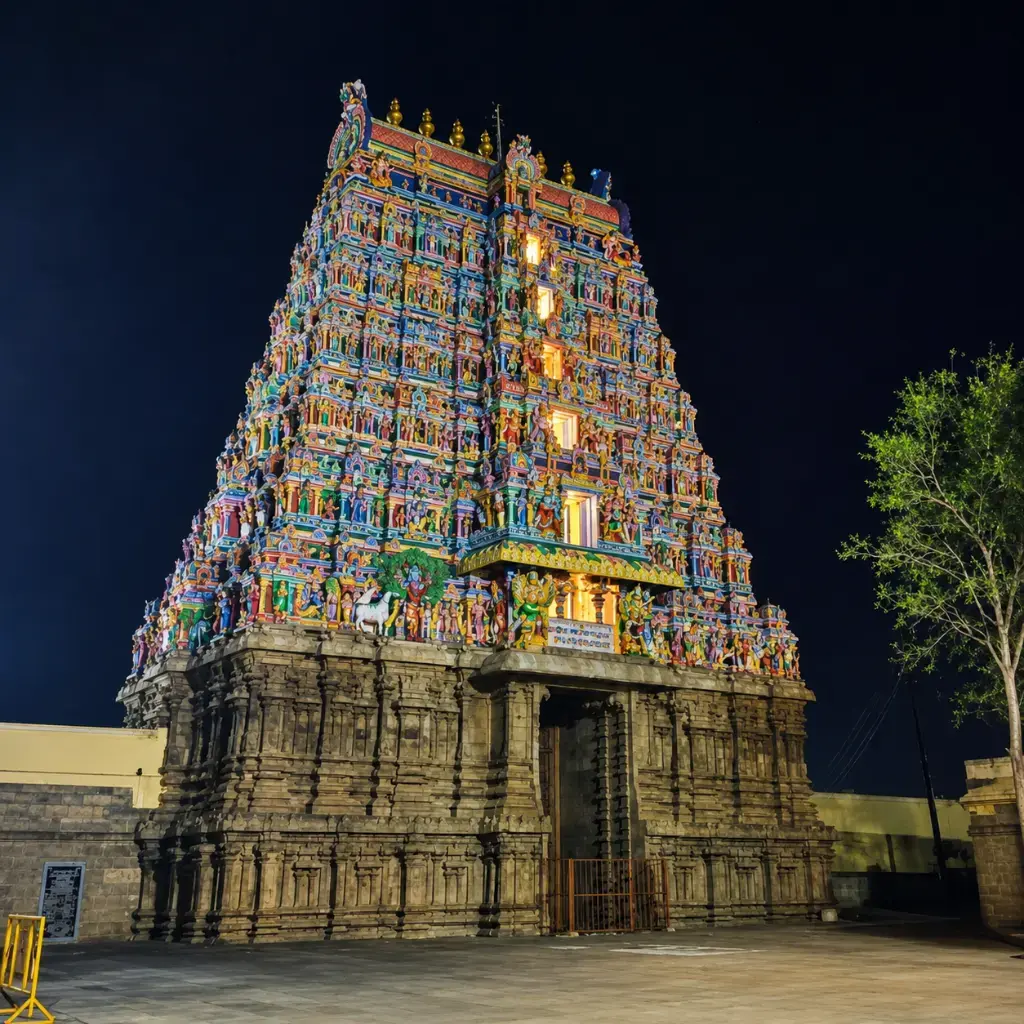
Arulmigu Kallazhagar Temple
அருள்மிகு கள்ளழகர் திருக்கோவில் (அழகர்கோவில்)
Lord Maha Vishnu · Madurai, Tamil Nadu
✓ VerifiedAncient★ 4.812,500 reviews
About the temple
Supreme (One of the core 108 Divya Desams; praised in Naalayira Divya Prabandham; vital cultural node of Southern Tamil Nadu) Eradication of negative astrological traits, protection against evil energies via the guardian deity, and ancestral karma balancing.
Temple information
- Darshan timings
- 06:00 – 20:00
- Best time to visit
- Early morning hours on mid-week non-festival days to experience a peaceful darshan atmosphere
Deity
Lord Maha Vishnu · തിരുനെല്ലിപ്പെരുമാൾ (Thirunelli Perumal)
- Deity form
- Sthanaka Kolam (Majestic standing posture of Lord Vishnu holding the divine discus and conch, facing East)
- Religious tradition
- Sri Vaishnava Sampradaya / Thenkalai Lineage
- Sanskrit name
- सुन्दरराजपेरुमाळ्मन्दिरम् (वृषभाद्रिः)
- Also known as
- Alagar Koyil, Azhagar Malai, Thirumaliruncholai, Rishabhagiri, Soumya Narayana Kshetram
Darshan hours
- Monday
- 06:00-12:30, 16:00-20:00
- Tuesday
- 06:00-12:30, 16:00-20:00
- Wednesday
- 06:00-12:30, 16:00-20:00
- Thursday
- 06:00-12:30, 16:00-20:00
- Friday
- 06:00-13:00, 15:30-21:00
- Saturday
- 06:00-13:00, 15:30-21:00
- Sunday
- 06:00-13:00, 15:30-20:30
- Break timings
- 12:30PM -04:00PM
- Special days
- 03:00-23:00 (Continuous queue management during Vaikuntha Ekadashi and the mega Chithirai Festival loops)
- Festival timings
- During the Chithirai departure and Vaikunta Ekadashi, the inner sanctums operate continuously for 20+ hours to manage regional pilgrim flows.
Aarti & rituals
- Morning aarti
- 06:30 AM
- Midday aarti
- 12:00 PM
- Evening aarti
- 06:00 PM
- Night aarti
- 08:45 PM
- Special aarti days
- Shravana constellation days, Ekadashi windows, New Moon nights, and standard Pradosham frames for Narasimhar.
- Ritual schedule
- Six daily operational scriptural ritual phases executed strictly via hereditary Vaishnavite Bhattacharyas.
- Pooja timings
- 08:30 (Kala Santhi Pooja), 11:00 (Irandaam Kaalam)
- Abhishek timings
- 07:00 and 17:00 daily across the core principal sanctum deities.
- Special poojas
- Shravana Deepa Archana, Sudarshana Homam, Narasimha Dosha Nivarthi.
- Online pooja booking
- Via portal
History & heritage
- Historical period
- Medieval
- Built by
- Built initially by the Early Pandyas; extensively structurally expanded by Vijayanagara rulers and King Thirumalai Nayak.
- Architect / builder
- Renovated massively under chief imperial designers commissioned by the Madurai Nayak Dynasty.
- Construction materials
- Monolithic dark granite rock block foundational structures paired with brick-and-lime mortar towers.
- Historical events
- Extensively praised by the Alvars in the Naalayira Divya Prabandham; explicitly recorded in the 3rd-century CE epic Cilappatikaram.
- Renovations
- Major structural extensions completed in the 16th and 17th centuries, alongside recent state-managed consecrations (Kumbhabhishekam).
- Archaeological importance
- Highly Recognized Ancient Monument under the protection and administrative oversight of the HR&CE Department, Government of Tamil Nadu.
- Legends
- Lord Vishnu manifested here to redeem Sage Suthapava (Manduka Maharishi) from the frog-curse of Sage Durvasa. The upper spring, Noopura Gangai, emerged directly from the foot-tassel ornament of Lord Vishnu during His Trivikrama avatar.
- Inscriptions
- Over 90+ stone wall epigraphs tracking historical land grants, gold transactions, and structural modifications from Chola, Pandya, and Vijayanagara royal houses.
Architecture
- Architectural style
- Dravidian
- Architectural period
- 6th–17th Century Development Matrix
- Structure
- Large Fortified Complex encompassing double defensive stone fortification corridors (Azhagapuri and Hiranyapuri).
- Floors
- 1
- Gopuram
- Features 3 prominent gopurams; the 9-tiered main Rajagopuram stands 130 feet tall, heavily decorated with rich historical stucco imagery.
- Mandapa
- Features the legendary Kalyana Mandapam built in the Nayaka era, displaying life-sized, high-precision monolithic stone sculptures.
- Sculptural features
- Exceptional rare carvings of Yoga Narasimha, Trivikrama, and fierce Yalis with functional, free-spinning solid stone balls engineered inside their open jaws.
- Artistic elements
- Ancient fresco tracks tracing traditional Vaishnavite puranas along the deep ceilings of the main walk paths.
- Construction technique
- Interlocking granite rock block layouts resting over foundational sandbox matrices, reflecting quintessential Pandyan engineering.
- Unique features
- The processional idol (Utsavar) is cast from an ultra-rare, high-purity golden five-metal alloy (Aponjee) that only retains its brilliant color when bathed exclusively in the medicinal waters of the mountain-top Noopura Gangai spring. The main wooden doors of the fortress are worshipped directly as the guardian deity Pathinettam Padi Karuppasamy and are never fully opened.
Festivals & events
- Festival calendar
- Highly structured around the traditional Tamil solar-lunar panchangam cycles.
- Special celebration days
- Monthly Ekadashi cycles, Thiruvonam constellation days, and grand Maha Navaratri nights for Goddess Thayar.
- Cultural events
- Grand classical music showcases, spiritual discourses, and traditional folk dances during the massive Chithirai and Navaratri celebrations.
- Annual events
- Madurai Chithirai Festival, 10-day Aadi Brahmotsavam Car Festival, Vaikunta Ekadashi, Vaikasi Vasanthotsavam, Float Festival on Masi Magam, and Gajendra Moksham rituals.
- Peak crowd season
- April to May (Chithirai festive window), July to August (Aadi festival), and throughout the winter months of November to January.
Visitor information
- ✓ Parking
- ✓ Restrooms
- ✓ Drinking water
- ✓ Shoe keeping
- ✓ Prasadam counter
- ✓ Annadanam
- Dress code
- Traditional
- Best time to visit
- Early morning hours on mid-week non-festival days to experience a peaceful darshan atmosphere
- Parking capacity
- 100+ Vehicles
- Parking fees
- Approx. 20-50 INR
- Donation counters
- Yes
- Donation methods
- Cash, UPI, Bank Transfer
- Prasadam
- Traditional Azhagar Kovil Ghee Dosai (a thick, unique cumin-spiced pancake deep-fried in pure cow ghee), Sweet Pongal, and holy temple dynamic tulsi leaves.