
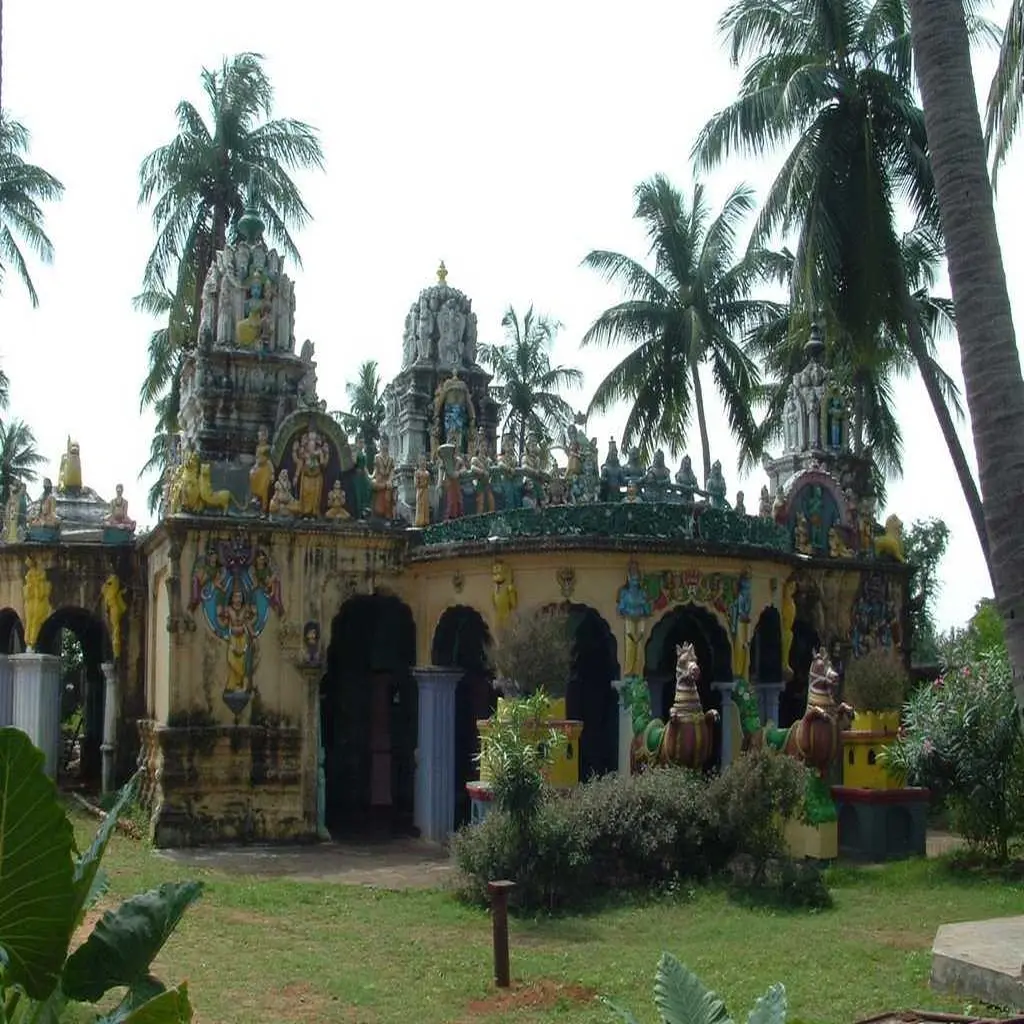
Kumili Temple
కుమిలి దేవాలయాల సమూహం
Lord Shiva · Bhogapuram / Vizianagaram, Andhra Pradesh
Ancient★ 4.72,000 visits
About the temple
Spectacular group of historic temples built by the Royal House of Vizianagaram displaying unique conical gopurams. Traditional belief: Harmony, comprehensive blessings of Hari and Hara, fulfillment of righteous desires.
Temple information
- Darshan timings
- 06:00 – 07:30
- Established
- 19
- Best time to visit
- Early morning hours on mid-week non-festival days to experience a peaceful darshan atmosphere
Deity
Lord Shiva · ଶିବ (Shiva)Lord GaneshaHanumanKalabhairava
- Deity form
- Stone Vigrahas and Shiva Lingams in individual shrines
- Religious tradition
- Agamic & Royal Samsthanam Tradition
- Sanskrit name
- कुमिलि मन्दिर समूहः
- Also known as
- Kumili Group of Temples, Santhapeta Kumili Temples
Darshan hours
- Daily
- 06:00 AM - 11:30 AM, 04:30 PM - 07:30 PM
- Break timings
- 12:00PM -04:00PM
- Special days
- Maha Shivaratri, Navaratri, Sri Rama Navami: 05:30 AM - 09:00 PM
- Festival timings
- Open till 09:00 PM during festival weeks
Aarti & rituals
- Morning aarti
- 06:30 AM
- Midday aarti
- 11:15 AM
- Evening aarti
- 06:30 PM
- Night aarti
- 07:15 PM
- Special aarti days
- Festival tithis across individual shrines
- Ritual schedule
- Panchayatana Nitya Archana, Abhishekam, Naivedyam, Mangala Harathi
- Pooja timings
- 07:00 AM - 11:00 AM, 05:00 PM - 07:00 PM
- Abhishek timings
- 06:30 AM - 08:00 AM
- Special poojas
- Available
- Online pooja booking
- No
History & heritage
- Historical period
- Ancient
- Built by
- Pusapati Royal Dynasty of Vizianagaram
- Architect / builder
- Master artisans commissioned by Vizianagaram Rajas
- Construction materials
- Finely dressed stone, terracotta ornamentation, stucco work
- Historical events
- Constructed as an architectural showcase of syncretic devotion by the Pusapati kings
- Renovations
- Protected and conserved under local endowment patronage and heritage trusts
- Archaeological importance
- State-level archaeological and architectural significance
- Legends
- Traditional belief: Royalty sought divine protection across all quadrants of the kingdom
- Inscriptions
- Telugu and Sanskrit donor records from Pusapati rulers
Architecture
- Architectural style
- Kalinga
- Architectural period
- Late Medieval / Royal Princely Samsthanam Period
- Structure
- Cluster of multiple distinct shrines arranged inside an ornate walled courtyard
- Floors
- 1
- Gopuram
- Unique pyramidally terraced, octagonal and conical vimana towers
- Mandapa
- Open mukhamandapas with elaborately carved stone pillars
- Sculptural features
- Remarkable sculptures depicting Ramayana, Bhagavata, and Shaivite lore
- Artistic elements
- High-relief stucco figurines, celestial damsels, and yali brackets
- Construction technique
- Interlocking stone masonry with fine lime plaster finish
- Unique features
- Rare architectural complex housing Shaivite, Vaishnavite, and Shakta shrines in unified harmony
Festivals & events
Maha ShivaratriDevi NavaratriSri Rama NavamiKartika Purnima
- Festival calendar
- Ashwayuja Shukla Dashami (Dussehra), Magha Bahula Chaturdashi
- Special celebration days
- Every Friday (Durga), Monday (Shiva), Saturday (Venugopala)
- Cultural events
- Classical Harikatha and devotional music during Navaratri
- Annual events
- Kumili Temple Jathara and Rathotsavam
- Peak crowd season
- October (Navaratri) and February/March (Shivaratri)
Visitor information
- ✓ Parking
- ✓ Restrooms
- ✓ Drinking water
- ✓ Shoe keeping
- ✓ Prasadam counter
- Dress code
- Traditional
- Best time to visit
- Early morning hours on mid-week non-festival days to experience a peaceful darshan atmosphere
- Parking capacity
- 50+ vehicles
- Donation counters
- Yes
- Donation methods
- Cash, UPI, Bank Transfer
- Prasadam
- Laddu; Pulihora