
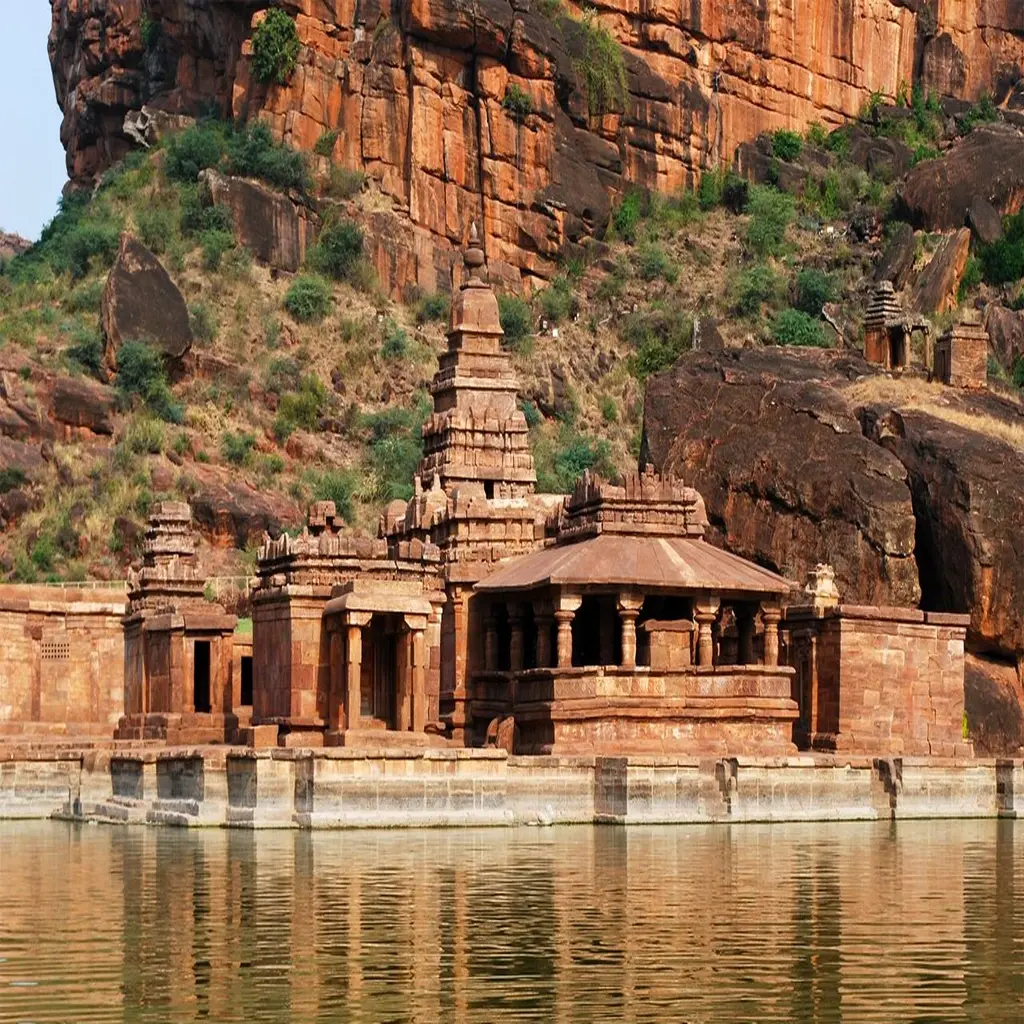
Bhutanatha Group of Temples
ಶ್ರೀ ಭೂತನಾಥ ದೇವಾಲಯಗಳ ಸಮೂಹ
Lord Shiva · Bagalkote, Karnataka
Ancient
About the temple
World-renowned early Chalukyan temple complex jutting dramatically into the emerald waters of Agasthya Lake against sandstone cliff backdrops; architectural hallmark of Badami. Traditional belief: Deep meditative tranquility, dissolution of worldly distress, and inner liberation.
Temple information
- Darshan timings
- 06:00 – 18:00
- Established
- 7
- Best time to visit
- Early morning hours on mid-week non-festival days to experience a peaceful darshan atmosphere
Deity
Lord Shiva · ଶିବ (Shiva)GangaGoddess YamunaAmaranarayana (Vishnu)
- Deity form
- Ancient Shiva Lingam inside the waterfront sandstone sanctum
- Religious tradition
- Early Chalukyan Agamic Shaiva Tradition
- Sanskrit name
- श्री भूतनाथ मन्दिर समूहः
- Also known as
- Badami Bhutanatha Temple, Agasthya Lake Bhutanatha Complex
Darshan hours
- Daily
- 06:00 AM - 06:00 PM
- Break timings
- Open continuously during daylight hours
- Special days
- Maha Shivaratri, Chalukya Utsava: 05:30 AM - 07:30 PM
- Festival timings
- Open till 07:30 PM on special cultural festival evenings
Aarti & rituals
- Morning aarti
- 06:30 AM
- Midday aarti
- 12:00 PM
- Evening aarti
- 5:30 PM
- Special aarti days
- Mondays, Maha Shivaratri
- Ritual schedule
- Nitya Sandhya Archana, Deeparadhana by local archaka
- Pooja timings
- 07:00 AM - 11:00 AM, 04:30 PM - 05:45 PM
- Abhishek timings
- 07:00 AM - 08:30 AM
- Special poojas
- Available
- Online pooja booking
- No
History & heritage
- Historical period
- Ancient
- Built by
- Chalukyas of Badami (Vatapi) and expanded by Kalyani Chalukyas
- Architect / builder
- Master architects of the Vatapi rock and structural guilds
- Construction materials
- Local golden-red sandstone blocks
- Historical events
- Heart of the ancient imperial capital of Vatapi; witness to Pallava-Chalukya wars in 7th century
- Renovations
- Conserved under Archaeological Survey of India (ASI) Dharwad Circle
- Archaeological importance
- Centrally Protected Monument of National Importance (ASI)
- Legends
- Traditional belief: Sage Agasthya blessed the holy lake; Lord Shiva resides here as protector of all elemental spirits
- Inscriptions
- 7th-century Kannada inscriptions on boulder faces nearby
Architecture
- Architectural style
- Dravidian
- Architectural period
- 7th - 8th Century CE (Eastern Group); 11th Century CE (Mallikarjuna/North-East Group)
- Structure
- Waterfront structural stone temple extending directly onto the stone revetment of the lake
- Floors
- 1
- Gopuram
- Stepped pyramidal Dravidian sandstone shikhara capped with an octagonal shikhara roof
- Mandapa
- Open pillared sabha mandapa projecting out into Agasthya Lake
- Sculptural features
- Ganga and Yamuna dvarapalikas on door jambs; rock-cut reliefs of Vishnu avatars behind the temple
- Artistic elements
- Intricate ceiling reliefs of dancing devatas, lotus medallions, and yali balustrades
- Construction technique
- Dry-stone sandstone block masonry on lakeside rock plinth
- Unique features
- Spectacular lakeside location with water reaching temple base during monsoon and reflection in Agasthya lake
Festivals & events
Maha ShivaratriChalukya UtsavaKartika PurnimaBanashankari Jathara
- Festival calendar
- Magha Bahula Chaturdashi (Shivaratri), December (Chalukya Utsava)
- Special celebration days
- Every Monday, Purnima
- Cultural events
- Chalukya Utsava cultural dance and classical music concerts against the illuminated temple backdrop
- Annual events
- Shivaratri Deepotsava around Agasthya Lake
- Peak crowd season
- October to February (peak international and domestic tourist season)
Visitor information
- ✓ Parking
- ✓ Restrooms
- ✓ Drinking water
- ✓ Shoe keeping
- ✓ Prasadam counter
- Dress code
- Traditional
- Best time to visit
- Early morning hours on mid-week non-festival days to experience a peaceful darshan atmosphere
- Parking capacity
- 50+ vehicles
- Parking fees
- Approx. 20-50 INR
- Donation counters
- Yes
- Donation methods
- Cash, Hundi
- Prasadam
- Vibhuti/Kumkum.