
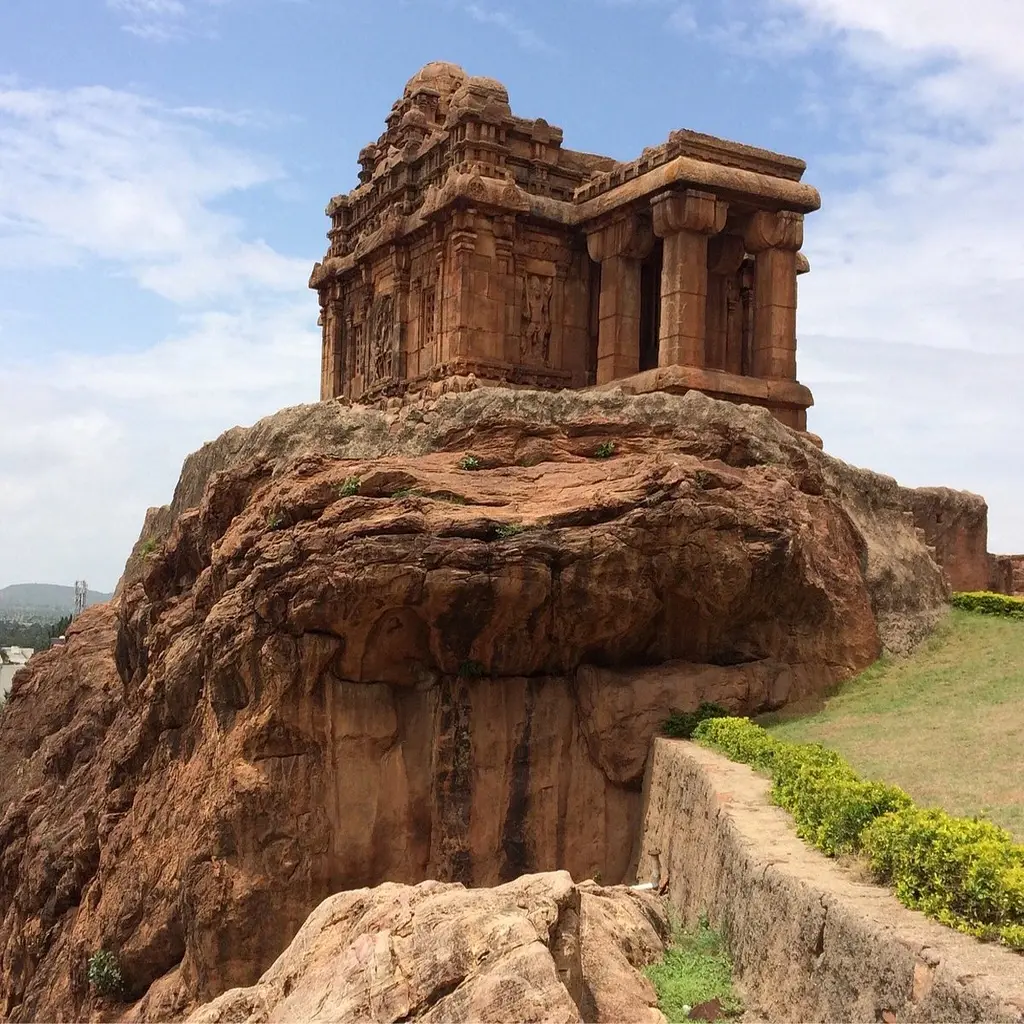
Sri Malegitti Shivalaya
ಶ್ರೀ ಮಾಲೆಗಿತ್ತಿ ಶಿವಾಲಯ
Lord Shiva · Bagalkote, Karnataka
Ancient
About the temple
The oldest surviving, exquisitely preserved structural stone temple in Badami; perched dramatically on a solitary sandstone crag overlooking the historic town. Traditional belief: Bestows clarity of intellect, inner peace, and relief from distress.
Temple information
- Darshan timings
- 06:00 – 18:00
- Established
- 675
- Best time to visit
- Early morning hours on mid-week non-festival days to experience a peaceful darshan atmosphere
Deity
Lord Shiva · ଶିବ (Shiva)Lord SuryaBhagavathy (Durga)Ganesha Family
- Deity form
- Stone sanctum designed for Shiva Lingam with Surya iconography
- Religious tradition
- Early Chalukyan Dravida Tradition
- Sanskrit name
- श्री मालेगवित्ती शिवालय मन्दिरम्
- Also known as
- Garland-maker Shiva Temple, Badami Hilltop Shivalaya, Northern Fort Shivalaya
Darshan hours
- Daily
- 06:00 AM - 06:00 PM
- Break timings
- Open continuously during daylight hours
- Special days
- Maha Shivaratri: 05:30 AM - 06:30 PM
- Festival timings
- Open till 06:30 PM on festival days
Aarti & rituals
- Morning aarti
- 06:30 AM
- Evening aarti
- 5:30 PM
- Special aarti days
- Maha Shivaratri
- Ritual schedule
- Monument maintained by ASI; commemorative Deeparadhana by local archakas
- Pooja timings
- 06:30 AM - 10:00 AM
- Special poojas
- Available
- Online pooja booking
- No
History & heritage
- Historical period
- Ancient
- Built by
- Chalukyas of Badami (reign of King Vinayaditya / Vijayaditya)
- Architect / builder
- Master architects of the Early Chalukya guild
- Construction materials
- Solid dressed golden-red sandstone blocks
- Historical events
- Built during the zenith of Early Chalukyan empire; stands sentinel over the historic canyon of Vatapi
- Renovations
- Protected and conserved under Archaeological Survey of India (ASI) Dharwad Circle
- Archaeological importance
- Centrally Protected Monument of National Importance (ASI)
- Legends
- Local legend associates its name "Malegitti" with a pious female garland-maker who funded the temple through her devotional flower offerings
- Inscriptions
- Stylistic inscriptions and graffiti of Chalukyan and Vijayanagara periods
Architecture
- Architectural style
- Dravidian
- Architectural period
- Circa 675 - 700 CE
- Structure
- Compact, complete structural Dravida temple with sanctum, small vestibule (antarala), and pillared mandapa
- Floors
- 1
- Gopuram
- Two-storeyed octagonal Dravidian Vimana shikhara of pristine proportions
- Mandapa
- Pillared mukhamandapa with heavy monolithic square columns
- Sculptural features
- Superb wall niches featuring high-relief sculptures of Lord Shiva, Surya, and decorative ganas (dwarfs) dancing along the plinth
- Artistic elements
- Elaborate kudu arches, makara toranas, and perforated lattice stone windows (jali work)
- Construction technique
- Dry-stone sandstone block masonry constructed directly on a sheer natural rock outcrop
- Unique features
- Regarded by architectural historians as the finest and most complete early structural stone temple of the Deccan
Festivals & events
Maha ShivaratriWorld Heritage DayChalukya Utsava
- Festival calendar
- Magha Bahula Chaturdashi (Shivaratri)
- Special celebration days
- World Heritage Week (November)
- Cultural events
- Heritage awareness walks and photo exhibitions during Chalukya Utsav
- Annual events
- Illumination during national heritage celebrations
- Peak crowd season
- October to February
Visitor information
- ✓ Parking
- ✓ Restrooms
- ✓ Drinking water
- ✓ Shoe keeping
- ✓ Prasadam counter
- Dress code
- Traditional
- Best time to visit
- Early morning hours on mid-week non-festival days to experience a peaceful darshan atmosphere
- Parking capacity
- 100+ Vehicles
- Parking fees
- Free
- Donation counters
- Yes
- Donation methods
- Cash, Hundi
- Prasadam
- Vibhuti/Kumkum.