
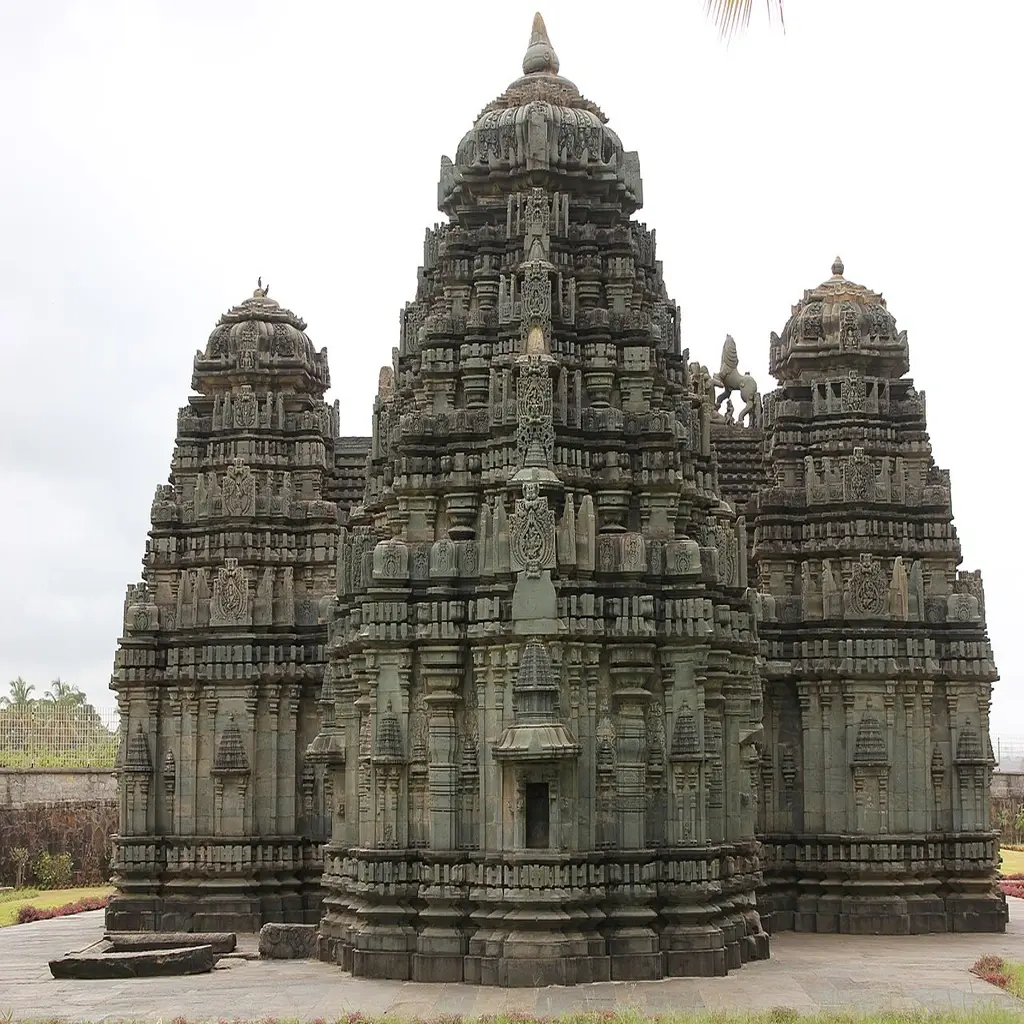
Shri Kedareshwara Swamy Temple
ಶ್ರೀ ಕೇದಾರೇಶ್ವರ ದೇವಾಲಯ
Lord Shiva · Shivamogga, Karnataka
Ancient
About the temple
Celebrated as Dakshina Kedara (Kedarnath of the South); historic capital of Banavasi-12000 and great university seat (Kodiyamatha); famed Trikuta soapstone architecture by master sculptor Dasoja. Traditional belief: Equal merit to visiting Kedarnath in Himalayas; brings cure from chronic illness, spiritual illumination, and liberation.
Temple information
- Darshan timings
- 06:00 – 18:30
- Established
- 11
- Best time to visit
- Early morning hours on mid-week non-festival days to experience a peaceful darshan atmosphere
Deity
Lord Shiva · ଶିବ (Shiva)Amaranarayana (Vishnu)BrahmaAmmanavaru (Parvati)Lord Ganesha
- Deity form
- Trikutachala arrangement with Shiva Lingam in southern sanctum and Janardana Vishnu in western sanctum
- Religious tradition
- Kalamukha Shaiva Agamic Tradition & Hoysala Vaikhanasa
- Sanskrit name
- श्री केदारेश्वर मन्दिरम्
- Also known as
- Belagami Kedareshwara Gudi, Dakshina Kedara, Balligave Shiva Temple
Darshan hours
- Daily
- 06:00 AM - 06:30 PM
- Break timings
- Open continuously during daylight hours
- Special days
- Maha Shivaratri, Allama Prabhu Jayanti: 05:30 AM - 08:30 PM
- Festival timings
- Open till 08:30 PM on Maha Shivaratri
Aarti & rituals
- Morning aarti
- 06:30 AM
- Midday aarti
- 12:00 PM
- Evening aarti
- 06:00 PM
- Special aarti days
- Mondays, Pradosham, Maha Shivaratri
- Ritual schedule
- Nitya Pooja, Rudrabhisheka, Archana, Deeparadhana by local hereditary archaka
- Pooja timings
- 07:00 AM - 11:30 AM, 04:30 PM - 06:00 PM
- Abhishek timings
- 07:00 AM - 08:30 AM
- Special poojas
- Available
- Online pooja booking
- No
History & heritage
- Historical period
- Ancient
- Built by
- Western Chalukyas of Kalyani & Hoysalas (patronized by Hoysala King Vishnuvardhana)
- Architect / builder
- Master sculptor Dasoja of Balligavi and the Ruvari guilds of Malnad
- Construction materials
- Chloritic schist (soapstone) of exquisite carving quality
- Historical events
- Birthplace of great 12th-century Sharana mystic Allama Prabhu and celebrated sculptors of Belur and Halebidu
- Renovations
- Protected monument conserved under Archaeological Survey of India (ASI) Bengaluru Circle
- Archaeological importance
- Centrally Protected Monument of National Importance (ASI Monument No. N-KA-B34)
- Legends
- Traditional belief: Revered as Dakshina Kedara where Kalamukha ascetics ran a celebrated residential university (Ghatikasthana)
- Inscriptions
- Over 80 magnificent stone epigraphs in Kannada prose and poetry recording endowments to the Kodiyamatha
Architecture
- Architectural style
- Dravidian
- Architectural period
- Circa 1060 - 1140 CE
- Structure
- Trikutachala (triple-shrined) temple with three sanctums connected to a central Navaranga and ornate sabha mandapa
- Floors
- 1
- Gopuram
- Three ornate stepped pyramidal soapstone vimana shikharas with the Hoysala crest (Sala slaying the lion)
- Mandapa
- Stunning Navaranga hall supported by lathe-turned mirror-finish soapstone pillars with carved ceiling domes
- Sculptural features
- Remarkable sculptures of Ashtadikpalas on ceilings, Mahishasuramardini, Gajasamharamurti, and intricately carved Nandi
- Artistic elements
- Elaborate perforated stone windows (Jalandhras), makara toranas, and multi-banded friezes of hamsas, elephants, and lions
- Construction technique
- Dry-stone interlocking soapstone masonry of unparalleled lapidary elegance
- Unique features
- Trikuta arrangement housing Shiva, Vishnu (Janardana), and Brahma/Surya under a unified celestial roof
Festivals & events
Maha ShivaratriAllama Prabhu JayantiKartika Deepotsava
- Festival calendar
- Magha Bahula Chaturdashi (Shivaratri)
- Special celebration days
- Every Monday, Pradosham
- Cultural events
- Vachana singing and classical Carnatic concerts during Allama Prabhu Jayanti
- Annual events
- Kedareshwara Jathara and Shivaratri Deepotsava
- Peak crowd season
- October to February (Malnad tourism season)
Visitor information
- ✓ Parking
- ✓ Restrooms
- ✓ Drinking water
- ✓ Shoe keeping
- ✓ Prasadam counter
- Dress code
- Traditional
- Best time to visit
- Early morning hours on mid-week non-festival days to experience a peaceful darshan atmosphere
- Parking capacity
- 20-30 vehicles
- Parking fees
- Free
- Donation counters
- Yes
- Donation methods
- Cash, Hundi
- Prasadam
- Vibhuti/Kumkum.