
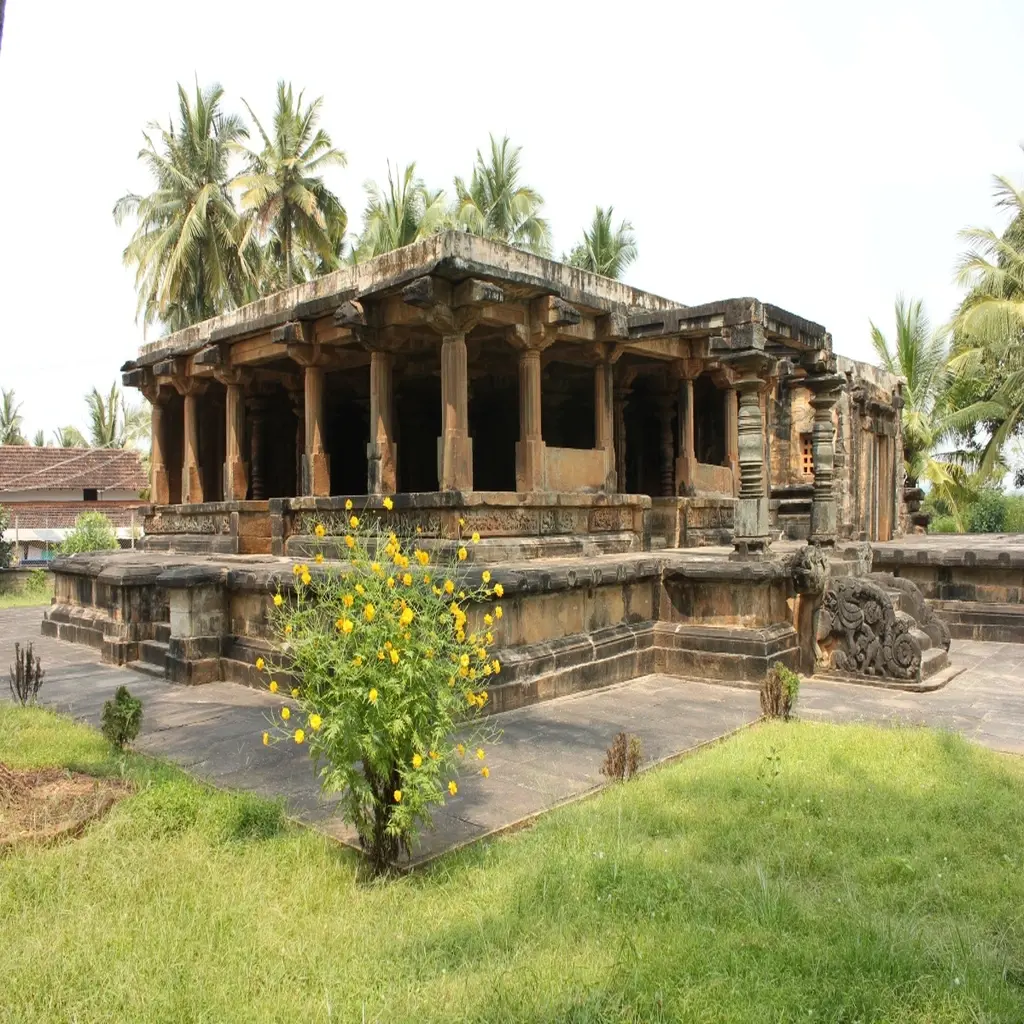
Shri Thripuranthakeshwara Temple
ಶ್ರೀ ತ್ರಿಪುರಾಂತಕ ದೇವಾಲಯ
Amareshwara (Shiva) · Shivamogga, Karnataka
Ancient
About the temple
Celebrated 11th-century Western Chalukyan temple famous for its dynamic friezes illustrating the Panchatantra fables, Ramayana episodes, and exquisite Mithuna (erotic) sculptures pre-dating Khajuraho. Traditional belief: Victory over internal vices (Kama, Krodha, Lobha), spiritual courage, and peace of mind.
Temple information
- Darshan timings
- 06:00 – 18:30
- Established
- 11
- Best time to visit
- Early morning hours on mid-week non-festival days to experience a peaceful darshan atmosphere
Deity
Amareshwara (Shiva)Ammanavaru (Parvati)Ganesha Family
- Deity form
- Ancient stone Shiva Lingam inside inner sanctum with erotic and mythological friezes on exterior walls
- Religious tradition
- Agamic Shaiva Tradition & Pancharatra Influence
- Sanskrit name
- श्री त्रिपुरान्तक मन्दिरम्
- Also known as
- Balligavi Tripurantakeshwara Temple, Erotic Sculptures Temple of Balligavi
Darshan hours
- Daily
- 06:00 AM - 06:30 PM
- Break timings
- Open continuously during daylight hours
- Special days
- Maha Shivaratri: 05:30 AM - 08:00 PM
- Festival timings
- Open till 08:00 PM on Maha Shivaratri
Aarti & rituals
- Morning aarti
- 06:30 AM
- Midday aarti
- 12:00 PM
- Evening aarti
- 06:00 PM
- Special aarti days
- Mondays, Maha Shivaratri
- Ritual schedule
- Nitya Pooja, Deeparadhana by local archaka
- Pooja timings
- 07:00 AM - 11:00 AM, 04:30 PM - 05:45 PM
- Abhishek timings
- 07:00 AM - 08:30 AM
- Special poojas
- Available
- Online pooja booking
- No
History & heritage
- Historical period
- Ancient
- Built by
- Western Chalukyas (reign of Someshwara II / Vikramaditya VI)
- Architect / builder
- Master soapstone sculptors of the Balligavi school
- Construction materials
- Chloritic schist (soapstone) of exquisite plasticity
- Historical events
- Part of the flourishing medieval temple university city of Balligavi; celebrated in Chalukyan records as an architectural wonder
- Renovations
- Protected monument conserved under Archaeological Survey of India (ASI) Bengaluru Circle
- Archaeological importance
- Centrally Protected Monument of National Importance (ASI Monument No. N-KA-B33)
- Legends
- Traditional belief: Shiva manifested as Tripurantaka to destroy the three celestial cities of bronze, silver, and gold that harbored cosmic tyranny
- Inscriptions
- Inscriptions on pillar bases and loose slabs recording land grants to temple priests and dancers
Architecture
- Architectural style
- Dravidian
- Architectural period
- Circa 1070 - 1080 CE
- Structure
- Double-shrined structural stone temple with sanctums, closed navaranga, open pillared hall, and ornate doorway screens
- Floors
- 1
- Gopuram
- Stepped stone Vimana tower above the primary sanctum
- Mandapa
- Pillared Navaranga hall supported by beautifully turned lathe-finished soapstone columns
- Sculptural features
- Remarkable pierced stone windows (Jalandhras) featuring dancing Shiva; intricate narrative panels depicting the Panchatantra (swan and tortoise, monkey and wedge)
- Artistic elements
- Elaborate friezes of Mithuna (erotic couples), scrollwork, celestial musicians (Gandharvas), and Ashtadikpalas
- Construction technique
- Dry-stone interlocking soapstone masonry with micro-carved narrative relief panels
- Unique features
- Earliest surviving stone depiction of Panchatantra moral tales on a Hindu temple exterior in South India
Festivals & events
Maha ShivaratriWorld Heritage Day
- Festival calendar
- Magha Bahula Chaturdashi (Shivaratri)
- Special celebration days
- Every Monday
- Cultural events
- Devotional bhajans on Shivaratri
- Annual events
- Shivaratri pooja by local village committee
- Peak crowd season
- October to February
Visitor information
- ✓ Parking
- ✓ Restrooms
- ✓ Drinking water
- ✓ Shoe keeping
- Dress code
- Traditional
- Best time to visit
- Early morning hours on mid-week non-festival days to experience a peaceful darshan atmosphere
- Parking capacity
- 20-30 vehicles
- Parking fees
- Free
- Donation counters
- Yes
- Donation methods
- Cash, Hundi
- Prasadam
- Vibhuti/Kumkum.