
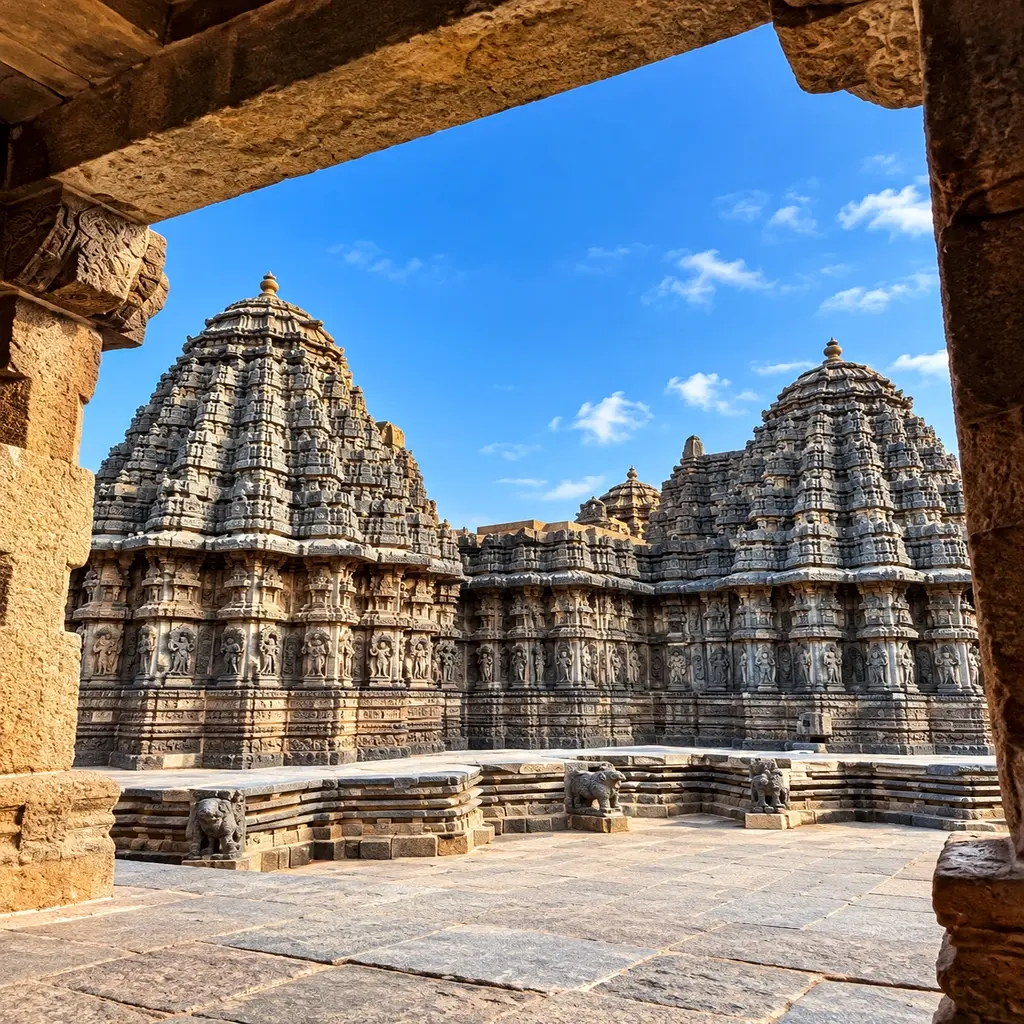
Chennakesava Temple
ಶ್ರೀ ಚೆನ್ನಕೇಶವ ದೇವಸ್ಥಾನ, ಸೋಮನಾಥಪುರ (Kannada)
Amaranarayana (Vishnu) · Mysore (Mysuru), Karnataka
Ancient★ 4.925,000 reviews1,500 visits
About the temple
One of the finest and best-preserved surviving examples of late Hoysala architecture, globally celebrated for its intricate soapstone friezes Aesthetic appreciation, historical enrichment, cultural wonder, and deep spiritual serenity
Temple information
- Darshan timings
- 09:00 – 17:30
- Established
- 1268
- Best time to visit
- Early morning hours on mid-week non-festival days to experience a peaceful darshan atmosphere
Deity
Amaranarayana (Vishnu)Janardhana SwamyLord Venu Gopala SwamyLord Surya
- Deity form
- Historically housed exquisite stone sculptural forms of Keshava, Janardhana, and Venugopala in its three sanctums (Trikootachala)
- Religious tradition
- Historic Hoysala / Pancharatra Agama
- Sanskrit name
- श्रीचेन्नकेशवमन्दिरम् (सोमनाथपुरम्)
- Also known as
- Somanathapura Keshava Temple, Hoysala Temple Somanathapura
Darshan hours
- Daily
- 09:00 AM – 05:30 PM
- Special days
- Standard ASI visiting hours apply (no active overnight rituals)
- Festival timings
- Follows regular ASI timings (No overnight events)
Aarti & rituals
- Ritual schedule
- No active daily poojas or rituals performed (monument protected by ASI)
- Special poojas
- Available
- Online pooja booking
- No
History & heritage
- Historical period
- Ancient
- Built by
- Hoysala King Narasimha III and his commander Somanatha
- Architect / builder
- Renowned Hoysala sthapati (architect) Ruvari Malithamma and other master sculptors
- Construction materials
- Soapstone (Chloritic schist), which allowed for exceptionally fine and intricate micro-carvings
- Historical events
- Constructed in 1268 CE as a triad shrine (Trikootachala); damaged during historical invasions but meticulously restored by the British and ASI
- Renovations
- Extensively conserved and maintained by the Archaeological Survey of India (ASI)
- Archaeological importance
- Centrally Protected Monument under the Archaeological Survey of India (ASI) & UNESCO World Heritage Site (Sacred Ensembles of the Hoysalas)
- Legends
- Built by Somanatha to honor the supreme forms of Lord Vishnu; celebrated for master craftsman signatures carved into the stone friezes
- Inscriptions
- Multiple Sanskrit and Old Kannada stone inscriptions detailing the construction date, builder, and land endowments
Architecture
- Architectural style
- Dravidian
- Architectural period
- Late Hoysala period architecture
- Structure
- Trikootachala (three-shrined) temple set within a walled courtyard (prakaram) featuring a cloistered corridor
- Floors
- 1
- Gopuram
- Entrance gateway features a porch leading into a pillared hall and the main star-shaped shrine complex
- Mandapa
- Closed and open pillared assembly halls featuring intricately carved star-shaped ceilings and lathe-turned pillars
- Sculptural features
- Exhaustive exterior wall friezes depicting scenes from the Ramayana, Mahabharata, Bhagavata Purana, elephants, horses, and floral scrolls
- Artistic elements
- Masterpiece bracket figures (Madanikas / Salabhanjikas) and finely detailed micro-carvings across all structural tiers
- Construction technique
- Soapstone block carving utilizing interlocking joinery and precision lathe-turning techniques
- Unique features
- One of the very few complete, intact Hoysala temples featuring signed sculptures by master architects like Malithamma; part of the UNESCO World Heritage listing
Festivals & events
Heritage festivals and cultural tourism events hosted by Karnataka Tourism
- Festival calendar
- Visited heavily during World Heritage Week (November) and winter vacation months
- Special celebration days
- World Heritage Day (April 18) and National Tourism Day
- Cultural events
- Classical heritage lectures, photography exhibitions, and art appreciation tours
- Annual events
- Cultural heritage programs and historical illumination events organized by Karnataka Tourism
- Peak crowd season
- October to March (Winter and festive holiday season)
Visitor information
- ✓ Parking
- ✓ Restrooms
- ✓ Drinking water
- ✓ Shoe keeping
- ✓ Prasadam counter
- Dress code
- Traditional
- Best time to visit
- Early morning hours on mid-week non-festival days to experience a peaceful darshan atmosphere
- Parking capacity
- 20+ Vehicles
- Parking fees
- Approx. 20-50 INR
- Donation counters
- Yes
- Donation methods
- Cash, UPI, Bank Transfer
- Prasadam
- Laddu; Pulihora