
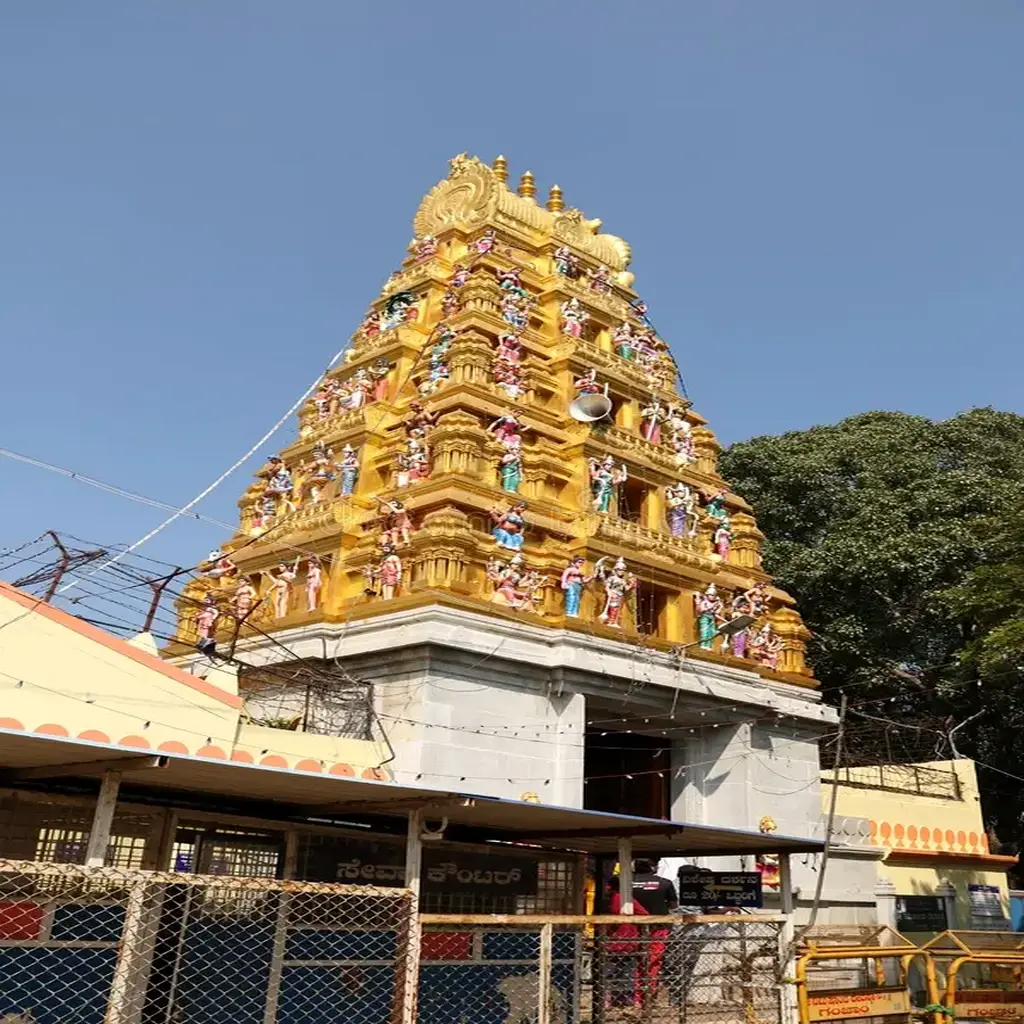
Sri Nimishamba Temple
ಶ್ರೀ ನಿಮಿಷಾಂಬ ದೇವಸ್ಥಾನ, ಗಂಜಾಂ, ಶ್ರೀರಂಗಪಟ್ಟಣ (Kannada)
Ammanavaru (Parvati) · Srirangapatna, Karnataka
Ancient
About the temple
One of the most revered Shakti temples in Karnataka, situated on the banks of the Kaveri River, famous for quick resolution of devotees' problems Removal of obstacles, relief from distress, family peace, prosperity, and maternal divine grace
Temple information
- Darshan timings
- 06:00 – 20:30
- Best time to visit
- Early morning hours on mid-week non-festival days to experience a peaceful darshan atmosphere
Deity
Ammanavaru (Parvati)Amareshwara (Shiva)Ganesha Family
- Deity form
- Divine mother seated on a lotus, believed to alleviate devotees' troubles within a "minute" (Nimisha)
- Religious tradition
- Agama Shastra / Shakta Tradition
- Sanskrit name
- श्रीनिमिषाम्बामन्दिरम् (गञ्जाम्)
- Also known as
- Ganjam Nimishamba Temple, Srirangapatna Nimishamba Temple
Darshan hours
- Daily
- 06:00 AM – 01:30 PM, 03:30 PM – 08:30 PM
- Break timings
- 01:30 PM – 03:30 PM
- Special days
- Open continuously during Navaratri, Ashada Fridays, and major Ammanavara festival days
- Festival timings
- Yes, temple doors remain open for longer hours during Navaratri and special Friday observances
Aarti & rituals
- Morning aarti
- 06:30 AM
- Midday aarti
- 12:30 PM
- Evening aarti
- 07:00 PM
- Night aarti
- 8:15 PM
- Special aarti days
- Fridays, Tuesdays, and Amavasya/Purnima days
- Ritual schedule
- Suprabhata Seva, Sahasranamarchana, Mangala Aarti, and Kumkumarchana
- Pooja timings
- Morning, afternoon, and evening ritual segments
- Abhishek timings
- Performed on Fridays and auspicious days with sacred substances
- Special poojas
- Available
- Online pooja booking
- Yes
History & heritage
- Historical period
- Ancient
- Built by
- Constructed during the reign of the Wadiyar kings of Mysore, with later patronage from regional rulers
- Architect / builder
- Traditional South Indian temple sthapatis
- Construction materials
- Stone masonry, carved pillars, and lime mortar finish
- Historical events
- Long revered by the citizens and rulers of Mysore as a powerful protective deity against hardship and adversity
- Renovations
- Maintained and upgraded over the decades by the Karnataka Muzrai Department and devotee trusts
- Archaeological importance
- Recognized regional heritage temple under state endowment administration
- Legends
- The name "Nimishamba" signifies that the Goddess dispels the grief and troubles of her true devotees within a minute ("Nimisha")
- Inscriptions
- Local temple records and historical grants detailing the endowment of the shrine
Architecture
- Architectural style
- Dravidian
- Architectural period
- Late medieval regional architecture
- Structure
- Main sanctum housing Goddess Nimishamba alongside a adjacent shrine for Lord Amrutheshwara (Shiva), pillared mantapam, and gateway arch
- Floors
- 1
- Gopuram
- Ornate entrance gateway tower featuring traditional sculptural motifs
- Mandapa
- Open and closed pillared assembly halls for devotee seating and rituals
- Sculptural features
- Statues of the Goddess, Lord Shiva, Ganesha, and traditional guardian deities
- Artistic elements
- Brass lamps, metal door panels, and traditional floral carvings
- Construction technique
- Classical stone assembly and column construction adapted to riverbank terrain
- Unique features
- Direct access to the holy Kaveri river ghats ("Nimishamba Ghat") where ritual baths and ancestral rites are performed
Festivals & events
Navaratri (Dussehra)Ashada FridaysVaramahalakshmi Festivaland Annual Car Festival
- Festival calendar
- Celebrations peak during September/October (Navaratri) and July/August (Ashada Masam)
- Special celebration days
- Fridays, Tuesdays, Purnima, and Amavasya
- Cultural events
- Classical devotional music recitals, Kuchipudi/Bharatanatyam dance offerings, and bhajan sessions during festivals
- Annual events
- Navaratri celebrations, grand Ashada Friday rituals, Varamahalakshmi Vrata, and annual chariot festival
- Peak crowd season
- Fridays, Tuesdays, Ashada Masam (July-August), Navaratri (September-October), and weekends
Visitor information
- ✓ Parking
- ✓ Restrooms
- ✓ Drinking water
- ✓ Shoe keeping
- ✓ Prasadam counter
- Dress code
- Traditional
- Best time to visit
- Early morning hours on mid-week non-festival days to experience a peaceful darshan atmosphere
- Parking capacity
- 20-30 vehicles
- Parking fees
- Approx. 20-50 INR
- Donation counters
- Yes
- Donation methods
- Cash, UPI, Bank Transfer
- Prasadam
- Laddu; Pulihora