
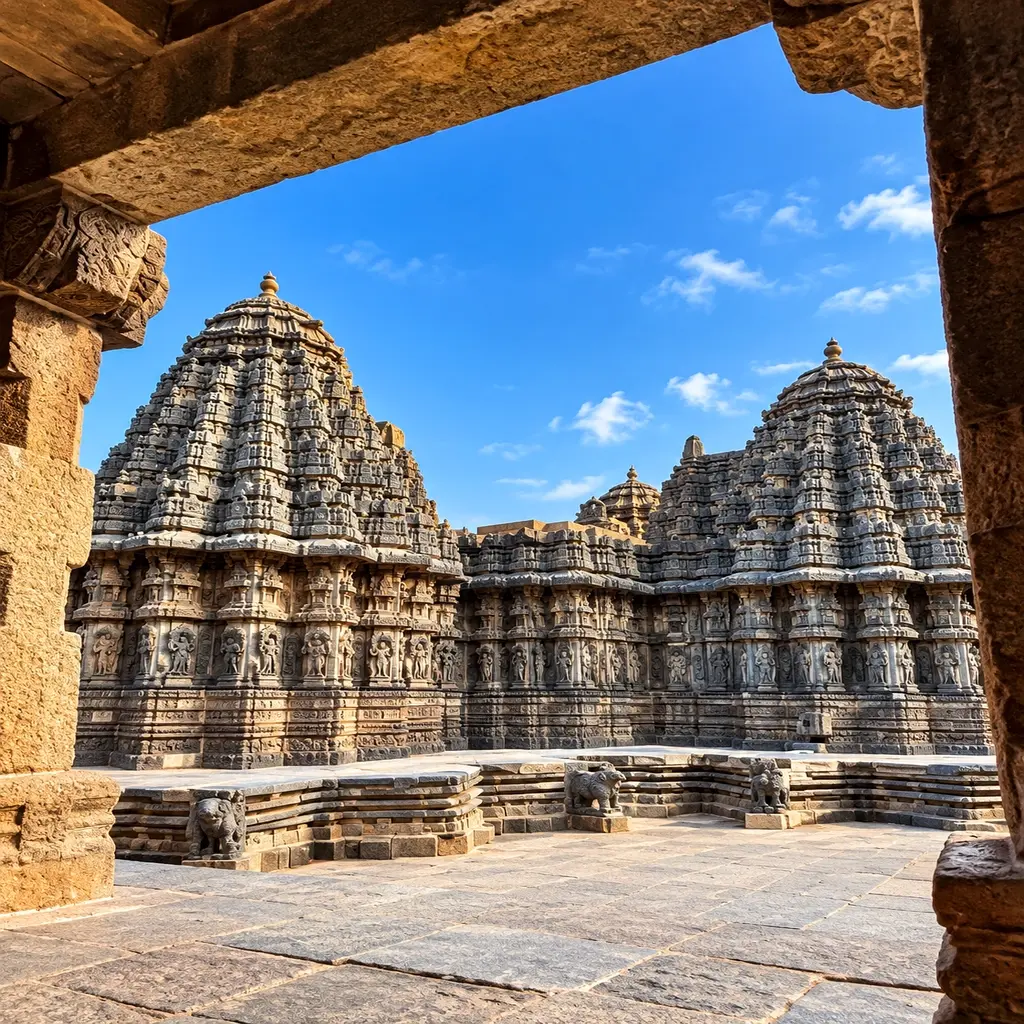
Chennakesava Temple - Somanathapura
ಶ್ರೀ ಚೆನ್ನಕೇಶವ ದೇವಸ್ಥಾನ, ಸೋಮನಾಥಪುರ
Lord Maha Vishnu · Mysore (Mysuru), Karnataka
Ancient★ 4.83,000 visits
About the temple
Masterpiece of Hoysala architecture and UNESCO tentative list monument Appreciation of divine art, aesthetic and cultural elevation
Temple information
- Darshan timings
- 09:00 – 17:30
- Established
- 1268
- Best time to visit
- Early morning hours on mid-week non-festival days to experience a peaceful darshan atmosphere
Deity
Lord Maha Vishnu · തിരുനെല്ലിപ്പെരുമാൾ (Thirunelli Perumal)Janardhana SwamyLord Venu Gopala Swamy
- Deity form
- Exquisitely carved stone sculpture of Lord Vishnu
- Religious tradition
- Sri Vaishnava
- Sanskrit name
- Sri Chennakeshavaswamy Temple
- Also known as
- Keshava Temple, Somanathapura Temple
Darshan hours
- Daily
- 09:00 AM - 05:30 PM
- Special days
- 09:00 AM - 06:00 PM
- Festival timings
- 09:00 AM to 06:30 PM
Aarti & rituals
- Special poojas
- Available
- Online pooja booking
- No
History & heritage
- Historical period
- Ancient
- Built by
- Hoysala Empire (King Narasimha III)
- Architect / builder
- Sculptor Ruha Muni (and other master sthapatis)
- Construction materials
- Soapstone (chloritic schist)
- Historical events
- Built by Somanatha, a Dandanayaka (commander) of the Hoysala king in 1268 CE
- Renovations
- Restored and conserved by the Archaeological Survey of India (ASI)
- Archaeological importance
- One of the finest and best-preserved trikuta Hoysala temples with complete inscription records
- Legends
- Commissioned as a grand dedication to Lord Keshava by Commander Somanatha
- Inscriptions
- Multiple soapstone pillar inscriptions detailing construction grants and sculptor names
Architecture
- Architectural style
- Dravidian
- Architectural period
- Late Hoysala architectural phase
- Structure
- Trikuta (three-shrined) temple set in a walled courtyard with a central pillared hall
- Floors
- 1
- Gopuram
- Mahadvara (entrance gateway) with historical architectural styling
- Mandapa
- Lathe-turned soapstone pillars with intricately carved bracket figures (Madanikas)
- Sculptural features
- Extensive friezes of elephants, horses, mythical makaras, and episodes from Hindu epics
- Artistic elements
- Star-shaped (stellate) plan platforms, intricate ceiling domes, and perforated stone windows
- Construction technique
- Interlocking dry masonry technique using high-grade soapstone blocks
- Unique features
- Exceptionally well-preserved wall reliefs and artist signature inscriptions
Festivals & events
Cultural heritage festivals organized by state tourism
- Festival calendar
- Special illumination and heritage events on World Heritage Day
- Special celebration days
- National Heritage Week events
- Cultural events
- Classical dance and music festivals held in the vicinity by tourism bodies
- Annual events
- World Heritage Day celebrations and historical exhibitions
- Peak crowd season
- October to March, and school vacation periods
Visitor information
- ✓ Parking
- ✓ Restrooms
- ✓ Drinking water
- ✓ Shoe keeping
- ✓ Prasadam counter
- Dress code
- Traditional
- Best time to visit
- Early morning hours on mid-week non-festival days to experience a peaceful darshan atmosphere
- Parking capacity
- 20-30 vehicles
- Parking fees
- Approx. 20-50 INR
- Donation counters
- Yes
- Donation methods
- Cash, UPI, Bank Transfer
- Prasadam
- Laddu; Pulihora