
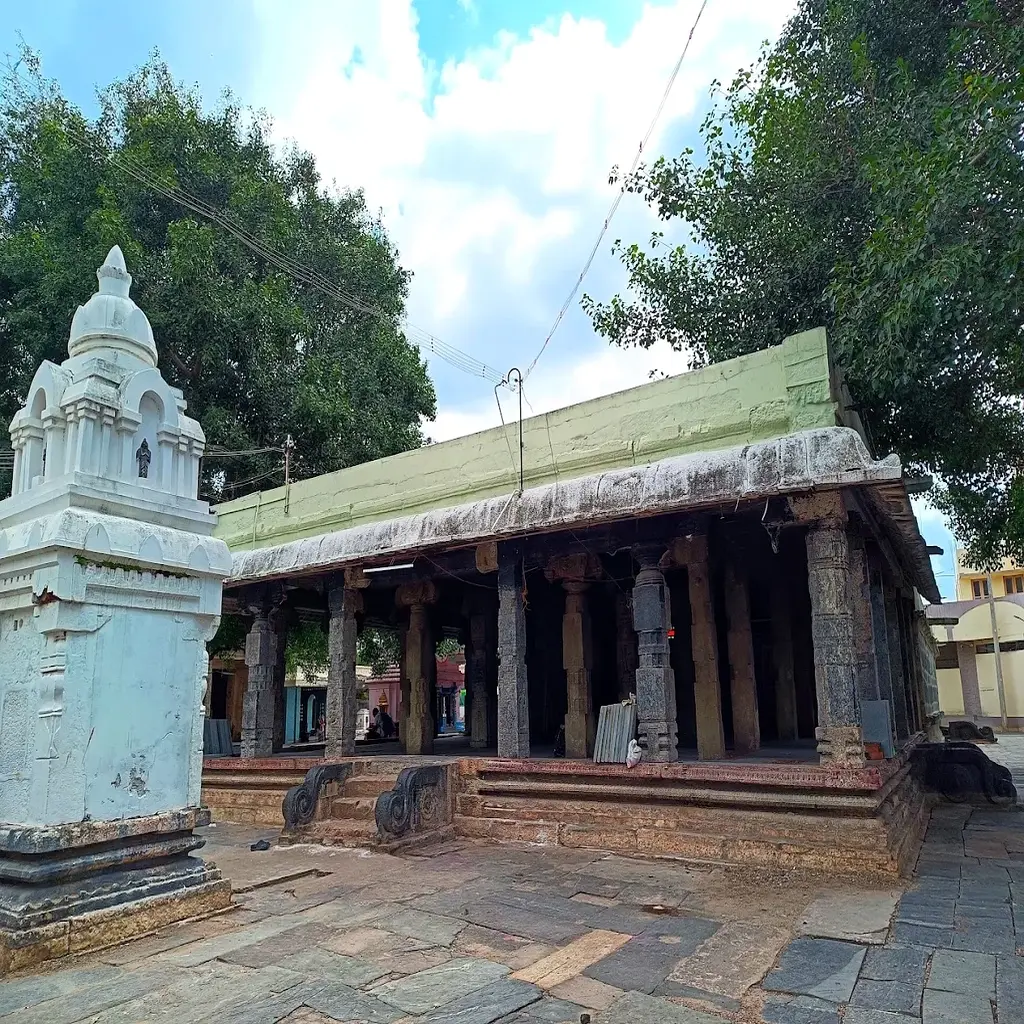
Shri Veeranarayana Swamy Temple
ಶ್ರೀ ವೀರನಾರಾಯಣ ಸ್ವಾಮಿ ದೇವಾಲಯ
Veera Narayana (Vishnu) · Gadag, Karnataka
Ancient
About the temple
One of the celebrated Pancha Narayana temples consecrated by Hoysala King Vishnuvardhana; the hallowed literary birthplace of the Kannada Mahabharata (Kumaravyasa Bharata / Gadugina Bharata), which poet Kumaravyasa composed while seated before the deity. Traditional belief: Victory in lawful battles and competitive pursuits, removal of ignorance, poetic/literary inspiration, and family protection.
Temple information
- Darshan timings
- 06:00 – 20:30
- Established
- 12
- Best time to visit
- Early morning hours on mid-week non-festival days to experience a peaceful darshan atmosphere
Deity
Veera Narayana (Vishnu)Ganesha Family
- Deity form
- Magnificent standing stone vigraha of Lord Narayana in majestic warrior attire (Veera), holding Shankha, Chakra, Gada, Padma, and wearing a royal dhoti with dagger
- Religious tradition
- Vedic Vaishnava Agamic Tradition & Birthplace of Kumaravyasa Bharata
- Sanskrit name
- श्री वीरनारायण स्वामि मन्दिरम्
- Also known as
- Gadag Veeranarayana Temple, Kumaravyasa Bharata Temple, Gadagina Narayana Gudi
Darshan hours
- Monday
- 06:00 AM - 12:30 PM, 05:00 PM - 08:30 PM
- Tuesday
- 06:00 AM - 12:30 PM, 05:00 PM - 08:30 PM
- Wednesday
- 06:00 AM - 12:30 PM, 05:00 PM - 08:30 PM
- Thursday
- 06:00 AM - 12:30 PM, 05:00 PM - 08:30 PM
- Friday
- 06:00 AM - 01:00 PM, 04:30 PM - 09:00 PM
- Saturday
- 06:00 AM - 01:30 PM, 04:30 PM - 09:30 PM
- Sunday
- 06:00 AM - 01:00 PM, 04:30 PM - 09:00 PM
- Break timings
- 12:30 PM - 05:00 PM
- Special days
- Vaikunta Ekadashi, Krishna Janmashtami, Kumaravyasa Jayanti: 04:30 AM - 10:30 PM
- Festival timings
- Open continuously till 10:30 PM on Vaikunta Ekadashi and festival days
Aarti & rituals
- Morning aarti
- 07:00 AM
- Midday aarti
- 12:00 PM
- Evening aarti
- 06:30 PM
- Night aarti
- 8:15 PM
- Special aarti days
- Saturdays, Ekadashi, Krishna Janmashtami
- Ritual schedule
- Suprabhatam, Thiruvaradhana, Thulasi Archana, Kumaravyasa Stambha Namaskara, Sahasranamarchana, Mangala Harathi
- Pooja timings
- 06:30 AM - 12:00 PM, 05:00 PM - 08:00 PM
- Abhishek timings
- 07:00 AM - 08:30 AM (Special Saturday Abhishekam)
- Special poojas
- Available
- Online pooja booking
- Yes
History & heritage
- Historical period
- Ancient
- Built by
- Hoysalas (King Vishnuvardhana); later enhanced by Chalukya, Vijayanagara, and Wodeyar rulers
- Architect / builder
- Master traditional sthapathis representing Chalukya, Hoysala, and Vijayanagara styles
- Construction materials
- Solid dressed dark granite, chlorite schist soapstone, and brick-lime gopurams
- Historical events
- In the 15th century, poet Narayanaappa (Kumaravyasa) sat before the pillar of this temple, dipped his quill in ink, and wrote the immortal epic "Karnata Bharata Katha Manjari" in Bhamini Shatpadi metre
- Renovations
- Protected and renovated under Karnataka Religious Endowments (Muzrai) Department and Temple Management Committee
- Archaeological importance
- Crucial literary and religious monument forming the foundation of classical Kannada epic literature
- Legends
- Kumaravyasa prayed to Lord Veeranarayana; the Lord blessed him that as long as his clothes remained wet from bath, divine poetry would flow uninterrupted from his quill
- Inscriptions
- Stone inscriptions recording endowments from Hoysala, Vijayanagara (Emperor Krishnadevaraya), and Chalukya kings
Architecture
- Architectural style
- Dravidian
- Architectural period
- 1117 CE foundations with 14th - 16th Century CE expansions
- Structure
- Spacious walled temple complex with towering Vijayanagara Rajagopuram, Garuda Stambha, broad courtyards, and the sacred Kumaravyasa pillar
- Floors
- 1
- Gopuram
- Soaring multi-tiered brick-and-mortar Vijayanagara entrance Rajagopuram decorated with stucco Vaishnava sculptures
- Mandapa
- Expansive pillared sabha mandapa supported by polished granite and soapstone columns featuring relief carvings
- Sculptural features
- Expansive pillared sabha mandapa supported by polished granite and soapstone columns featuring relief carvings
- Artistic elements
- Majestic stone deity of Lord Veeranarayana in standing warrior pose; the famous "Kumaravyasa Stambha" (pillar); sculpted Garuda and Hanuman
- Construction technique
- Interlocking monolithic granite and soapstone masonry of monumental proportions
- Unique features
- The hallowed "Kumaravyasa Stambha"—the sacred pillar in the mandapa where the greatest epic of the Kannada language was penned
Festivals & events
- Festival calendar
- Margashirsha Shukla Ekadashi (Vaikunta Ekadashi), Chaitra Rathotsavam
- Special celebration days
- Every Saturday, Shukla Ekadashi, Gokulashtami
- Cultural events
- State-level Gamaka recitals, classical Carnatic and Hindustani music concerts during festival days
- Annual events
- Veeranarayana Swamy Maha Rathotsavam through the historic boulevards of Gadag
- Peak crowd season
- October to February and during Vaikunta Ekadashi
Visitor information
- ✓ Parking
- ✓ Restrooms
- ✓ Drinking water
- ✓ Shoe keeping
- ✓ Prasadam counter
- Dress code
- Traditional
- Best time to visit
- Early morning hours on mid-week non-festival days to experience a peaceful darshan atmosphere
- Parking capacity
- 50+ vehicles
- Parking fees
- Approx. 20-50 INR
- Donation counters
- Yes
- Donation methods
- Cash, UPI, Bank Transfer
- Prasadam
- Vibhuti/Kumkum.