
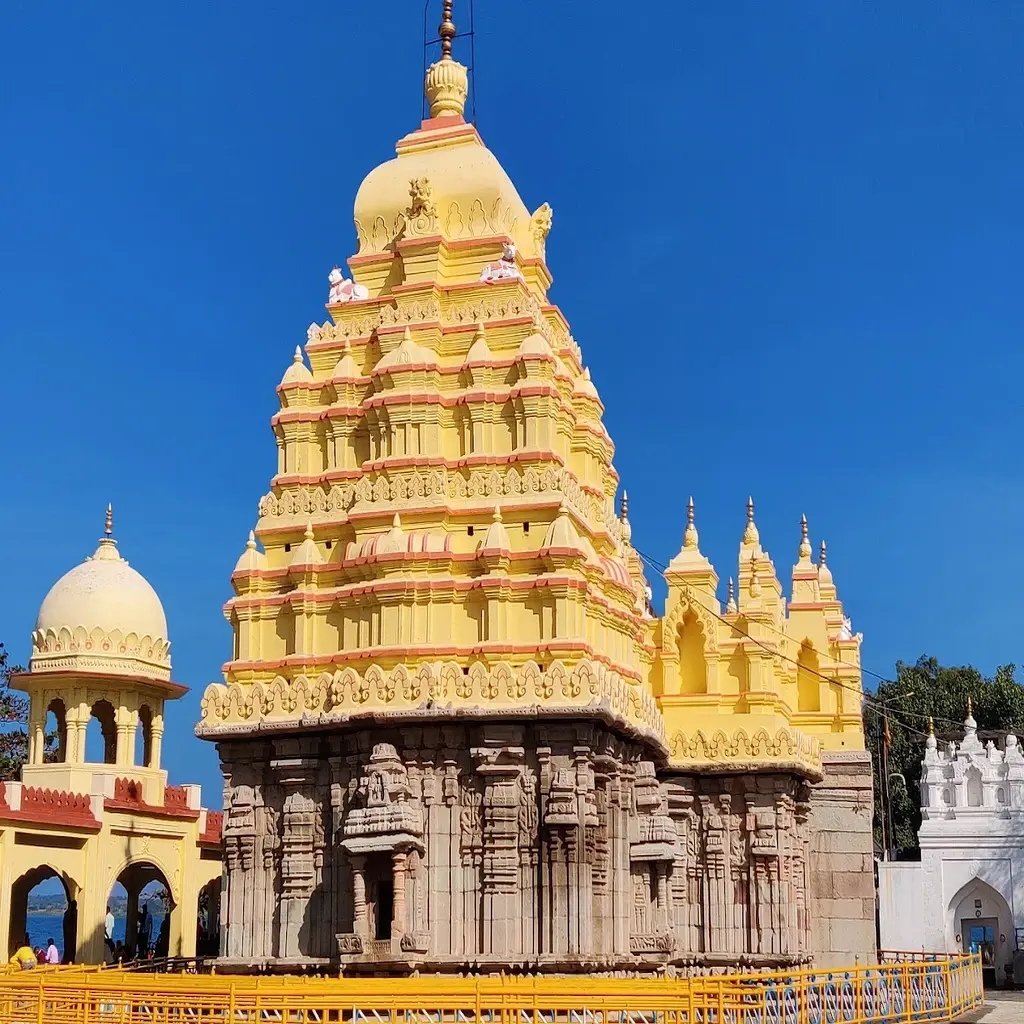
Shri Sangameshwara Temple
ಶ್ರೀ ಸಂಗಮೇಶ್ವರ ದೇವಾಲಯ
Lord Shiva · Bagalkote, Karnataka
Ancient
About the temple
The holiest supreme pilgrimage of the Lingayat faith worldwide; holy confluence (Sangama) of the Krishna and Malaprabha rivers; where 12th-century social revolutionary Jagadjyothi Basavanna meditated under Guru Jataveda Muni, composed immortal Vachanas, and attained spiritual merger (Aikya) in 1167 CE. Traditional belief: Absolute spiritual liberation, attainment of divine consciousness, elimination of caste/class prejudices, and social harmony.
Temple information
- Darshan timings
- 05:00 – 21:00
- Established
- 12
- Best time to visit
- Early morning hours on mid-week non-festival days to experience a peaceful darshan atmosphere
Deity
Lord Shiva · ଶିବ (Shiva)Ganesha Family
- Deity form
- Ancient Swayambhu Shiva Lingam inside inner sanctum and the sacred Aikya Linga enshrined in the circular submarine Aikya Mantapa at the river confluence
- Religious tradition
- Sharana Philosophy & Agamic Shaivism
- Sanskrit name
- श्री सङ्गमेश्वर मन्दिरम्
- Also known as
- Kudala Sangameshwara Gudi, Basavanna Aikya Sthala, Krishna Malaprabha Sangama Temple
Darshan hours
- Monday
- 05:00 AM - 09:30 PM
- Tuesday
- 05:00 AM - 09:00 PM
- Wednesday
- 05:00 AM - 09:00 PM
- Thursday
- 05:00 AM - 10:00 PM
- Friday
- 05:00 AM - 10:00 PM
- Saturday
- 05:00 AM - 10:00 PM
- Sunday
- 05:00 AM - 10:00 PM
- Break timings
- No break; continuous darshan with scheduled alankara intervals
- Special days
- Basava Jayanti, Sharana Mela: 04:00 AM - 11:30 PM (Continuous Darshan)
- Festival timings
- Open 24 hours continuously during Sharana Mela and Basava Jayanti
Aarti & rituals
- Morning aarti
- 06:00 AM
- Midday aarti
- 12:30 PM
- Evening aarti
- 07:00 PM
- Night aarti
- 08:45 PM
- Special aarti days
- Basava Jayanti, Mondays, Purnima, January Sharana Mela
- Ritual schedule
- Nitya Ishtalinga Puja, Rudrabhisheka, Vachana Parayana, Sangama Snana, Aikya Mantapa Deeparadhana, Dasoha
- Pooja timings
- 05:30 AM - 01:00 PM, 04:30 PM - 08:30 PM
- Abhishek timings
- 06:00 AM - 08:00 AM, 11:00 AM - 12:00 PM
- Special poojas
- Available
- Online pooja booking
- No
History & heritage
- Historical period
- Ancient
- Built by
- Western Chalukyas of Kalyani; preserved and modernised by the Kudalasangama Development Board
- Architect / builder
- Traditional Chalukyan stone masons and modern marine engineering architects
- Construction materials
- Solid dressed black basalt stone, granite pillars, and underwater cylindrical glass-and-concrete protection ring
- Historical events
- Jagadjyothi Basavanna spent his youth here acquiring scriptural mastery; returned here after the Kalyana revolution and merged into the infinite (Linga-Aikya) in 1167 CE
- Renovations
- When Almatti dam was constructed, the sacred Aikya Mantapa was protected by an astonishing engineering marvel: a massive cylindrical concrete dry-well wall preserving the sanctum below the water level
- Archaeological importance
- The supreme living monument and pilgrimage ground of the Lingayat faith
- Legends
- The river Krishna and Malaprabha embrace each other here as divine sisters before flowing to the eastern sea; Basavanna’s Vachana: "Koodala Sangama Deva" was his immortal signature
- Inscriptions
- Stone epigraphs of Western Chalukya King Jagadhekamalla I dated 1122 CE recording land grants to the Sangameshwara deity
Architecture
- Architectural style
- Dravidian
- Architectural period
- 12th Century CE with 21st-century conservation engineering
- Structure
- Heritage temple on the riverbank connected to the circular submarine Aikya Mantapa standing in the middle of the river confluence
- Floors
- 2
- Gopuram
- Stepped stone Vimana tower above the main temple sanctum with golden kalasha
- Mandapa
- Pillared Navaranga hall supported by lathe-turned soapstone pillars; circular open-air gallery around the Aikya Mantapa
- Sculptural features
- Pillared Navaranga hall supported by lathe-turned soapstone pillars; circular open-air gallery around the Aikya Mantapa
- Artistic elements
- Ancient Sangameshwara Lingam; sacred Aikya Lingam marking Basavanna’s samadhi; carved stone Nandi; life-size bronze statues of Sharanas
- Construction technique
- Vachanas of Basavanna etched in polished black granite panels across the entire river promenade
- Unique features
- Interlocking basalt block masonry combined with a modern 20-meter tall cylindrical reinforced concrete water-barrier wall
Festivals & events
- Festival calendar
- Chaitra Shukla Tritiya (Basava Jayanti), Mid-January (Sharana Mela)
- Special celebration days
- Every Monday, Purnima, Amavasya
- Cultural events
- National seminars on human equality, Vachana singing festivals, folk art performances during Sharana Mela
- Annual events
- Grand Sharana Mela drawing over 500,000 pilgrims and thinkers from across the globe
- Peak crowd season
- October to February and during Basava Jayanti
Visitor information
- ✓ Parking
- ✓ Restrooms
- ✓ Drinking water
- ✓ Shoe keeping
- ✓ Prasadam counter
- Dress code
- Traditional
- Best time to visit
- Early morning hours on mid-week non-festival days to experience a peaceful darshan atmosphere
- Parking capacity
- 20+ Vehicles
- Parking fees
- Approx. 20-50 INR
- Donation counters
- Yes
- Donation methods
- Cash, UPI, Bank Transfer
- Prasadam
- Vibhuti/Kumkum.