
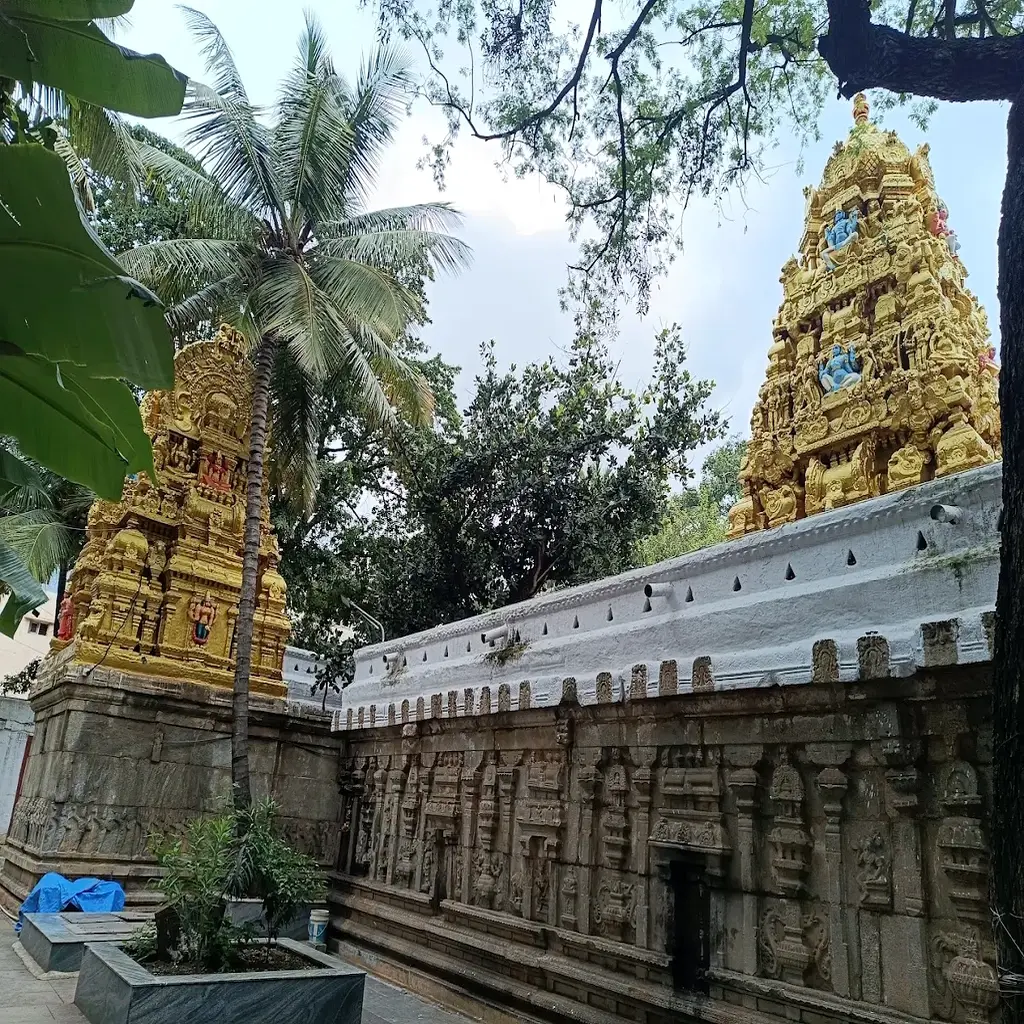
Halasuru Someshwara Temple
ಶ್ರೀ ಹಲಸೂರು ಸೋಮೇಶ್ವರ ದೇವಾಲಯ
Lord Shiva · Bengaluru, Karnataka
Ancient
About the temple
The oldest, historically most revered Shiva temple in central Bengaluru; grandly enlarged by the city’s founder Hiriya Kempe Gowda in the 16th century, featuring remarkable Vijayanagara-Chola architecture and monolithic pillars. Traditional belief: Dispels fear and anxiety, grants family well-being, bestows health, and fulfills noble sankalpas.
Temple information
- Darshan timings
- 06:00 – 20:30
- Established
- 12
- Best time to visit
- Early morning hours on mid-week non-festival days to experience a peaceful darshan atmosphere
Deity
Lord Shiva · ଶିବ (Shiva)Ganesha Family
- Deity form
- Ancient Swayambhu Shiva Lingam adorned with silver/gold kavacha in inner sanctum
- Religious tradition
- Agamic Shaiva Tradition
- Sanskrit name
- श्री सोमेश्वर मन्दिरम्
- Also known as
- Halasuru Someshwara Temple, Ulsoor Someshwara Gudi, Kempe Gowda Someshwara Temple
Darshan hours
- Daily
- 06:00 AM - 12:30 PM, 05:00 PM - 08:30 PM
- Break timings
- 12:30 PM - 05:00 PM (on regular weekdays)
- Special days
- Maha Shivaratri: 04:00 AM - 11:30 PM (Continuous Darshan)
- Festival timings
- Open continuously throughout the night on Maha Shivaratri
Aarti & rituals
- Morning aarti
- 07:00 AM
- Midday aarti
- 12:00 PM
- Evening aarti
- 07:00 PM
- Night aarti
- 8:15 PM
- Special aarti days
- Mondays, Pradosham, Maha Shivaratri
- Ritual schedule
- Suprabhatam, Rudrabhishekam, Bilvarchana, Alankara, Sandhya Deeparadhana, Ekantha Seva
- Pooja timings
- 06:30 AM - 12:00 PM, 05:00 PM - 08:00 PM
- Abhishek timings
- 06:30 AM - 08:30 AM
- Special poojas
- Available
- Online pooja booking
- No
History & heritage
- Historical period
- Ancient
- Built by
- Cholas; substantially expanded and reconstructed by Kempe Gowda I (founder of Bengaluru)
- Architect / builder
- Master traditional Vijayanagara stone guilds
- Construction materials
- Dressed granite stone blocks, carved pillars, brick-and-lime Rajagopuram
- Historical events
- Renovated and maintained under Karnataka State Muzrai (Endowments) Department and local trustee board
- Renovations
- Renovated and maintained under Karnataka State Muzrai (Endowments) Department and local trustee board
- Archaeological importance
- Heritage monument representing the foundational history of Bengaluru city
- Legends
- Traditional belief: Kempe Gowda fell asleep under a tree while hunting and had a divine vision of Lord Someshwara commanding him to build a temple
- Inscriptions
- Tamil and Kannada inscriptions recording Chola and Vijayanagara endowments on the temple base
Architecture
- Architectural style
- Dravidian
- Architectural period
- 13th - 16th Century CE
- Structure
- Walled urban temple complex with towering Rajagopuram, broad open pradakshina courtyard, mukhamandapa, and Kalyana Mandapa
- Floors
- 1
- Gopuram
- Impressive multi-tiered entrance Rajagopuram decorated with stucco sculptures of Shaivite devatas
- Mandapa
- Open Mukhamandapa supported by intricately carved monolithic granite pillars depicting warriors on horseback and gods
- Sculptural features
- Ancient Shiva Lingam; carved stone Nandi; dynamic wall reliefs depicting Girija Kalyana (wedding of Shiva and Parvati)
- Artistic elements
- Intricate ceiling medallions, makara toranas, and embossed brass kalyana mantapa
- Construction technique
- Interlocking monolithic granite masonry designed for durability
- Unique features
- The legendary connection with Bengaluru’s founder Kempe Gowda and the grand Brahmotsavam car festival in the heart of the city
Festivals & events
- Festival calendar
- Magha Bahula Chaturdashi (Shivaratri), Chaitra Brahmotsavam
- Special celebration days
- Every Monday, Pradosham, Masa Shivaratri
- Cultural events
- Classical Carnatic concerts, Nadaswaram, and devotional bhajans during Shivaratri and Brahmotsavam
- Annual events
- Halasuru Someshwara Pallakki Utsava and Maha Rathotsava through Ulsoor streets
- Peak crowd season
- November to February and during Maha Shivaratri
Visitor information
- ✓ Parking
- ✓ Restrooms
- ✓ Drinking water
- ✓ Shoe keeping
- ✓ Prasadam counter
- Dress code
- Traditional
- Best time to visit
- Early morning hours on mid-week non-festival days to experience a peaceful darshan atmosphere
- Parking capacity
- 20-30 vehicles
- Parking fees
- Approx. 20-50 INR
- Donation counters
- Yes
- Donation methods
- Cash, UPI, Bank Transfer
- Prasadam
- Vibhuti/Kumkum.