
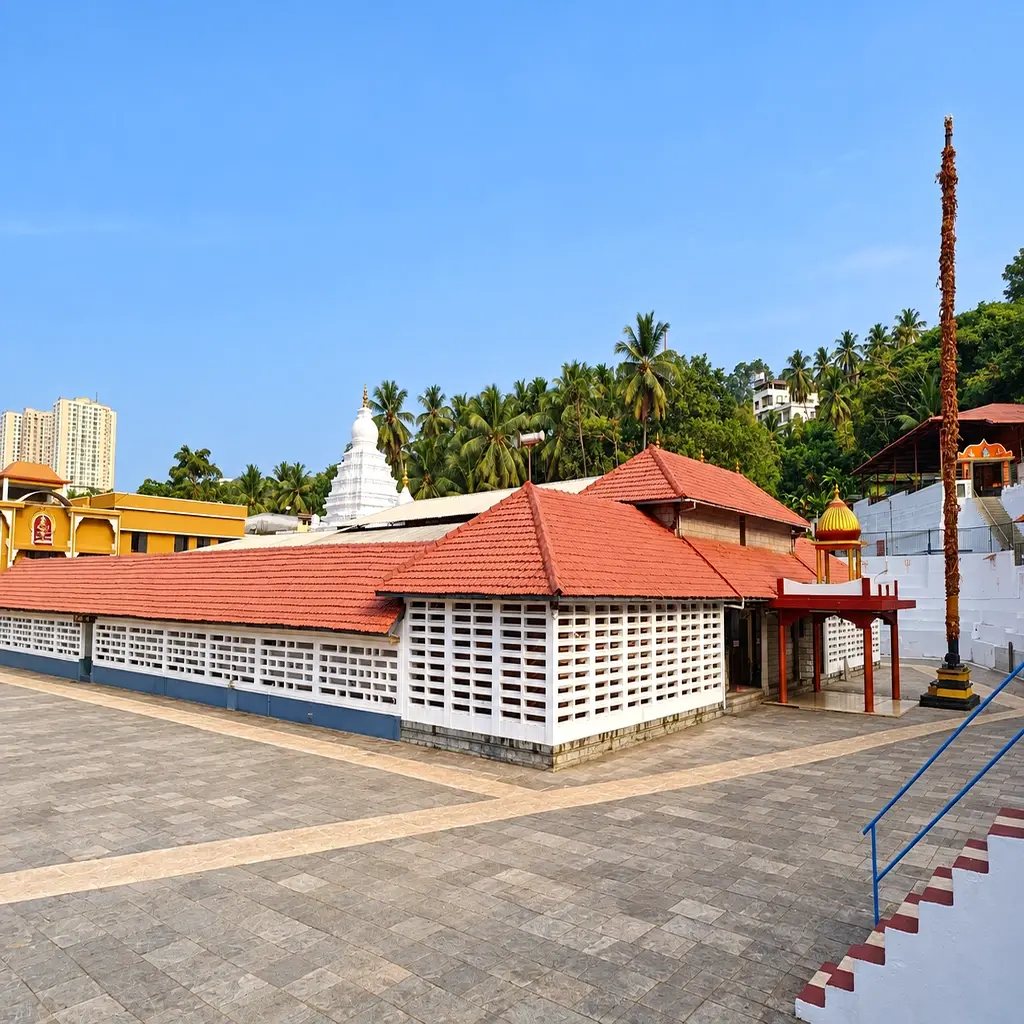
Kadri Manjunath Temple
ಶ್ರೀ ಕದ್ರಿ ಮಂಜುನಾಥ ಸ್ವಾಮಿ ದೇವಾಲಯ
Lord Shiva · Mangaluru, Karnataka
Ancient
About the temple
One of the most ancient and celebrated religious shrines of Tulunadu; famed for its 1,000-year-old high-relief bronze icons (acclaimed as the finest bronze sculptures in India), natural perennial hill springs (Gomukha Theertha), and deep Natha cave hermitage (Jogimatha). Traditional belief: Relief from severe skin ailments through holy bath in natural springs, peace of mind, fearlessness, and spiritual illumination.
Temple information
- Darshan timings
- 06:00 – 20:30
- Established
- 10
- Best time to visit
- Early morning hours on mid-week non-festival days to experience a peaceful darshan atmosphere
Deity
Lord Shiva · ଶିବ (Shiva)Ganesha FamilyDurga
- Deity form
- Ancient Swayambhu Shiva Lingam accompanied by the world-renowned 10th-century seated bronze icon of Bodhisattva Lokeshwara (Trilokya Manjunatha)
- Religious tradition
- Natha Pantha Siddha Tradition & Coastal Agamic Shaivism
- Sanskrit name
- कद्रि मञ्जुनाथ मन्दिर
- Also known as
- Kadri Manjunatha Gudi, Kadri Lokeshwara Temple, Natha Pantha Kadri Math
Darshan hours
- Daily
- 06:00 AM - 01:00 PM, 04:00 PM - 08:30 PM
- Break timings
- 01:00 PM - 04:00 PM
- Special days
- Maha Shivaratri, Annual Jathara (9 days in Makara month): 05:00 AM - 11:00 PM
- Festival timings
- Open continuously till 11:00 PM during annual Jathara days
Aarti & rituals
- Morning aarti
- 07:30 AM
- Midday aarti
- 12:30 PM
- Evening aarti
- 07:00 PM
- Night aarti
- 8:15 PM
- Special aarti days
- Mondays, Pradosham, Maha Shivaratri, Makara Sankranti
- Ritual schedule
- Nitya Ksheerabhishekam, Rudrabhisheka, Sahasranamarchana, Deeparadhana, Palkhi Utsava, Ratha Seva
- Pooja timings
- 06:30 AM - 12:30 PM, 04:30 PM - 08:00 PM
- Abhishek timings
- 06:30 AM - 08:30 AM
- Special poojas
- Available
- Online pooja booking
- No
History & heritage
- Historical period
- Ancient
- Built by
- Alupas of Mangaluru (patronized by King Kundavarma in 968 CE; later expanded by Vijayanagara)
- Architect / builder
- Master metallurgists and stone sculptors of the ancient Tulunadu guild
- Construction materials
- Laterite stone masonry, dark granite sanctum, exquisite bronze castings, and brass gopuram
- Historical events
- The famous epigraph of Alupa King Kundavarma on the pedestal of the Lokeshwara bronze records its installation on Makara Sankranti day in 968 CE
- Renovations
- Protected and renovated under Karnataka Religious Endowments (Muzrai) Department and Kadri Temple Trust
- Archaeological importance
- Houses the oldest, highest quality classical bronze sculptures in India (ASI recognized heritage treasures)
- Legends
- Traditional belief: Lord Parashurama performed penance on Kadri hill to atone for sins of warfare; Lord Shiva appeared as Manjunatha and blessed him with eternal peace
- Inscriptions
- Ancient Kannada and Grantha inscriptions on the bronze pedestal of Lokeshwara dated 968 CE
Architecture
- Architectural style
- Dravidian
- Architectural period
- 10th - 14th Century CE
- Structure
- Hill-slope structural temple complex featuring nine natural spring ponds (Kashi Bagilu, Gomukha), multi-tiered courtyards, and deep-cut Natha caves
- Floors
- 1
- Gopuram
- Stepped copper-clad coastal shikhara with golden kalasha
- Mandapa
- Pillared sabha mandapa with heavy timber rafters and sloping tile roofs suited for coastal monsoons
- Sculptural features
- World-famous 10th-century seated bronze icon of Lokeshwara (Buddha-Shiva composite), bronze Vyaghrarudha Chamundi, and stone Shiva Lingam
- Artistic elements
- Masterpiece metal sculpting with delicate ornaments, celestial crown, and meditative facial expression of Lokeshwara
- Construction technique
- Laterite block masonry lined with granite and fed by subterranean natural mountain spring channels
- Unique features
- The perennial hill spring emerging from natural rock clefts through a stone Gomukha spout, filling seven cascading stone bathing ponds
Festivals & events
- Festival calendar
- Makara Sankranti (Annual Jathara), Magha Bahula Chaturdashi
- Special celebration days
- Every Monday, Pradosham, Purnima
- Cultural events
- All-night Yakshagana performances, classical Carnatic concerts, and folk dance during the annual Jathara
- Annual events
- Kadri Manjunatha Maha Rathotsavam drawing over 200,000 devotees across coastal Karnataka and Kerala
- Peak crowd season
- October to February and during the January Jathara
Visitor information
- ✓ Parking
- ✓ Restrooms
- ✓ Drinking water
- ✓ Shoe keeping
- ✓ Prasadam counter
- Dress code
- Traditional
- Best time to visit
- Early morning hours on mid-week non-festival days to experience a peaceful darshan atmosphere
- Parking capacity
- 50+ vehicles
- Parking fees
- Approx. 20-50 INR
- Donation counters
- Yes
- Donation methods
- Cash, UPI, Bank Transfer
- Prasadam
- Vibhuti/Kumkum.