
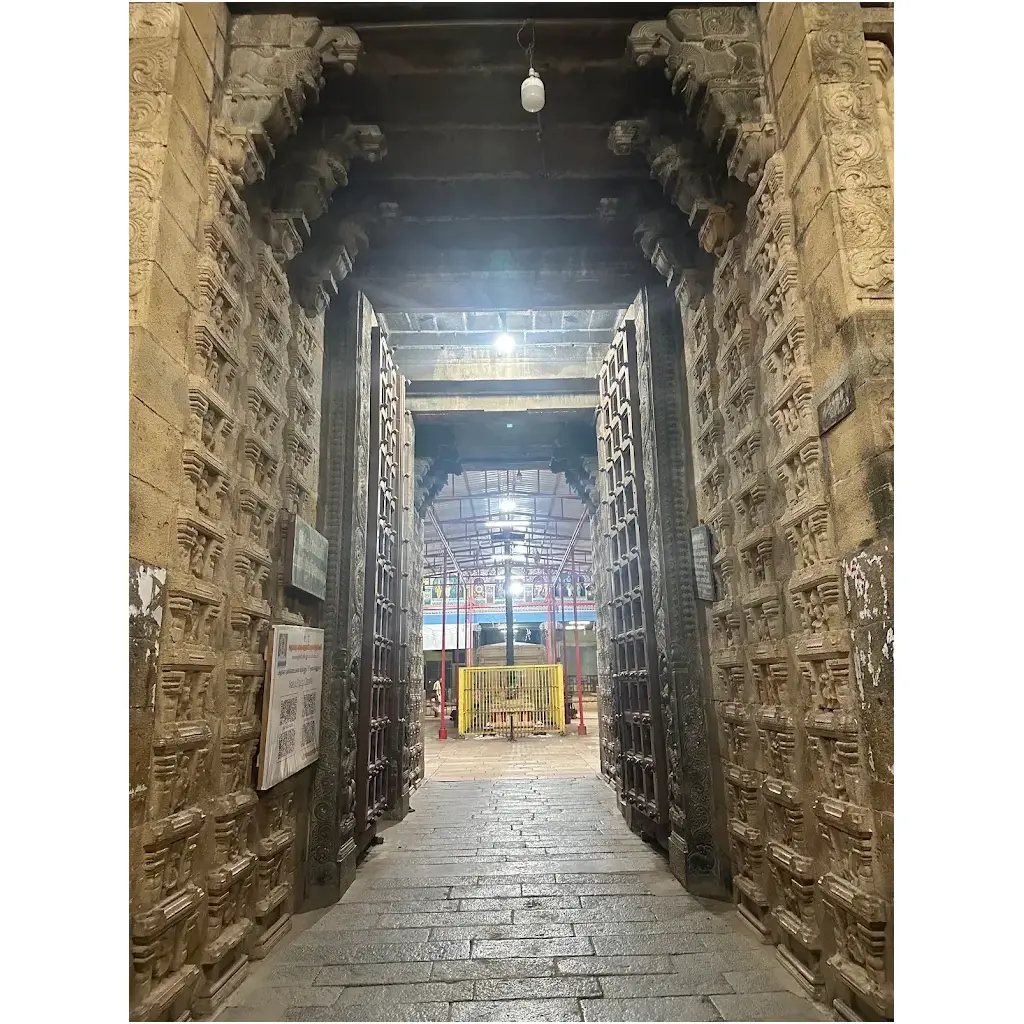
Arulmigu Kaliyuga Varadaraja Perumal Temple
அருள்மிகு கலியுக வரதராஜப் பெருமாள் திருக்கோயில்
Lord Shiva · Kallankurichi, Tamil Nadu
Ancient
About the temple
The most celebrated Vaishnavite pilgrimage center in Ariyalur district; famous for its unique pillar deity (Kambathadi Perumal) without human idol form; home to the largest temple chariot (Maha Ratham) in the central district region, drawing hundreds of thousands during the Panguni car festival. Traditional belief: The supreme savior for Kali Yuga (Kaliyuga Varada); cures eye disorders, resolves severe court litigations, protects livestock, and grants children.
Temple information
- Darshan timings
- 06:00 – 20:30
- Established
- 18
- Best time to visit
- Early morning hours on mid-week non-festival days to experience a peaceful darshan atmosphere
Deity
Lord Shiva · ଶିବ (Shiva)Ganesha Family
- Deity form
- Unique 12-foot tall sacred monolithic stone/wooden pillar (Kambam) adorned with divine eyes, conch, discus, and golden armor representing Lord Varadaraja
- Religious tradition
- Vedic Vaishnava Agamic Tradition & Sacred Wooden Pillar Worship
- Sanskrit name
- श्री कलियुगवरदराजपेरुमाल् मन्दिरम्
- Also known as
- Kallankurichi Perumal Temple, Ariyalur Varadaraja Temple, Kaliyuga Varadar Temple
Darshan hours
- Daily
- 06:00 AM - 01:00 PM, 04:00 PM - 09:00 PM
- Break timings
- 12:30 PM - 04:30 PM (Monday to Thursday)
- Special days
- Panguni Brahmotsavam, Vaikunta Ekadashi: 04:00 AM - 11:30 PM
- Festival timings
- Open continuously till 11:30 PM during Panguni Chariot festival and Purattasi Saturdays
Aarti & rituals
- Morning aarti
- 07:30 AM
- Midday aarti
- 12:00 PM
- Evening aarti
- 06:30 PM
- Night aarti
- 8:15 PM
- Special aarti days
- Every Saturday, Ekadashi, Purattasi Saturdays, Panguni Chariot Day
- Ritual schedule
- Nitya Thiruvaradhana, Thulasi Archana, Sahasranamarchana, Golden Kavacha Alankara to Pillar Deity, Maha Mangalarati
- Pooja timings
- 06:30 AM - 12:00 PM, 04:30 PM - 08:15 PM
- Abhishek timings
- Special Thirumanjanam performed on Saturdays and festival days at 07:00 AM
- Special poojas
- Available
- Online pooja booking
- Yes
History & heritage
- Historical period
- Ancient
- Built by
- Local chieftains and the Reddiar/Vanniyar village community of Kallankurichi
- Architect / builder
- Traditional Tamil Dravidian sthapathis and chariot craftsmen
- Construction materials
- Granite stone base, brick-lime superstructure, carved wooden chariot
- Historical events
- A shepherd discovered a sacred wooden post glowing with divine light; when he attempted to uproot it, blood sprouted, confirming the presence of Lord Varadaraja
- Renovations
- Extensively modernized with large multi-pillar wedding halls, Rajagopuram, and new silver kavacha under Tamil Nadu HR&CE Department
- Archaeological importance
- Crucial anthropological shrine blending classical Sri Vaishnavism with indigenous sacred post (Stambha) worship
- Legends
- Lord Vishnu promised to reside in this sacred pillar during Kali Yuga to grant boons (Varada) without demanding complex Vedic rituals
- Inscriptions
- Copper plates and temple donor records in modern Tamil script detailing chariot donations and land endowments
Architecture
- Architectural style
- Dravidian
- Architectural period
- 18th Century foundations with grand 20th-century expansions
- Structure
- Large walled rural-urban temple complex with soaring Rajagopuram, broad circumambulatory prakaras, and grand chariot shelter
- Floors
- 1
- Gopuram
- Magnificent seven-tiered 85-foot entrance Rajagopuram adorned with colorful stucco figures of Dashavatara and Garuda
- Mandapa
- Spacious Mukhamandapa supported by polished granite pillars depicting Vaishnava themes and Alwars
- Sculptural features
- The venerated 12-foot sacred pillar deity (Kambam) adorned with silver tilaka, eyes, and weapons; colossal stone Hanuman; sculpted Garuda
- Artistic elements
- Elaborately carved wooden panels on the 75-foot tall temple chariot (Maha Ratham) and embossed silver sanctum cladding
- Construction technique
- Interlocking monolithic granite plinth with traditional mortar superstructure
- Unique features
- Worship of the primary deity in the form of an aniconic sacred pillar (Kambam) rather than a carved human murti
Festivals & events
- Festival calendar
- Panguni Uthiram (Brahmotsavam), Margashirsha Shukla Ekadashi
- Special celebration days
- Every Saturday (Purattasi Saturdays attract immense crowds), Ekadashi
- Cultural events
- Nadaswaram concerts, folk Therukoothu performances, and Harikatha during the annual Brahmotsavam
- Annual events
- The colossal Kallankurichi Car Festival (Therottam) featuring the largest wooden chariot in the region
- Peak crowd season
- September to October (Purattasi month) and March to April (Panguni Chariot festival)
Visitor information
- ✓ Parking
- ✓ Restrooms
- ✓ Drinking water
- ✓ Shoe keeping
- ✓ Prasadam counter
- Dress code
- Traditional
- Best time to visit
- Early morning hours on mid-week non-festival days to experience a peaceful darshan atmosphere
- Parking capacity
- 100+ Vehicles
- Parking fees
- Approx. 20-50 INR
- Donation counters
- Yes
- Donation methods
- Cash, UPI, Bank Transfer
- Prasadam
- Laddu; Pulihora