
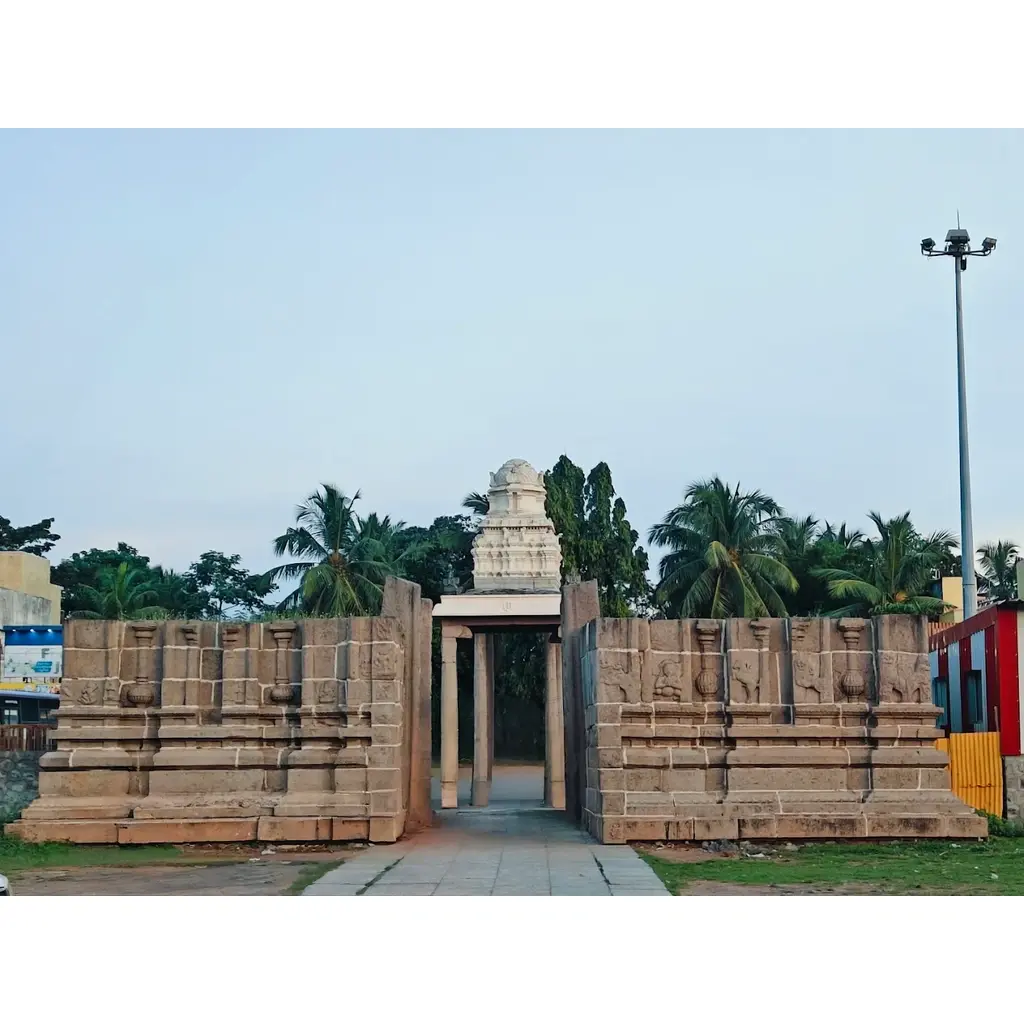
Arulmigu Sri Sthala Sayana Perumal Temple
அருள்மிகு ஸ்ரீ ஸ்தலசயனப் பெருமாள் திருக்கோயில்
Lord Adikesava Perumal (Vishnu) · Mamallapuram, Tamil Nadu
Ancient
About the temple
The 63rd Divya Desam of Vishnu; hallowed birthplace of the second Alvar saint, Boothathazhwar; holy site where Sage Pundarika attempted to empty the ocean with a small vessel to offer lotus flowers to Vishnu, whereupon the Lord manifested directly on the floor to receive his pure devotion.` Traditional belief: Bestows humility, immense mental peace, relief from property and land disputes, and liberation from worldly sorrow.
Temple information
- Darshan timings
- 06:00 – 20:30
- Established
- 8
- Best time to visit
- Early morning hours on mid-week non-festival days to experience a peaceful darshan atmosphere
Deity
Lord Adikesava Perumal (Vishnu)Lord Laxmi Narsimha SwamyLord RamaHanuman
- Deity form
- Rare and unique stone icon of Lord Vishnu reclining directly on the bare ground (Sthala-Sayana) without his customary serpent bed (Adisesha), resting his right hand on his chest
- Religious tradition
- Vedic Pancharatra Agamic Tradition & 108 Divya Desam Heritage
- Sanskrit name
- श्री स्थलशयनपेरुमाल् मन्दिरम्
- Also known as
- Mahabalipuram Divya Desam, Kadalmallai Sthalasayana Perumal Temple, Boothathazhwar Birthplace Temple
Darshan hours
- Daily
- 06:00 AM - 12:00 PM, 04:30 PM - 08:30 PM
- Break timings
- 12:00 PM - 04:30 PM (Monday to Thursday)
- Special days
- Vaikunta Ekadashi, Masi Makham, Boothathazhwar Avathara Utsavam: 04:30 AM - 10:30 PM
- Festival timings
- Open continuously till 10:30 PM on festival days and Vaikunta Ekadashi
Aarti & rituals
- Morning aarti
- 07:30 AM
- Midday aarti
- 11:45 AM
- Evening aarti
- 06:00 PM
- Night aarti
- 8:15 PM
- Special aarti days
- Saturdays, Ekadashi, Boothathazhwar Avathara Utsavam, Masi Makham
- Ritual schedule
- Suprabhatam, Thiruvaradhana, Thulasi Archana, Divya Prabandham Parayanam, Sahasranamarchana, Mangala Harathi
- Pooja timings
- 06:30 AM - 12:00 PM, 04:30 PM - 08:00 PM
- Abhishek timings
- Thirumanjanam performed on Saturdays and festival days at 07:00 AM
- Special poojas
- Available
- Online pooja booking
- Yes
History & heritage
- Historical period
- Ancient
- Built by
- Pallavas; rebuilt in stone and enhanced by Vijayanagara Emperor Parankusa and local chieftains
- Architect / builder
- Master traditional sthapathis of the Vijayanagara guild
- Construction materials
- Solid dressed granite stone masonry, carved pillars, brick-lime Rajagopuram
- Historical events
- Boothathazhwar was born in a blue lily flower (Neelotpalam) in the temple tank here in the 7th century CE; composed the Second Tiruvandhadhi of the Divya Prabandham
- Renovations
- Protected and renovated under Tamil Nadu HR&CE Department with new marble flooring and perimeter lighting
- Archaeological importance
- Crucial Divya Desam monument directly linked to the origin of the Tamil Bhakti movement
- Legends
- Sage Pundarika attempted to dry up the Bay of Bengal with his hands to place lotuses on Vishnu; the Lord appeared disguised as an old hungry man, ate rice, and laid down on the flowers on the bare ground
- Inscriptions
- Stone inscriptions in Tamil dating from the Chola (Kulothunga II) and Vijayanagara periods recording endowments of gardens and salt pans
Architecture
- Architectural style
- Dravidian
- Architectural period
- 14th - 16th Century CE structural complex
- Structure
- Walled urban temple complex featuring towering Rajagopuram, broad courtyards, Nilamangai Thayar shrine, and sacred Pundarika Theertham
- Floors
- 1
- Gopuram
- Soaring seven-tiered entrance Rajagopuram decorated with stucco figures of Vishnu Avatars and Alwars
- Mandapa
- Pillared Navaranga and Ardhamandapa supported by massive monolithic granite pillars carved with rearing yalis and Vaishnava devatas
- Sculptural features
- Unique monolithic stone murti of Lord Sthalasayana Perumal reclining on bare ground without Adisesha; standing idol of Sage Pundarika with folded hands; beautiful Nilamangai Thayar
- Artistic elements
- Intricate ceiling medallions, embossed silver altar cladding, and classical stone dvarapalakas
- Construction technique
- Interlocking monolithic granite block masonry of durable Vijayanagara execution
- Unique features
- The rare iconographic form of Vishnu reclining directly on the floor without the serpent Adisesha (Ananthasayanam without snake)
Festivals & events
- Festival calendar
- Aippasi month Avittam Nakshatra (Boothathazhwar), Margashirsha Shukla Ekadashi
- Special celebration days
- Every Saturday, Shukla Ekadashi, Masi Makham
- Cultural events
- Divya Prabandham goshti chanting, classical Carnatic music concerts, and religious dramas during festivals
- Annual events
- Masi Makham Sea Theerthavari where the processional deity is taken to the Bay of Bengal for sacred ocean bath
- Peak crowd season
- November to February and during Vaikunta Ekadashi
Visitor information
- ✓ Parking
- ✓ Restrooms
- ✓ Drinking water
- ✓ Shoe keeping
- ✓ Prasadam counter
- Dress code
- Traditional
- Best time to visit
- Early morning hours on mid-week non-festival days to experience a peaceful darshan atmosphere
- Parking capacity
- 100+ Vehicles
- Parking fees
- Approx. 20-50 INR
- Donation counters
- Yes
- Donation methods
- Cash, UPI, Bank Transfer
- Prasadam
- Laddu; Pulihora