
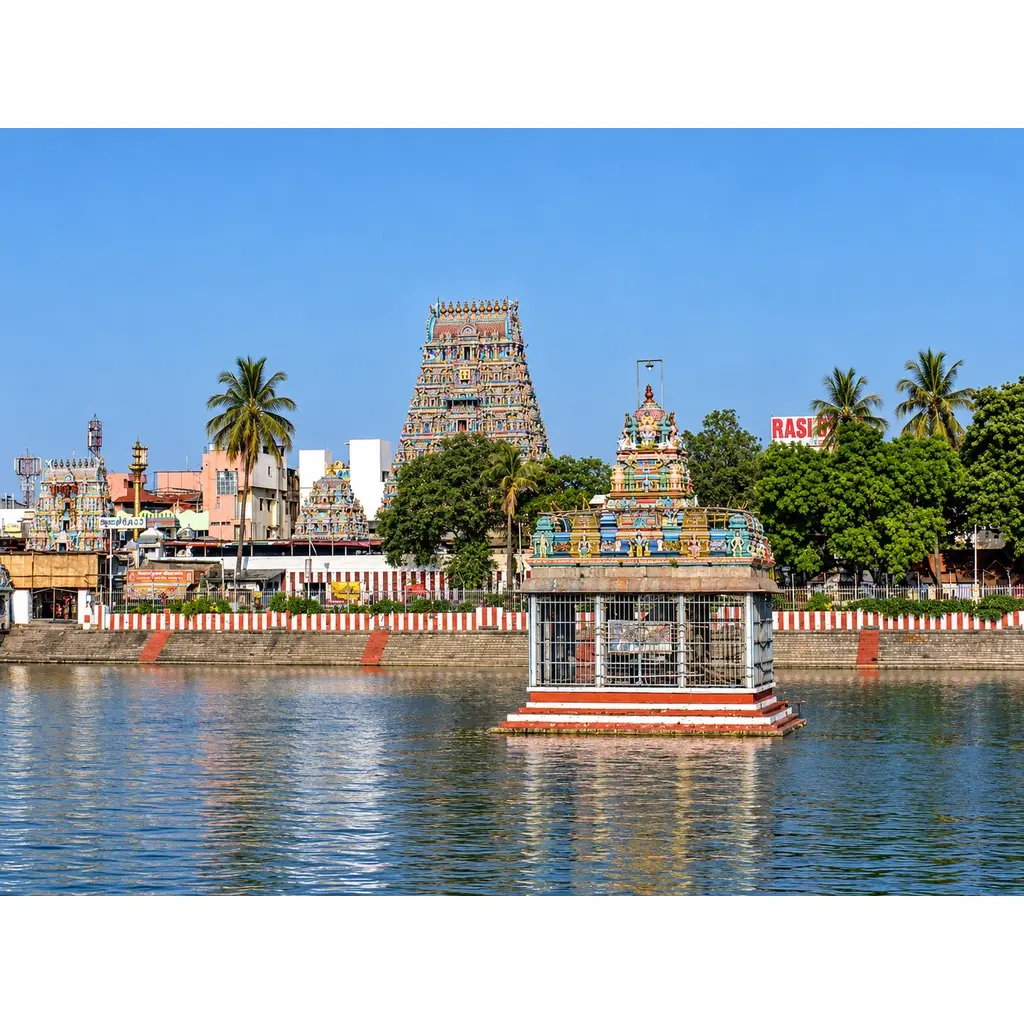
Arulmigu Kapaleeswarar Temple
அருள்மிகு கபாலீஸ்வரர் திருக்கோயில்
Lord Shiva · Chennai, Tamil Nadu
Ancient
About the temple
The ultimate spiritual and cultural heartbeat of Chennai; 24th Paadal Petra Sthalam of Thondai Nadu; where Goddess Parvati worshipped Shiva in the form of a peacock (Mayil), naming the locality "Mylapore"; where child-saint Thirugnanasambandar miraculously resurrected the cremated girl Poompavai from her ashes by singing the "Mattitta Punnai" hymn; world-famous for the grand Arupathimoovar car festival. Traditional belief: Fulfills all pure desires (Karpagambal is the celestial wish-granting tree), cures fatal illnesses, eliminates fear of death, and grants salvation.
Temple information
- Established
- 7
- Best time to visit
- Early morning hours on mid-week non-festival days to experience a peaceful darshan atmosphere
Deity
Lord Shiva · ଶିବ (Shiva)Ganesha Family
- Deity form
- Ancient Swayambhu Shiva Lingam adorned with silver/gold kavacha in the inner stone sanctum; radiant standing murti of Goddess Karpagambal
- Religious tradition
- Vedic Agamic Shaiva Siddhanta & 63 Nayanmars Arupathimoovar Tradition
- Sanskrit name
- श्री कपालिश्वरस्वामी मन्दिरम्
- Also known as
- Mylapore Kapaleeswarar Temple, Mayurapuri Shivalaya, Arulmigu Kapaleeswarar Temple
Darshan hours
- Daily
- 05:30 AM - 12:30 PM, 04:00 PM - 09:30 PM
- Break timings
- 12:30 PM - 04:00 PM (Sanctum closed for afternoon alankara)
- Special days
- Panguni Brahmotsavam / Arupathimoovar: 04:00 AM - 11:30 PM (Continuous Darshan)
- Festival timings
- Open continuously till 11:30 PM during Panguni Brahmotsavam and major festival days
Aarti & rituals
- Morning aarti
- 06:00 AM
- Midday aarti
- 12:00 PM
- Evening aarti
- 06:00 PM
- Night aarti
- 09:00 PM
- Special aarti days
- Every Monday, Pradosham, Panguni Arupathimoovar, Fridays for Karpagambal
- Ritual schedule
- Nitya Arukala Puja, Rudrabhishekam, Karpagambal Kunkumarchana, Singaravelar Murugan Abhishekam, Poompavai Utsavam, Pallakki Seva
- Pooja timings
- 06:00 AM - 12:30 PM, 04:30 PM - 09:00 PM
- Abhishek timings
- 06:30 AM - 08:30 AM, 11:30 AM - 12:00 PM
- Special poojas
- Available
- Online pooja booking
- Yes
History & heritage
- Historical period
- Ancient
- Built by
- Sanctified by Pallavas; current architectural complex built by Vijayanagara rulers and Tuluva chieftains
- Architect / builder
- Master traditional Tamil sthapathis of the Vijayanagara school
- Construction materials
- Solid dressed granite stone base, brick-and-lime soaring Rajagopurams, brass flagstaff, massive stepped lake
- Historical events
- Sambandar resurrected Poompavai here in the 7th century; Saint Vayilar Nayanar attained Mukti here; Portuguese destroyed earlier beachfront temple in 1566 CE, prompting relocation 1 km inland
- Renovations
- Punarprathishta and massive Brahmakalashotsava completed under Tamil Nadu HR&CE Department with gold-plated vimanams
- Archaeological importance
- Crucial cultural landmark hosting precious epigraphs and 63 bronze Nayanmar icons
- Legends
- Goddess Uma cursed to become a peahen (Mayil) performed intense penance under the Punnai tree to reunite with Shiva; Lord Brahma had his fifth arrogant head severed here by Shiva (Kapala)
- Inscriptions
- Stone inscriptions dating from the 12th to 16th century in Tamil recording grants by Cholas and Vijayanagara Kings (Harihara II and Venkatapati Raya)
Architecture
- Architectural style
- Dravidian
- Architectural period
- 16th Century CE reconstruction
- Structure
- Vast rectangular urban temple complex with dual towering Rajagopurams, broad circumambulatory cloisters, sacred Punnai tree shrine, and colossal stepped temple tank (Teppakulam)
- Floors
- 1
- Gopuram
- Magnificent seven-tiered 120-foot eastern entrance Rajagopuram embellished with hundreds of vibrantly painted stucco puranic sculptures; smaller western gopuram overlooking the tank
- Mandapa
- Spacious Mukhamandapa, Navaranga, and Navaratri Mandapa supported by carved granite pillars depicting yalis, dancers, and epic themes
- Sculptural features
- Ancient Swayambhu Shiva Lingam; radiant standing stone murti of Goddess Karpagambal holding lotus; miraculous bronze icon of Sambandar and Poompavai; sacred peacock worship relief under Punnai tree
- Artistic elements
- Intricate granite ceiling rosettes, embossed silver doorframes, gold-plated kalashas, and sacred flagstaff (Kodimaram)
- Construction technique
- Interlocking monolithic granite masonry designed for long structural life in coastal humid weather
- Unique features
- The world-famous "Arupathimoovar Festival" (procession of all 63 Shaiva Nayanmars in decorated palanquins) drawing half a million people, and the sacred Punnai tree shrine
Festivals & events
- Festival calendar
- Panguni month Uthiram (Arupathimoovar), Margashirsha (Tiruvadhirai), Masi (Shivaratri)
- Special celebration days
- Every Monday, Pradosham, Fridays for Karpagambal, Kiruthigai for Murugan
- Cultural events
- World-famous December Chennai Music Season concerts held in surrounding sabhas (Bharatiya Vidya Bhavan, Rasika Ranjani Sabha)
- Annual events
- The legendary Arupathimoovar Procession drawing over 500,000 devotees across the globe to the Mada streets
- Peak crowd season
- Throughout the year; peak during December Margazhi music season and March-April Panguni festival
Visitor information
- ✓ Parking
- ✓ Restrooms
- ✓ Drinking water
- ✓ Shoe keeping
- ✓ Prasadam counter
- Dress code
- Traditional
- Best time to visit
- Early morning hours on mid-week non-festival days to experience a peaceful darshan atmosphere
- Parking capacity
- 50+ vehicles
- Parking fees
- Approx. 20-50 INR
- Donation counters
- Yes
- Donation methods
- Cash, UPI, Bank Transfer
- Prasadam
- Vibhuti/Kumkum.