
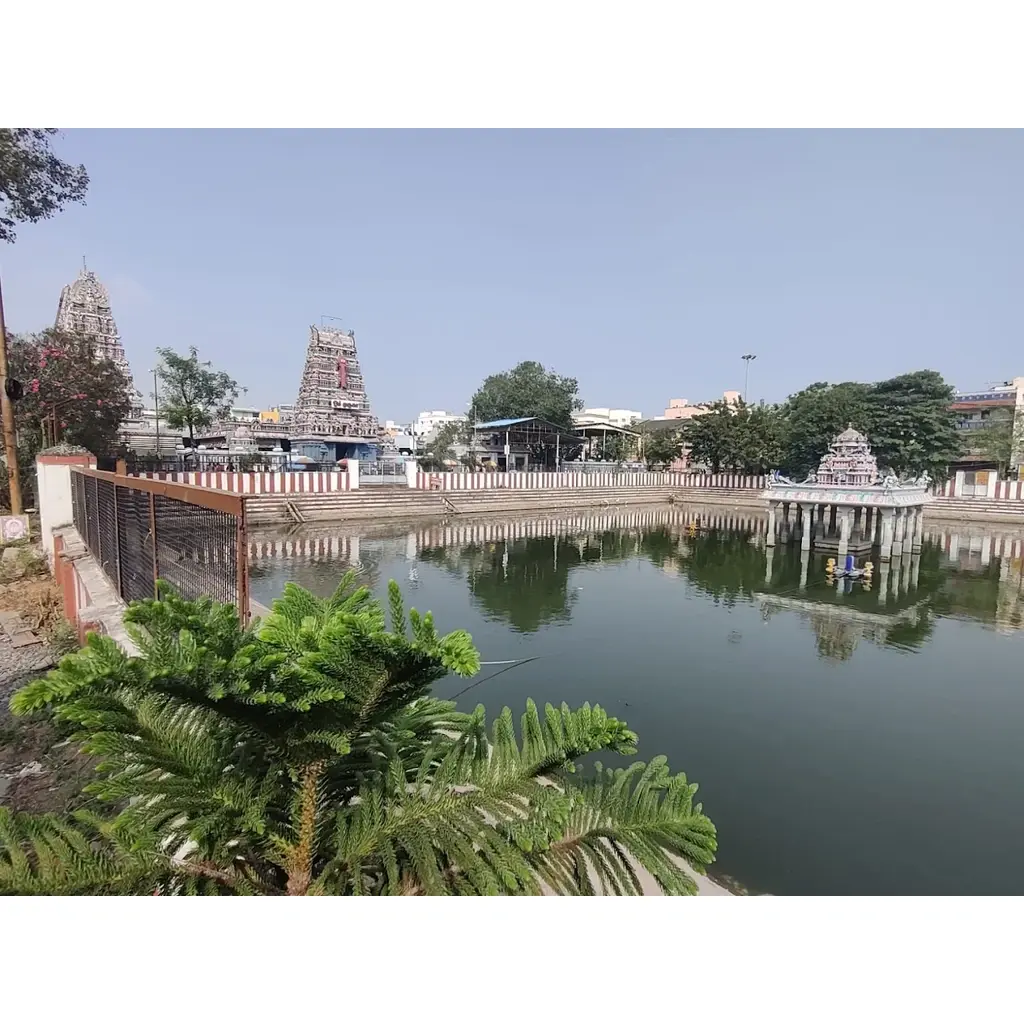
Arulmigu Vadapalani Andavar Temple
அருள்மிகு வடபழனி ஆண்டவர் திருக்கோயில்
Lord Murugan · Chennai, Tamil Nadu
Ancient
About the temple
The most popular Murugan shrine in Chennai; revered as the northern replica of Palani (Vada-Palani); universally famous as the most sought-after wedding destination in Tamil Nadu, solemnizing thousands of marriages every year. Traditional belief: Removal of obstacles, cure of stomach ailments and chronic illnesses, grant of wedding alliances, and immense career and business prosperity.
Temple information
- Darshan timings
- 05:30 – 21:30
- Established
- 1890
- Best time to visit
- Early morning hours on mid-week non-festival days to experience a peaceful darshan atmosphere
Deity
Lord MuruganGoddess ValliGoddess DevasenaLord Shiva
- Deity form
- Radiant standing stone murti of Lord Murugan holding the divine staff (Danda) in the posture of Palani Andavar, adorned in dazzling gold and diamond armor
- Religious tradition
- Vedic Agamic Kaumara Tradition & Matrimonial Auspiciousness
- Sanskrit name
- श्री वडपलनि आन्डवर् मन्दिरम्
- Also known as
- Vadapalani Murugan Temple, North Palani Temple, Vadapalani Dandayudhapani Gudi
Darshan hours
- Daily
- 05:30 AM - 12:30 PM, 04:00 PM - 09:30 PM
- Break timings
- 12:30 PM - 04:00 PM (Monday to Thursday)
- Special days
- Thaipusam, Panguni Uthiram, Skanda Sashti: 04:00 AM - 11:30 PM (Continuous Darshan)
- Festival timings
- Open continuously till 11:30 PM during Thaipusam and major festivals
Aarti & rituals
- Morning aarti
- 06:00 AM
- Midday aarti
- 12:00 PM
- Evening aarti
- 06:00 PM
- Night aarti
- 09:00 PM
- Special aarti days
- Every Kiruthigai, Tuesdays, Sashti, Thaipusam, Panguni Uthiram
- Ritual schedule
- Nitya Arukala Puja, Ksheerabhishekam, Sandal paste Alankara, Sahasranamarchana, Golden Chariot procession
- Pooja timings
- 06:00 AM - 12:30 PM, 04:30 PM - 09:00 PM
- Abhishek timings
- 06:30 AM - 08:30 AM, 11:30 AM - 12:00 PM
- Special poojas
- Available
- Online pooja booking
- Yes
History & heritage
- Historical period
- Ancient
- Built by
- Consecrated by Saint Annaswamy Tambiran; developed into a grand stone temple by the Tambiran disciples and local philanthropists
- Architect / builder
- Traditional Tamil Dravidian sthapathis
- Construction materials
- Solid dressed granite stone masonry, brick-mortar soaring Rajagopuram, brass flagstaff, sacred tank
- Historical events
- Annaswamy Tambiran cured himself of severe stomach ulcers by worshipping Murugan; his samadhi and that of his disciple Rathinaswamy Tambiran are located nearby
- Renovations
- Punarprathishta and massive expansion completed under Tamil Nadu HR&CE Department with air-conditioned wedding halls and new Rajagopuram
- Archaeological importance
- Modern landmark of contemporary Dravidian temple architecture and popular devotional worship
- Legends
- Saint Annaswamy Tambiran pierced his tongue with a spear (Vel) to attain spiritual silence and was granted divine darshan of Lord Dandayudhapani
- Inscriptions
- Trust records and commemorative donor inscriptions detailing the growth of the temple from a thatched hut to a multi-crore pilgrimage complex
Architecture
- Architectural style
- Dravidian
- Architectural period
- Early 20th Century (1920 - 1980 CE)
- Structure
- Sprawling urban temple complex featuring multi-tiered entrance Rajagopuram, broad pillared prakaras, sacred temple tank, and wedding halls
- Floors
- 1
- Gopuram
- Soaring 108-foot eastern entrance Rajagopuram embellished with hundreds of colorful stucco figures illustrating the 108 Karanas (Bharatanatyam dance postures) and Skanda Purana legends
- Mandapa
- Spacious Mukhamandapa supported by polished granite columns depicting Murugan’s avatars and saintly devotees
- Sculptural features
- Standing stone murti of Lord Vadapalani Andavar; separate shrines of Valli-Devasena Murugan, Meenakshi Sundareswarar, and Anjaneya; golden chariot (Thanga Ratham)
- Artistic elements
- Intricate wood-carved ceiling panels, embossed silver sanctum frames, gold-plated kalashas, and brass flagstaff
- Construction technique
- Interlocking monolithic granite plinth combined with reinforced concrete and traditional stucco art
- Unique features
- World-famous wedding venue hosting up to 100 Hindu weddings simultaneously in its mandapams on auspicious muhurtham days, and the 108 Karana dance sculptures on the gopuram
Festivals & events
- Festival calendar
- Thai month Poosam Nakshatram (Thaipusam), Panguni Uthiram
- Special celebration days
- Every Kiruthigai, Tuesdays, Sashti, Sundays
- Cultural events
- Carnatic vocal concerts, Bharatanatyam dance performances, and Harikatha during festival months
- Annual events
- Panguni Brahmotsavam and Thaipusam Float Festival (Teppotsavam) drawing over 200,000 devotees
- Peak crowd season
- Throughout the year; peak during Thaipusam, Panguni Uthiram, and auspicious wedding dates
Visitor information
- ✓ Parking
- ✓ Restrooms
- ✓ Drinking water
- ✓ Shoe keeping
- ✓ Prasadam counter
- Dress code
- Traditional
- Best time to visit
- Early morning hours on mid-week non-festival days to experience a peaceful darshan atmosphere
- Parking capacity
- 100+ Vehicles
- Parking fees
- Approx. 20-50 INR
- Donation counters
- Yes
- Donation methods
- Cash, UPI, Bank Transfer
- Prasadam
- Vibhuti/Kumkum.