
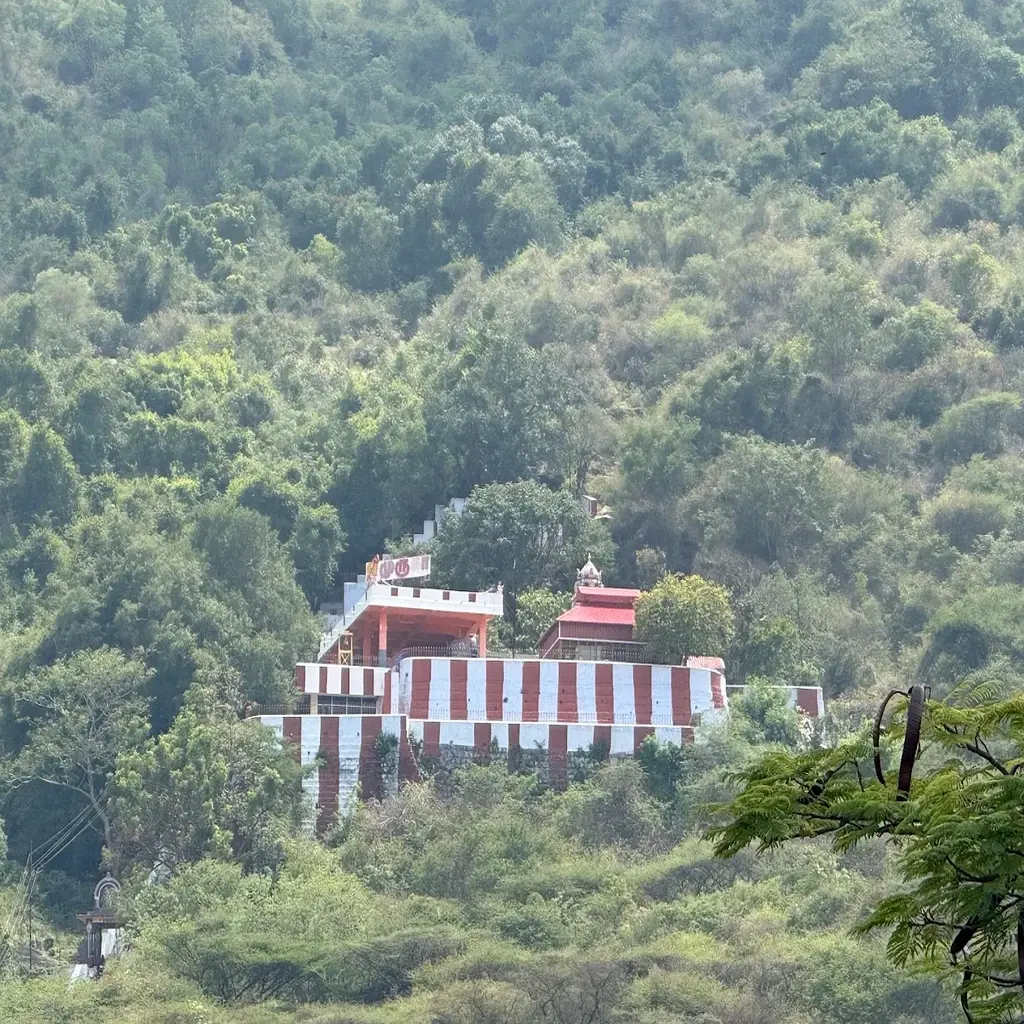
Arulmigu Anuvavi Subramanyasamy Temple
அருள்மிகு அனுவாவி சுப்பிரமணியசுவாமி திருக்கோயில்
Lord Subrahmanya · Coimbatore, Tamil Nadu
Ancient
About the temple
Spectacular natural hill temple nestled deep inside a dense Western Ghats valley surrounded by cloud-kissed cliffs; famous for the perennial natural spring "Hanuman Theertham" created by Lord Hanuman when carrying the Sanjeevani hill to quench his thirst. Traditional belief: Removal of acute mental depression, curing of incurable physical diseases through medicinal spring water, grant of vitality, and courage.
Temple information
- Darshan timings
- 06:30 – 18:00
- Established
- 11
- Best time to visit
- Early morning hours on mid-week non-festival days to experience a peaceful darshan atmosphere
Deity
Lord SubrahmanyaGoddess ValliGoddess DevasenaHanuman
- Deity form
- Ancient standing stone murti of Lord Murugan holding Vel with consorts Valli and Devasena inside a natural rock-cleft sanctum
- Religious tradition
- Agamic Kaumara Tradition & Ramayana Sacred Spring Heritage
- Sanskrit name
- श्री अनुवावि सुब्रह्मण्यस्वामी मन्दिरम्
- Also known as
- Anuvavi Murugan Temple, Hanuman Teertham Murugan Temple, Western Ghats Cave Temple Anuvavi
Darshan hours
- Daily
- 06:30 AM - 06:00 PM
- Break timings
- Open continuously during daylight hours (closed at sunset due to wild forest elephant movements)
- Special days
- Thaipusam, Panguni Uthiram, Sashti: 05:00 AM - 07:30 PM
- Festival timings
- Open till 07:30 PM on Thaipusam (daylight hours strictly enforced)
Aarti & rituals
- Morning aarti
- 07:00 AM
- Midday aarti
- 12:00 PM
- Evening aarti
- 5:30 PM
- Special aarti days
- Every Kiruthigai, Tuesdays, Sashti, Thaipusam
- Ritual schedule
- Nitya Pooja, Rudrabhisheka to Murugan, Hanuman Theertham snana, Sandal paste Alankara, Deeparadhana
- Pooja timings
- 07:00 AM - 12:30 PM, 03:30 PM - 05:30 PM
- Abhishek timings
- 07:30 AM - 09:00 AM
- Special poojas
- Available
- Online pooja booking
- No
History & heritage
- Historical period
- Ancient
- Built by
- Kongu chieftains; maintained under forest pilgrimage guidelines by Tamil Nadu HR&CE Department
- Architect / builder
- Traditional hill stone carvers of the Western Ghats
- Construction materials
- Solid dressed granite, natural rock cave shelter, brick-lime vimana, 500 stone steps
- Historical events
- Celebrated in regional folk epics and songs of Kongu Nadu; visited by ascetics and Siddhas for its secluded meditative environment
- Renovations
- Protected and renovated under Tamil Nadu HR&CE Department with new stone steps, protective railings, and water pipelines
- Archaeological importance
- Pristine ecological and mythological pilgrimage site nestled inside an elephant corridor of the Western Ghats
- Legends
- Lord Hanuman was flying with the Sanjeevani mountain to Lanka; he felt thirsty and struck the rock with his gada (mace); Lord Murugan appeared and released a perennial sweet spring ("Hanuma-Vavi" / Anuvavi)
- Inscriptions
- Tamil epigraphs on rock boulders near the spring recording donations by local farmers
Architecture
- Architectural style
- Dravidian
- Architectural period
- 16th Century CE structural enhancements
- Structure
- Hilltop stone temple complex reached by climbing approximately 500 steps, nestled amidst sheer Western Ghats cliffs with natural spring pond
- Floors
- 1
- Gopuram
- Single-tiered Dravidian Vimana tower rising above the natural rock sanctum
- Mandapa
- Open pillared shelter overlooking the picturesque green Thadagam valley
- Sculptural features
- Ancient stone idols of Lord Murugan with Valli and Devasena; stone Hanuman relief near the perennial spring; Nandi and Ganesha
- Artistic elements
- Rustic stone carvings, brass deepas, and natural spring water conduits
- Construction technique
- Interlocking granite block masonry built directly into natural rock fissures
- Unique features
- The perennial natural spring "Hanuman Theertham" flowing constantly from a rock cleft, which never dries up even in severe peak summer droughts
Festivals & events
- Festival calendar
- Thai month Poosam Nakshatram (Thaipusam)
- Special celebration days
- Every Kiruthigai, Tuesdays, Sashti
- Cultural events
- Devotional bhajans, Kavadi processions, and Harikatha during Thaipusam
- Annual events
- Thaipusam festival drawing thousands of devotees from Coimbatore and Kerala
- Peak crowd season
- October to February and during Thaipusam
Visitor information
- ✓ Parking
- ✓ Restrooms
- ✓ Drinking water
- ✓ Shoe keeping
- ✓ Prasadam counter
- Dress code
- Traditional
- Best time to visit
- Early morning hours on mid-week non-festival days to experience a peaceful darshan atmosphere
- Parking capacity
- 100+ Vehicles
- Parking fees
- Approx. 20-50 INR
- Donation counters
- Yes
- Donation methods
- Cash, UPI, Bank Transfer
- Prasadam
- Vibhuti/Kumkum.