
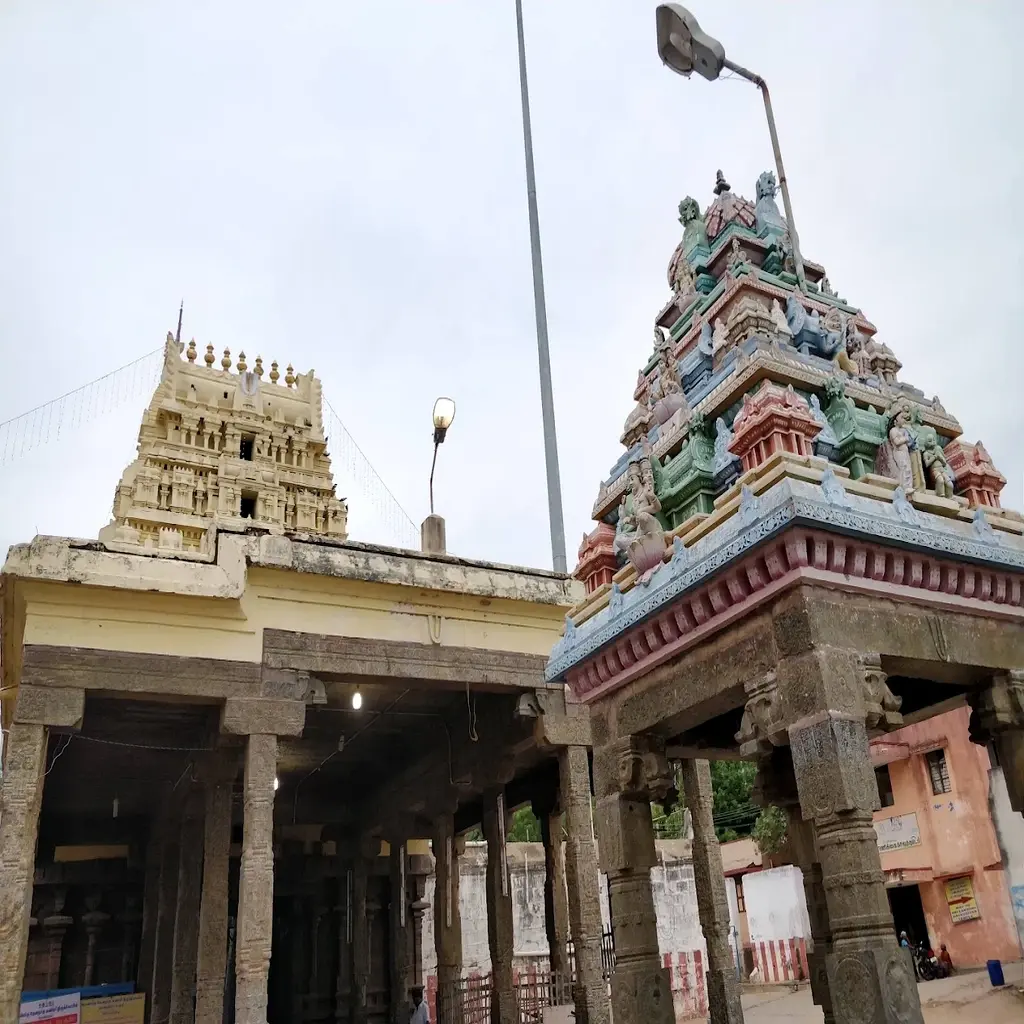
Arulmigu Devanatha Swami Temple
அருள்மிகு தேவநாத சுவாமி திருக்கோயில்
Lord Shiva (as Shivalinga) · cuddalore, Tamil Nadu
Ancient
About the temple
The 64th Divya Desam of Vishnu; situated along the holy Gadilam River at the foot of Oushadhagiri hill; the supreme spiritual sanctuary of Acharya Sri Vedanta Desika who spent over 40 years here, obtained divine Hayagriva Upasana, and excavated the sacred Desika Well. Traditional belief: Supreme academic excellence, intelligence, memory power, speech eloquence (from Hayagriva), cure of illnesses, and spiritual wisdom.
Temple information
- Darshan timings
- 06:00 – 20:30
- Established
- 8
- Best time to visit
- Early morning hours on mid-week non-festival days to experience a peaceful darshan atmosphere
Deity
Lord Shiva (as Shivalinga)Ganesha Family
- Deity form
- Majestic standing stone vigraha of Lord Devanatha holding Shankha, Chakra, and lotus; on the adjoining Oushadhagiri hillock sits the unique stone idol of Lord Yoga Hayagriva
- Religious tradition
- Vedic Vaikhanasa / Pancharatra Tradition & Sri Desika Sampradaya
- Sanskrit name
- श्री देवनाथस्वामी मन्दिरम्
- Also known as
- Thiruvanthipuram Divya Desam, Hayagriva Hilltop Temple Thiruvanthipuram, Oushadhagiri Temple
Darshan hours
- Daily
- 05:30 AM - 01:30 PM, 03:30 PM - 09:30 PM
- Break timings
- 12:30 PM - 04:30 PM (Monday to Thursday)
- Special days
- Desika Utsavam, Vaikunta Ekadashi, Purattasi Saturdays: 04:00 AM - 10:30 PM
- Festival timings
- Open continuously till 10:30 PM on festival days and Thursdays during exam seasons
Aarti & rituals
- Morning aarti
- 07:30 AM
- Midday aarti
- 12:00 PM
- Evening aarti
- 06:00 PM
- Night aarti
- 8:15 PM
- Special aarti days
- Every Thursday (Hayagriva), Saturdays, Ekadashi, Purattasi Saturdays
- Ritual schedule
- Nitya Thiruvaradhana, Thulasi Archana, Hayagriva Vidya Homam, Cardamom garland (Elakkai Malai) offering, Desika Mangalasasanam
- Pooja timings
- 06:30 AM - 12:00 PM, 04:30 PM - 08:00 PM
- Abhishek timings
- Thirumanjanam performed on Thursdays for Hayagriva and Saturdays for Devanatha at 07:00 AM
- Special poojas
- Available
- Online pooja booking
- No
History & heritage
- Historical period
- Ancient
- Built by
- Pallavas; expanded by Medieval Cholas (Raja Raja I) and Vijayanagara Kings; sanctified by Sri Vedanta Desika
- Architect / builder
- Traditional Dravidian temple sthapathis
- Construction materials
- Solid dressed dark granite, brick-lime Rajagopuram, marble steps leading to Oushadhagiri hill
- Historical events
- Sri Vedanta Desika composed the immortal "Hayagriva Stotram", "Devanayaka Panchashat", and "Gopala Vimshati" while residing at this temple in the 13th century
- Renovations
- Protected and renovated under Tamil Nadu HR&CE Department with new hillock railings, lighting, and queue complexes
- Archaeological importance
- Crucial Divya Desam monument containing over 50 Chola and Pandya stone inscriptions
- Legends
- The hillock Oushadhagiri is a dropped piece of the Sanjeevani mountain carried by Hanuman; Lord Vishnu manifested as Devanatha (Lord of Gods) to establish the oneness of the Trinity
- Inscriptions
- Stone inscriptions in Tamil dating from the 11th to 16th century recording grants by Rajendra Chola, Vikrama Chola, and Vijayanagara King Achyuta Deva Raya
Architecture
- Architectural style
- Dravidian
- Architectural period
- 10th Century core with 13th - 16th Century CE expansions
- Structure
- Twin-level temple complex comprising the large walled base temple of Devanathaswamy and the hilltop shrine of Lord Hayagriva atop Oushadhagiri hill
- Floors
- 2
- Gopuram
- Five-tiered entrance Rajagopuram decorated with stucco figures of Dashavatara and Garuda
- Mandapa
- Pillared Mahamandapa and Kalyana Mandapa supported by carved granite pillars depicting Vaishnava legends
- Sculptural features
- Standing stone idol of Lord Devanathaswamy; unique stone icon of Lord Yoga Hayagriva on the hill; carved image of Vedanta Desika; Desika’s Well (Desikan Kinaru)
- Artistic elements
- Intricate ceiling medallions, embossed silver altar frames, and stone water conduits
- Construction technique
- Interlocking monolithic granite masonry built on the riverbank and hill slope
- Unique features
- The famous cardamom garland (Elakkai Malai) offering to Lord Hayagriva by thousands of students before examinations, and Desika’s sacred well
Festivals & events
- Festival calendar
- Purattasi Sravanam (Desika Jayanti), Margashirsha Shukla Ekadashi
- Special celebration days
- Every Thursday (for Hayagriva), Saturdays, Ekadashi
- Cultural events
- Divya Prabandham recitals, Desika Stotra chanting, and classical Carnatic music concerts during festivals
- Annual events
- Grand Devanathaswamy Maha Rathotsavam and Float Festival (Teppotsavam) in Gadilam River
- Peak crowd season
- September to October (Purattasi season), exam months (Feb-April), and winter holidays
Visitor information
- ✓ Parking
- ✓ Restrooms
- ✓ Drinking water
- ✓ Shoe keeping
- ✓ Prasadam counter
- Dress code
- Traditional
- Best time to visit
- Early morning hours on mid-week non-festival days to experience a peaceful darshan atmosphere
- Parking capacity
- 100+ Vehicles
- Parking fees
- Approx. 20-50 INR
- Donation counters
- Yes
- Donation methods
- Cash, UPI, Bank Transfer
- Prasadam
- Vibhuti/Kumkum.