
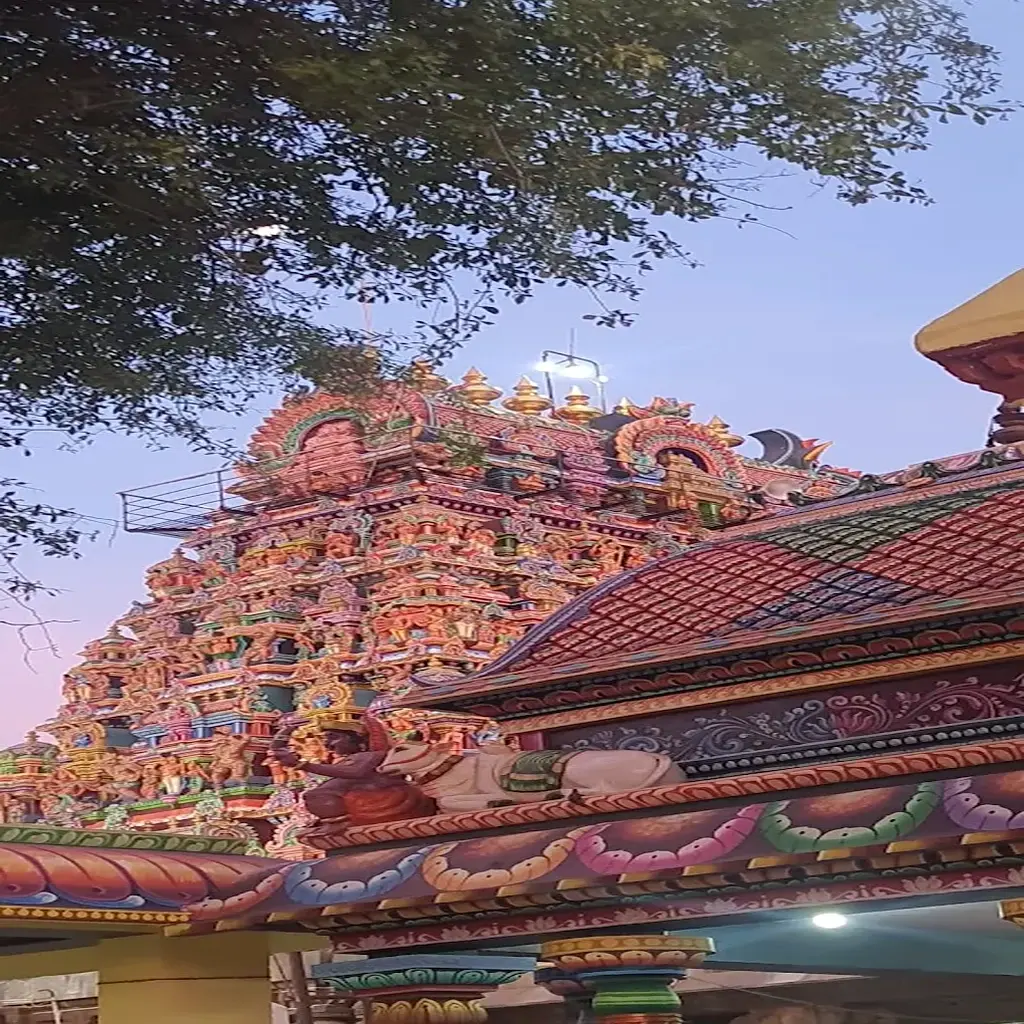
Arulmigu Padaleeswarar Temple
அருள்மிகு பாடலீஸ்வரர் திருக்கோயில்
Lord Shiva · cuddalore, Tamil Nadu
Ancient
About the temple
The 18th Paadal Petra Sthalam of Nadu Naadu; historic spiritual ground where Saint Thirunavukkarasar (Appar) was tied to a stone boulder by the Pallava King and thrown into the sea, but miraculously floated ashore at Thirupathiripuliyur singing the immortal hymn "Kattrinai Pooti Oar Kallinai Katti"; famed for its ancient Pathiri tree. Traditional belief: Miraculous deliverance from impossible life-threatening crises, removal of chronic diseases, grant of inner strength, and liberation.
Temple information
- Darshan timings
- 06:00 – 20:30
- Established
- 7
- Best time to visit
- Early morning hours on mid-week non-festival days to experience a peaceful darshan atmosphere
Deity
Lord Shiva · ଶିବ (Shiva)Ganesha Family
- Deity form
- Ancient Swayambhu Shiva Lingam located under the sacred Pathiri (Trumpet Flower) sthala vriksham tree in the inner stone sanctum
- Religious tradition
- Vedic Agamic Shaiva Siddhanta & Saint Appar Miraculous Stone Float Heritage
- Sanskrit name
- श्री पाटलीश्वरस्वामी मन्दिरम्
- Also known as
- Thirupathiripuliyur Temple, Cuddalore Shivalaya, Padaleeswarar Temple Tirupadripulyur
Darshan hours
- Daily
- 06:00 AM - 12:30 PM, 04:00 PM - 08:30 PM
- Break timings
- 12:30 PM - 04:00 PM
- Special days
- Vaikasi Brahmotsavam, Maha Shivaratri: 04:30 AM - 11:30 PM
- Festival timings
- Open continuously till 11:30 PM on Maha Shivaratri and festival days
Aarti & rituals
- Morning aarti
- 07:00 AM
- Midday aarti
- 12:00 PM
- Evening aarti
- 06:00 PM
- Night aarti
- 8:15 PM
- Special aarti days
- Every Monday, Pradosham, Maha Shivaratri, Vaikasi Brahmotsavam
- Ritual schedule
- Nitya Chatukkala Puja, Rudrabhisheka, Saint Appar Theerthavari, Pathiri tree worship, Sandhya Deeparadhana
- Pooja timings
- 06:30 AM - 12:00 PM, 04:30 PM - 08:00 PM
- Abhishek timings
- 07:00 AM - 08:30 AM
- Special poojas
- Available
- Online pooja booking
- No
History & heritage
- Historical period
- Ancient
- Built by
- Pallavas; substantially expanded by Medieval Cholas (Parantaka I and Rajaraja I)
- Architect / builder
- Master traditional Tamil stone sculptors
- Construction materials
- Solid dressed dark granite stone blocks, brick-lime Rajagopuram, brass flagstaff
- Historical events
- The miraculous sea survival of Saint Appar who stepped ashore at the river mouth here; Pallava King Mahendravarman I abandoned Jainism and embraced Shaivism following this miracle
- Renovations
- Protected and renovated under Tamil Nadu HR&CE Department with new Rajagopuram painting and marble flooring
- Archaeological importance
- Priceless Paadal Petra Sthalam monument preserving dozens of early Chola and Pallava stone epigraphs
- Legends
- Sage Vyaghrapada and Sage Pulastya worshipped here under the Pathiri tree (Padali); Goddess Parvati worshipped Shiva here to atone for playfully closing his eyes
- Inscriptions
- More than 30 Tamil stone inscriptions on the sanctum walls recording grants by Chola, Pandya, and Vijayanagara rulers
Architecture
- Architectural style
- Dravidian
- Architectural period
- Circa 1000 - 1200 CE
- Structure
- Spacious walled urban temple complex with seven-tiered entrance Rajagopuram, broad courtyards, sacred Pathiri tree enclosure, and Periyanayaki shrine
- Floors
- 1
- Gopuram
- Soaring seven-tiered 100-foot entrance Rajagopuram decorated with colorful stucco sculptures of Shaivite puranic themes
- Mandapa
- Pillared Mukhamandapa and Mahamandapa supported by carved monolithic granite columns depicting yalis and Nayanmar saints
- Sculptural features
- Pillared Mukhamandapa and Mahamandapa supported by carved monolithic granite columns depicting yalis and Nayanmar saints
- Artistic elements
- Intricate ceiling floral patterns, embossed silver altar frames, and brass oil-lamp sthambhas
- Construction technique
- Interlocking monolithic granite block masonry engineered for durability in an urban coastal setting
- Unique features
- The venerated sthala vriksham Pathiri tree (Stereospermum chelonoides) and the historic connection to Saint Appar’s floating stone miracle
Festivals & events
- Festival calendar
- Vaikasi month (May/June Brahmotsavam), Magha Bahula Chaturdashi
- Special celebration days
- Every Monday, Pradosham, New Moon days
- Cultural events
- Devotional bhajans, Thevaram parayanam, and classical music during Vaikasi festival
- Annual events
- Padaleeswarar Maha Rathotsavam and Appar Theerthavari drawing over 100,000 devotees
- Peak crowd season
- October to February and during Vaikasi Brahmotsavam
Visitor information
- ✓ Parking
- ✓ Restrooms
- ✓ Drinking water
- ✓ Shoe keeping
- ✓ Prasadam counter
- Dress code
- Traditional
- Best time to visit
- Early morning hours on mid-week non-festival days to experience a peaceful darshan atmosphere
- Parking capacity
- 50+ vehicles
- Parking fees
- Approx. 20-50 INR
- Donation counters
- Yes
- Donation methods
- Cash, UPI, Bank Transfer
- Prasadam
- Laddu; Pulihora