
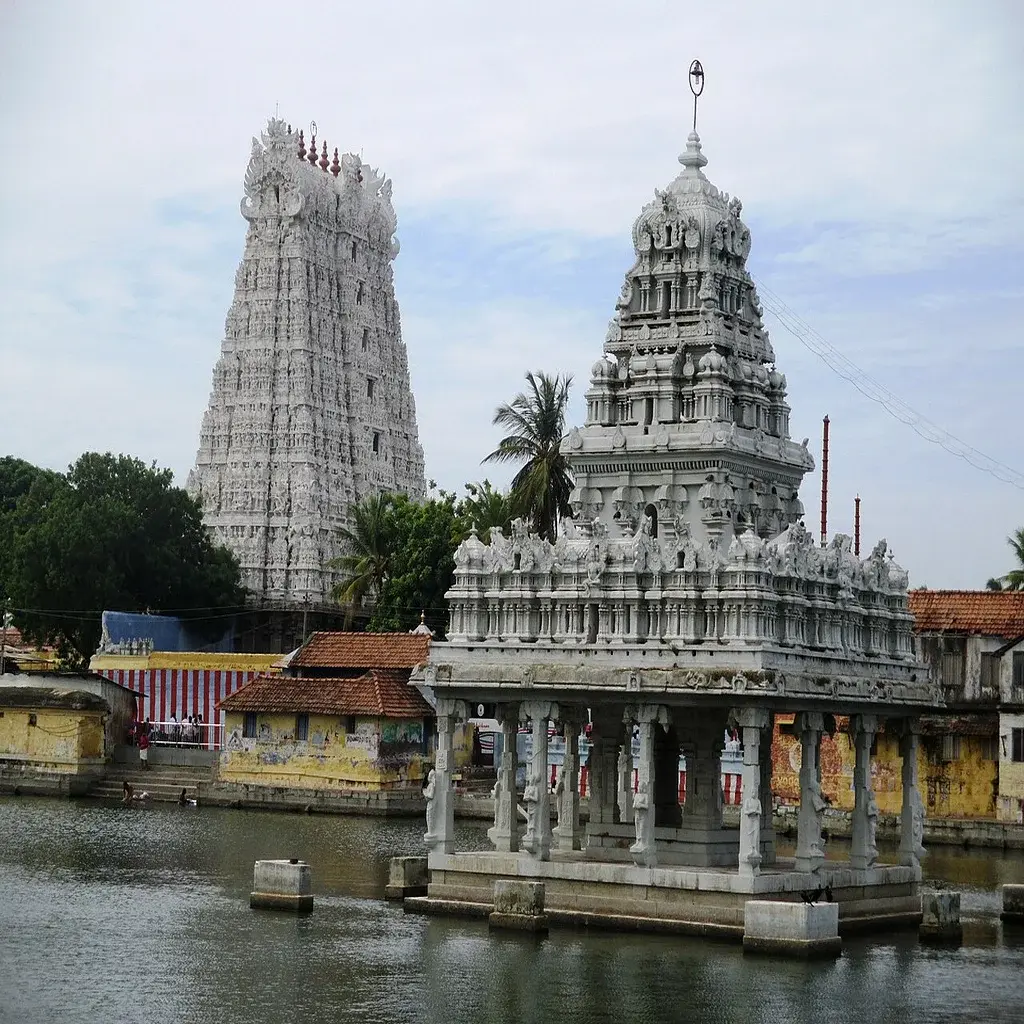
Arulmigu Thanumalayan Temple
அருள்மிகு தனுமாலயன் திருக்கோயில்
Sthanumalaya Swamy (Brahma-Vishnu-Shiva) · Suchindram, Tamil Nadu
Ancient★ 4.91,15,000 reviews12,000 visits
About the temple
The foremost Trimurti temple in India where the Holy Trinity (Brahma, Vishnu, Shiva) is embodied in a single Lingam; holy site where Lord Indra was purified (Suchi) from sage Gautama’s curse; renowned for the colossal 22-foot monolithic Anjaneyar and four monolithic musical pillars producing resonant swaras. Traditional belief: Harmony of the Trinity, purification of grievous sins (Indra Vimochana), eradication of fear through colossal Hanuman, and removal of family distress.
Temple information
- Darshan timings
- 04:30 – 20:30
- Established
- 8
- Best time to visit
- Early morning hours on mid-week non-festival days to experience a peaceful darshan atmosphere
Deity
Sthanumalaya Swamy (Brahma-Vishnu-Shiva) · தாணுமாலயன்Ammanavaru (Parvati)Abhaya Anjaneya Swamy
- Deity form
- Unique composite Swayambhu Lingam representing Shiva (top), Vishnu (middle), and Brahma (base); colossal 22-foot monolithic standing Hanuman
- Religious tradition
- Vedic Agamic Trimurti & Travancore-Tamil Ritual Synthesis
- Sanskrit name
- श्री स्थानुमालयस्वामी मन्दिरम्
- Also known as
- Suchindram Temple, Sthanumalayan Temple, Trimurti Temple Suchindram, Indra Vimochana Kshetra
Darshan hours
- Daily
- 04:30 AM - 12:00 PM, 05:00 PM - 08:30 PM
- Break timings
- 12:00 PM - 05:00 PM (Sanctum closed during afternoon; outer halls open for tourists)
- Special days
- Margazhi Brahmotsavam, Chithirai Festival: 03:30 AM - 11:30 PM
- Festival timings
- Open continuously till 11:30 PM during Margazhi Brahmotsavam and festival days
Aarti & rituals
- Morning aarti
- 06:00 AM
- Midday aarti
- 11:45 AM
- Evening aarti
- 06:00 PM
- Night aarti
- 8:15 PM
- Special aarti days
- Every Monday, Saturdays for Anjaneyar, Pradosham, Margazhi Brahmotsavam
- Ritual schedule
- Nitya Chatukkala Puja, Sandal paste Alankara to 22-ft Hanuman, Musical pillar resonance demonstration, Midnight puja by Devendra
- Pooja timings
- 05:00 AM - 11:30 AM, 05:30 PM - 08:00 PM
- Abhishek timings
- 05:30 AM - 07:00 AM, 11:00 AM - 11:30 AM
- Special poojas
- Available
- Online pooja booking
- No
History & heritage
- Historical period
- Ancient
- Built by
- Expanded by Cholas, Cheras, Pandyas, and Travancore Maharajas (Marthanda Varma and Rama Varma)
- Architect / builder
- Master traditional sculptors of the Travancore and Tamil Nadu sthapathi guilds
- Construction materials
- Solid dressed dark granite, sandstone carved musical columns, white brick-lime 134-foot Rajagopuram
- Historical events
- Sage Atri and Anasuya tested the Trimurtis here; Lord Indra was purified of his curse; famous venue where the historic "Suchindram Kaimukku" (truth ordeal in boiling ghee) was conducted until banned in 1834
- Renovations
- Protected and renovated under Tamil Nadu HR&CE (Kanniyakumari Devasthanam Board) with golden vimana kalashas and renovated Teppakulam lake
- Archaeological importance
- Crucial epigraphical monument containing ancient Vattezhuttu and Tamil inscriptions of Chola and Pandya monarchs
- Legends
- Indra enters the sanctum invisibly every midnight to perform the final Arthajamam puja to Lord Sthanumalaya to express gratitude for purification
- Inscriptions
- More than 40 stone inscriptions in Tamil, Malayalam, and Grantha dating from the 9th to 18th century recording royal grants by Chola King Parantaka I and Travancore kings
Architecture
- Architectural style
- Dravidian
- Architectural period
- 9th Century core with 15th - 17th Century CE monumental expansions
- Structure
- Sprawling 7-acre walled temple complex with soaring white Rajagopuram, musical pillar mandapa, 22-foot Hanuman shrine, and massive Teppakulam lake
- Floors
- 1
- Gopuram
- Magnificent seven-tiered 134-foot white entrance Rajagopuram adorned with hundreds of delicate stucco sculptures illustrating puranic epics
- Mandapa
- The world-famous Chempakaraman Mandapa supported by 32 sculpted granite pillars, and the Alankara Mandapa housing four monolithic musical pillars
- Sculptural features
- Colossal 22-foot monolithic standing icon of Lord Anjaneya covered in butter and sindhoor; Trimurti composite Lingam; monolithic musical pillars producing seven notes
- Artistic elements
- Intricate granite filigree carving, monolithic stone chains hanging from ceiling, embossed silver altar frames, and wooden carved ceilings
- Construction technique
- Interlocking monolithic granite block masonry of extraordinary acoustic precision
- Unique features
- The Sthanumalaya Lingam uniting Brahma, Vishnu, and Shiva; the 22-foot giant Hanuman; four monolithic musical pillars cut from single granite stones producing musical notes when tapped
Festivals & events
- Festival calendar
- Margazhi month (December/January Brahmotsavam), Chaitra Festival
- Special celebration days
- Every Monday, Saturdays for Anjaneyar, Pradosham, New Moon days
- Cultural events
- Grand classical music concerts, Nadaswaram recitals, and traditional Kathakali/Bharatanatyam performances during Margazhi festival
- Annual events
- The monumental Margazhi Car Festival (Therottam) featuring three giant wooden chariots pulled around the four Car streets
- Peak crowd season
- November to January (Margazhi festival and Sabarimala season) and summer vacations
Visitor information
- ✓ Parking
- ✓ Restrooms
- ✓ Drinking water
- ✓ Shoe keeping
- ✓ Prasadam counter
- Dress code
- Traditional
- Best time to visit
- Early morning hours on mid-week non-festival days to experience a peaceful darshan atmosphere
- Parking capacity
- 20-30 vehicles
- Parking fees
- Approx. 20-50 INR
- Donation counters
- Yes
- Donation methods
- Cash, UPI, Bank Transfer
- Prasadam
- Vibhuti/Kumkum.