
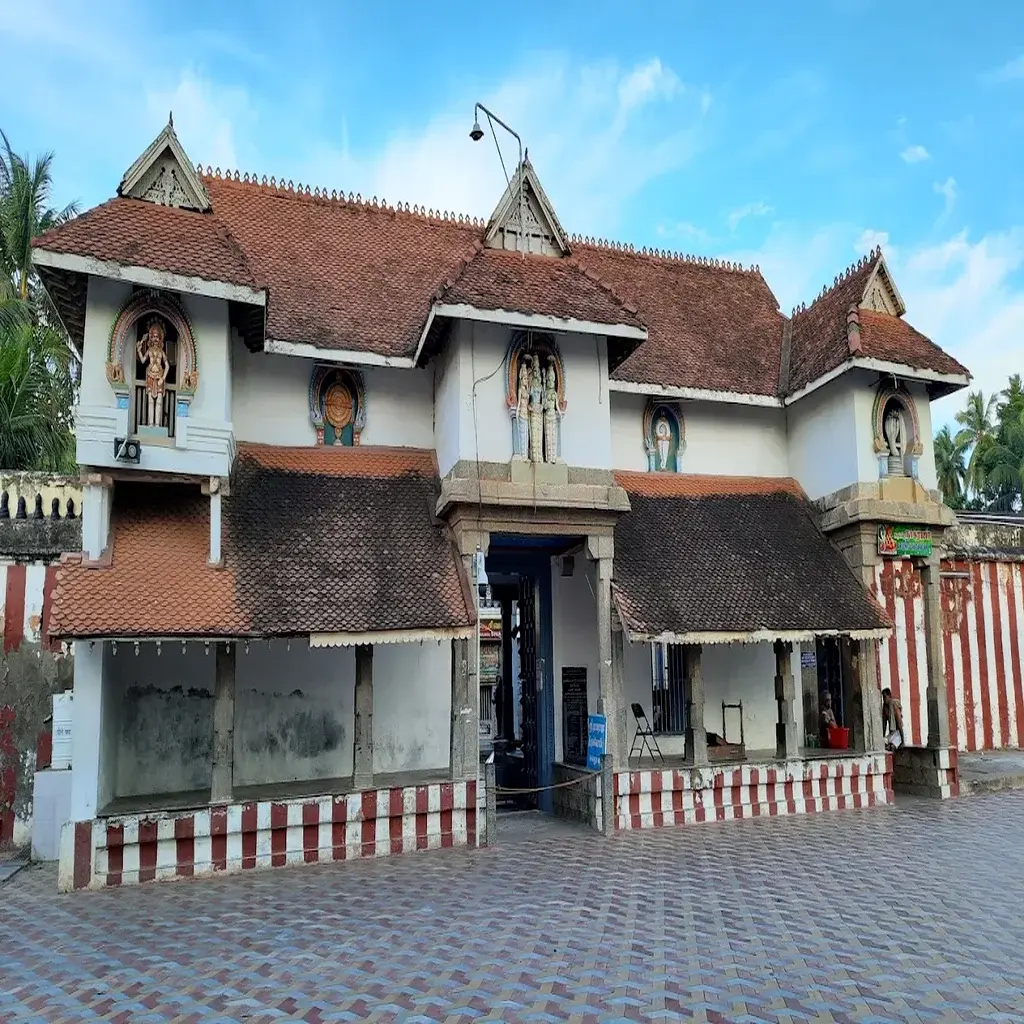
Arulmigu Nagaraja Temple
அருள்மிகு நாகராஜா திருக்கோயில்
Lord Nagaraja · Nagercoil, Tamil Nadu
Ancient
About the temple
The legendary namesake temple of the city of Nagercoil (Nagar-Koil); the foremost serpent pilgrimage center in Tamil Nadu; unique architectural tradition where the inner sanctum roof is made strictly of coconut leaf thatch, replaced annually; famous for distributing sacred sand (Man-Prasadam) that miraculously changes color from black to white depending on seasons. Traditional belief: Supreme cure for all skin diseases (leprosy, eczema), absolute neutralization of Sarpa/Naga Dosha, Rahu-Ketu parihara, and grant of healthy progeny.
Temple information
- Darshan timings
- 04:30 – 20:30
- Established
- 10
- Best time to visit
- Early morning hours on mid-week non-festival days to experience a peaceful darshan atmosphere
Deity
Lord NagarajaKrishnaLord ShivaDurga
- Deity form
- Five-headed serpent deity (Nagaraja) self-manifested on bare ground inside a unique thatched roof (Oolai Veyndha) sanctum; sacred soil given as prasadam
- Religious tradition
- Vedic Naga Worship & Sacred Sand Prasadam Tradition
- Sanskrit name
- श्री नागराज मन्दिरम्
- Also known as
- Nagercoil Nagaraja Temple, King of Serpents Temple, Thatched Roof Nagaraja Temple
Darshan hours
- Daily
- 04:30 AM - 12:00 PM, 05:00 PM - 08:30 PM
- Break timings
- 12:00 PM - 05:00 PM (Monday to Thursday)
- Special days
- Thai Brahmotsavam, Naga Panchami, Ayilyam Nakshatram: 03:30 AM - 11:30 PM
- Festival timings
- Open continuously till 11:30 PM on Thai festival days and Naga Panchami
Aarti & rituals
- Morning aarti
- 05:00 AM
- Midday aarti
- 12:00 PM
- Evening aarti
- 06:00 PM
- Night aarti
- 08:00 PM
- Special aarti days
- Every Sunday (Prime day for Naga worship), Ayilyam Nakshatram, Naga Panchami
- Ritual schedule
- Nitya Chatukkala Puja, Milk abhishekam to thousands of stone serpents, Distribution of sacred sand (Man-Prasadam), Pal Payasam offering
- Pooja timings
- 05:00 AM - 11:30 AM, 05:30 PM - 08:00 PM
- Abhishek timings
- Milk abhishekam performed continuously on Sundays and festival days from 06:00 AM to 11:00 AM
- Special poojas
- Available
- Online pooja booking
- No
History & heritage
- Historical period
- Ancient
- Built by
- Venad Kings; expanded by Travancore King Bhutalavira Udaya Marthanda Varma (1516–1535 CE)
- Architect / builder
- Master traditional Kerala-Tamil sthapathis
- Construction materials
- Solid dressed dark granite outer walls, thatched coconut leaf sanctum roof, sacred sand pitha
- Historical events
- A field woman cutting grass accidentally hit a stone serpent; blood sprouted from the stone; the villagers constructed a thatched shrine around the spot; King Udaya Marthanda Varma was cured of skin disease and built the grand stone mandapas
- Renovations
- The sanctum roof is traditionally re-thatched every year using fresh coconut leaves; stone corridors renovated under Tamil Nadu HR&CE
- Archaeological importance
- Crucial monument documenting the Jain-Naga-Hindu syncretic artistic traditions in southern Tamil Nadu
- Legends
- The deity instructed the king never to build a concrete or stone roof over his head, wishing to feel the direct rain and dew of heaven like a serpent in nature
- Inscriptions
- Stone inscriptions in Tamil dating from the 16th century detailing the cure of King Udaya Marthanda Varma and his royal endowments
Architecture
- Architectural style
- Dravidian
- Architectural period
- 1520 CE stone mandapas with ancient thatched core
- Structure
- Walled urban temple sanctuary spanning 3 acres with Mahameru style stone entrance gate, vast gardens filled with thousands of stone Nagas, and thatched central sanctum
- Floors
- 1
- Gopuram
- Stepped Dravidian style entrance Rajagopuram facing east, adorned with stucco sculptures of Krishna, Shiva, and five-headed serpents
- Mandapa
- Spacious Mukhamandapa supported by polished granite columns depicting Dashavatara and Jain Tirthankara figures reflecting syncretic antiquity
- Sculptural features
- Five-headed stone Nagaraja; stone Ananthakrishna; garden containing over 10,000 stone serpent idols dedicated by grateful devotees
- Artistic elements
- Traditional Kerala carved timber gables, embossed silver altar frames, and brass serpent lamps
- Construction technique
- Interlocking monolithic granite block masonry combined with organic coconut-leaf thatch roofing
- Unique features
- The thatched roof of the inner sanctum that is never covered in stone or tiles; the sacred sand (Man-Prasadam) scooped from the floor beneath the deity which cures chronic skin disorders
Festivals & events
- Festival calendar
- Thai month (January/February Brahmotsavam), Monthly Ayilyam Nakshatram
- Special celebration days
- Every Sunday (Prime day for Naga darshan), Ayilyam Nakshatram, Tuesdays
- Cultural events
- Nadaswaram recitals, classical Carnatic vocal concerts, and traditional temple arts during Thai Brahmotsavam
- Annual events
- Nagercoil Nagaraja Maha Rathotsavam drawing over 100,000 devotees across Tamil Nadu and Kerala
- Peak crowd season
- December to February (Thai Brahmotsavam season), every Sunday, and monthly Ayilyam
Visitor information
- ✓ Parking
- ✓ Restrooms
- ✓ Drinking water
- ✓ Shoe keeping
- ✓ Prasadam counter
- Dress code
- Traditional
- Best time to visit
- Early morning hours on mid-week non-festival days to experience a peaceful darshan atmosphere
- Parking capacity
- 50+ vehicles
- Parking fees
- Approx. 20-50 INR
- Donation counters
- Yes
- Donation methods
- Cash, UPI, Bank Transfer
- Prasadam
- Vibhuti/Kumkum.