
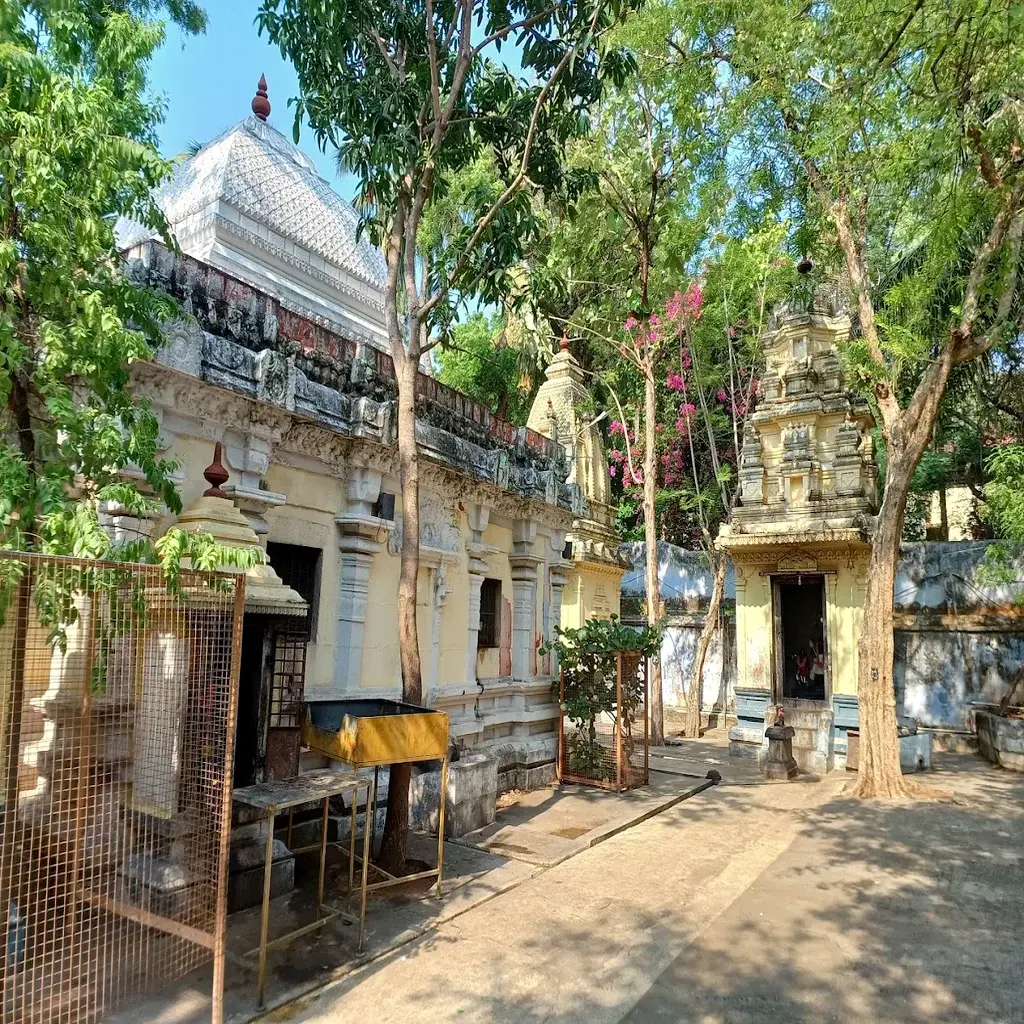
Arulmigu Guhanatheeswarar Temple
அருள்மிகு குகநாதீஸ்வரர் திருக்கோயில்
Lord Shiva · Kanyakumari, Tamil Nadu
Ancient
About the temple
The oldest surviving pure Chola structural stone temple in Kanniyakumari district; built in 1000 CE by Emperor Raja Raja Chola I after his conquest of the Ay kingdom and Kottar; contains priceless 1,000-year-old stone inscriptions describing Raja Raja Chola’s military victories and revenue grants; Centrally Protected Monument under Archaeological Survey of India (ASI). Traditional belief: Victory in ambitious undertakings, mental peace, removal of inner fear, and spiritual enlightenment.
Temple information
- Darshan timings
- 06:00 – 18:00
- Established
- 1000
- Best time to visit
- Early morning hours on mid-week non-festival days to experience a peaceful darshan atmosphere
Deity
Lord Shiva · ଶିବ (Shiva)Ganesha Family
- Deity form
- Ancient polished stone Shiva Lingam inside inner sanctum on elevated square granite pitha
- Religious tradition
- Vedic Agamic Shaiva Siddhanta & Imperial Chola Heritage
- Sanskrit name
- श्री गुहनाथीश्वर मन्दिरम्
- Also known as
- Kottar Choleswarar Temple, Rajaraja Chola Temple Kottar, Guganathaswamy Gudi
Darshan hours
- Daily
- 06:00 AM - 12:00 PM, 04:00 PM - 06:00 PM
- Break timings
- 12:00 PM - 04:00 PM (Monday to Friday only; open continuously on weekends)
- Special days
- Maha Shivaratri, Pradosham: 05:00 AM - 08:30 PM
- Festival timings
- Open till 08:30 PM on Maha Shivaratri
Aarti & rituals
- Morning aarti
- 07:30 AM
- Midday aarti
- 11:45 AM
- Evening aarti
- 07:00 PM
- Special aarti days
- Mondays, Pradosham, Maha Shivaratri
- Ritual schedule
- Nitya Pooja to Guganatha Swamy, Archana, Sandhya Deeparadhana by local archaka under ASI & HR&CE coordination
- Pooja timings
- 07:00 AM - 11:30 AM, 04:30 PM - 05:30 PM
- Abhishek timings
- 07:00 AM - 08:30 AM
- Special poojas
- Available
- Online pooja booking
- No
History & heritage
- Historical period
- Ancient
- Built by
- Imperial Chola Emperor Raja Raja Chola I (reigned 985–1014 CE)
- Architect / builder
- Master royal architects and sthapathis of the Imperial Chola guild
- Construction materials
- Solid dressed dark granite stone blocks, brick-lime vimana
- Historical events
- Built by Raja Raja Chola to commemorate his victorious military march across Venad and southern Kerala, renaming Kottar as "Mummudi Chola Nallur"
- Renovations
- Protected and conserved under Archaeological Survey of India (ASI) Chennai Circle with lush green lawns and structural consolidation
- Archaeological importance
- Centrally Protected Monument of National Importance (ASI Monument Identifier: N-TN-C18)
- Legends
- The temple is named Guganatha ("Lord of Guha/Murugan") indicating Lord Shiva, the father and preceptor of Lord Murugan
- Inscriptions
- Extensive Chola inscriptions on the granite plinth dating to the 11th year of Raja Raja Chola I, detailing military victories, tax exemptions, and endowments of perpetual ghee lamps
Architecture
- Architectural style
- Dravidian
- Architectural period
- 1000 CE
- Structure
- Compact structural granite temple complex with stepped stone Vimana, ardhamandapa, mukhamandapa, and peaceful ASI garden enclosure
- Floors
- 1
- Gopuram
- Two-tiered stone Vimana shikhara rising over the sanctum adorned with octagonal dome and kalasha
- Mandapa
- Pillared Ardhamandapa and Mukhamandapa supported by massive square granite columns bearing classical Chola reliefs
- Sculptural features
- Ancient polished stone Shiva Lingam; stone Dakshinamurti in southern niche; Chandikeshwara; carved stone Nandi facing sanctum
- Artistic elements
- Intricate makara toranas, deep-cut devakoshta niches, and calligraphic 11th-century Tamil inscriptions
- Construction technique
- Dry-stone interlocking granite block masonry without binding mortar
- Unique features
- The 1,000-year-old pristine stone temple built by Raja Raja Chola I standing as the southernmost imperial Chola monument in mainland India
Festivals & events
- Festival calendar
- Magha Bahula Chaturdashi (Shivaratri)
- Special celebration days
- Every Monday, Pradosham
- Cultural events
- Devotional bhajans and classical music during Shivaratri
- Annual events
- Maha Shivaratri celebrations drawing heritage lovers and Shaivite devotees
- Peak crowd season
- October to February
Visitor information
- ✓ Parking
- ✓ Restrooms
- ✓ Drinking water
- ✓ Shoe keeping
- ✓ Prasadam counter
- Dress code
- Traditional
- Best time to visit
- Early morning hours on mid-week non-festival days to experience a peaceful darshan atmosphere
- Parking capacity
- 20-30 vehicles
- Parking fees
- Approx. 20-50 INR
- Donation counters
- Yes
- Donation methods
- Cash, UPI, Bank Transfer
- Prasadam
- Vibhuti/Kumkum.