
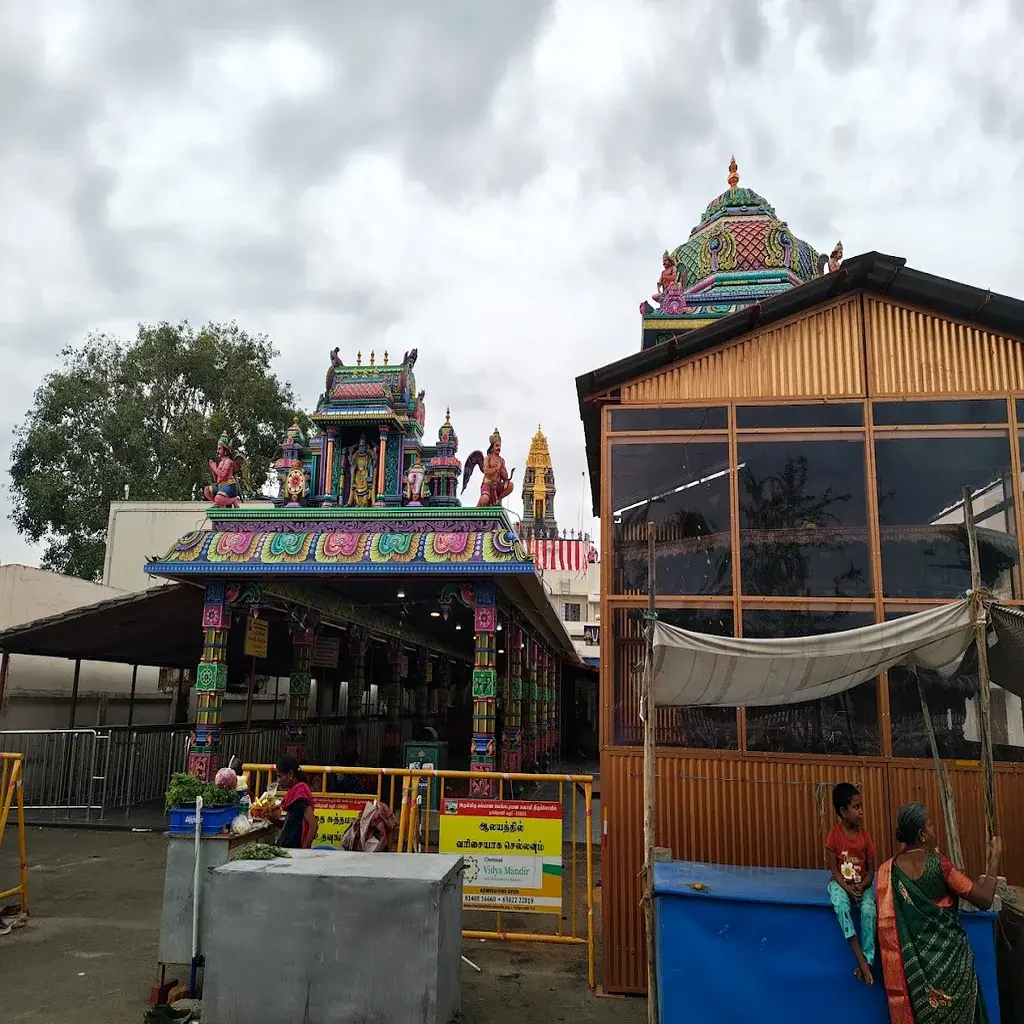
Arulmigu Kalyana Venkatramanaswamy Temple
அருள்மிகு கல்யாண வெங்கட்ரமணசுவாமி திருக்கோயில்
Lord Kalyana Venkateswara Swamy · Karur, Tamil Nadu
Ancient
About the temple
Revered as the "Dakshina Tirupati" (Southern Tirupati) of Tamil Nadu; where Lord Srinivasa manifested spontaneously (Thaan-Thondri) out of the living granite rock; fulfilling vows here is traditionally believed to grant the exact spiritual merit of visiting Tirupati Tirumala; celebrated for the grand Purattasi Brahmotsavam where hundreds of thousands gather. Traditional belief: Immediate fulfillment of Tirupati prayer vows, grant of matrimonial alliances (Kalyana), cure of speech delays and eye afflictions, and financial prosperity.
Temple information
- Darshan timings
- 06:00 – 20:30
- Established
- 12
- Best time to visit
- Early morning hours on mid-week non-festival days to experience a peaceful darshan atmosphere
Deity
Lord Kalyana Venkateswara SwamyGoddess PadmavathiGanesha Family
- Deity form
- Majestic self-manifested (Swayambhu) rock-relief carving of Lord Srinivasa standing on the sheer granite rock face, holding conch and discus with smiling benevolent grace
- Religious tradition
- Vedic Pancharatra Agamic Tradition & Dakshina Tirupati Vow Heritage
- Sanskrit name
- श्री कल्याण वेङ्कटरमणस्वामी मन्दिरम्
- Also known as
- Thanthonimalai Perumal Temple, Dakshina Tirupati Karur, Thanthoni Venkatachalapathy Gudi
Darshan hours
- Daily
- 06:00 AM - 12:30 PM, 04:00 PM - 08:30 PM
- Break timings
- 12:30 PM - 04:00 PM (Monday to Thursday)
- Special days
- Purattasi Saturdays, Vaikunta Ekadashi: 03:30 AM - 11:30 PM (Continuous Darshan)
- Festival timings
- Open continuously till 11:30 PM on Purattasi Saturdays and Vaikunta Ekadashi
Aarti & rituals
- Morning aarti
- 06:30 AM
- Midday aarti
- 12:00 PM
- Evening aarti
- 06:00 PM
- Night aarti
- 8:15 PM
- Special aarti days
- Every Saturday, Ekadashi, Purattasi Saturdays, Vaikunta Ekadashi
- Ritual schedule
- Nitya Thiruvaradhana, Thulasi Archana, Sahasranamarchana, Golden Chariot (Thanga Ratham) procession, Garuda Seva, Mangala Harathi
- Pooja timings
- 06:00 AM - 12:30 PM, 04:30 PM - 08:15 PM
- Abhishek timings
- Since Moolavar is a living rock-relief carving, Thirumanjanam is performed with natural oils periodically, and daily to bronze Utsava deity at 07:00 AM
- Special poojas
- Available
- Online pooja booking
- No
History & heritage
- Historical period
- Ancient
- Built by
- Madurai Nayakas; expanded by Mysore Wodeyars and local Gounder chieftains
- Architect / builder
- Traditional Tamil Dravidian rock sculptors
- Construction materials
- Natural granite rock hill face, solid dressed dark granite mandapa, brick-lime Rajagopuram
- Historical events
- Devotees unable to travel to Tirupati due to old age or illness were granted direct darshan here by Lord Srinivasa who manifested from the rock; the Mysore Rajas made large land grants
- Renovations
- Punarprathishta performed with a grand new five-tiered Rajagopuram, air-conditioned marriage mandapams, and covered queue complexes under Tamil Nadu HR&CE
- Archaeological importance
- Crucial rock-cut Vaishnavite monument demonstrating the diffusion of Tirupati Srinivasa worship in Kongu Nadu
- Legends
- A shepherd saw milk flowing from a cow into a granite fissure; when clearing the bushes, the glowing rock-carved image of Lord Venkataramana was revealed
- Inscriptions
- Stone inscriptions in Tamil and Kannada recording endowments of village lands, gold coins, and chariot funds by Madurai Nayakas and Mysore rulers
Architecture
- Architectural style
- Dravidian
- Architectural period
- 12th Century rock shrine with 16th - 17th Century CE expansions
- Structure
- Hillside rock-cut temple complex built directly against a rocky hillock, featuring five-tiered entrance Rajagopuram, pillared navaranga, and rock-relief sanctum
- Floors
- 1
- Gopuram
- Five-tiered 75-foot entrance Rajagopuram adorned with colorful stucco sculptures of Dashavatara, Garuda, and Alwars
- Mandapa
- Spacious Mukhamandapa supported by polished granite columns depicting Vaishnava themes, rearing yalis, and royal donors
- Sculptural features
- The venerated self-manifested rock-relief idol of Lord Kalyana Venkataramana; standing stone Thayar shrines; golden chariot (Thanga Ratham); carved Garuda
- Artistic elements
- Intricate ceiling medallions, embossed silver sanctum frames, gold-plated kalashas, and traditional brass oil lamps
- Construction technique
- Interlocking monolithic granite block masonry built directly against living bedrock
- Unique features
- The self-manifested (Swayambhu) rock-relief carving of Lord Srinivasa that has no separate foundation and emerges directly from the natural hill bedrock
Festivals & events
- Festival calendar
- Purattasi month (September/October Brahmotsavam), Margashirsha Shukla Ekadashi
- Special celebration days
- Every Saturday, Shukla Ekadashi, Purattasi Saturdays
- Cultural events
- Devotional bhajans, Harikatha, and Carnatic music concerts during Purattasi Brahmotsavam
- Annual events
- Thanthoni Perumal Maha Rathotsavam drawing over 200,000 devotees across central Tamil Nadu
- Peak crowd season
- September to October (Purattasi month), December to January, and every Saturday
Visitor information
- ✓ Parking
- ✓ Restrooms
- ✓ Drinking water
- ✓ Shoe keeping
- ✓ Prasadam counter
- Dress code
- Traditional
- Best time to visit
- Early morning hours on mid-week non-festival days to experience a peaceful darshan atmosphere
- Parking capacity
- 50+ vehicles
- Parking fees
- Approx. 20-50 INR
- Donation counters
- Yes
- Donation methods
- Cash, UPI, Bank Transfer
- Prasadam
- Vibhuti/Kumkum.