
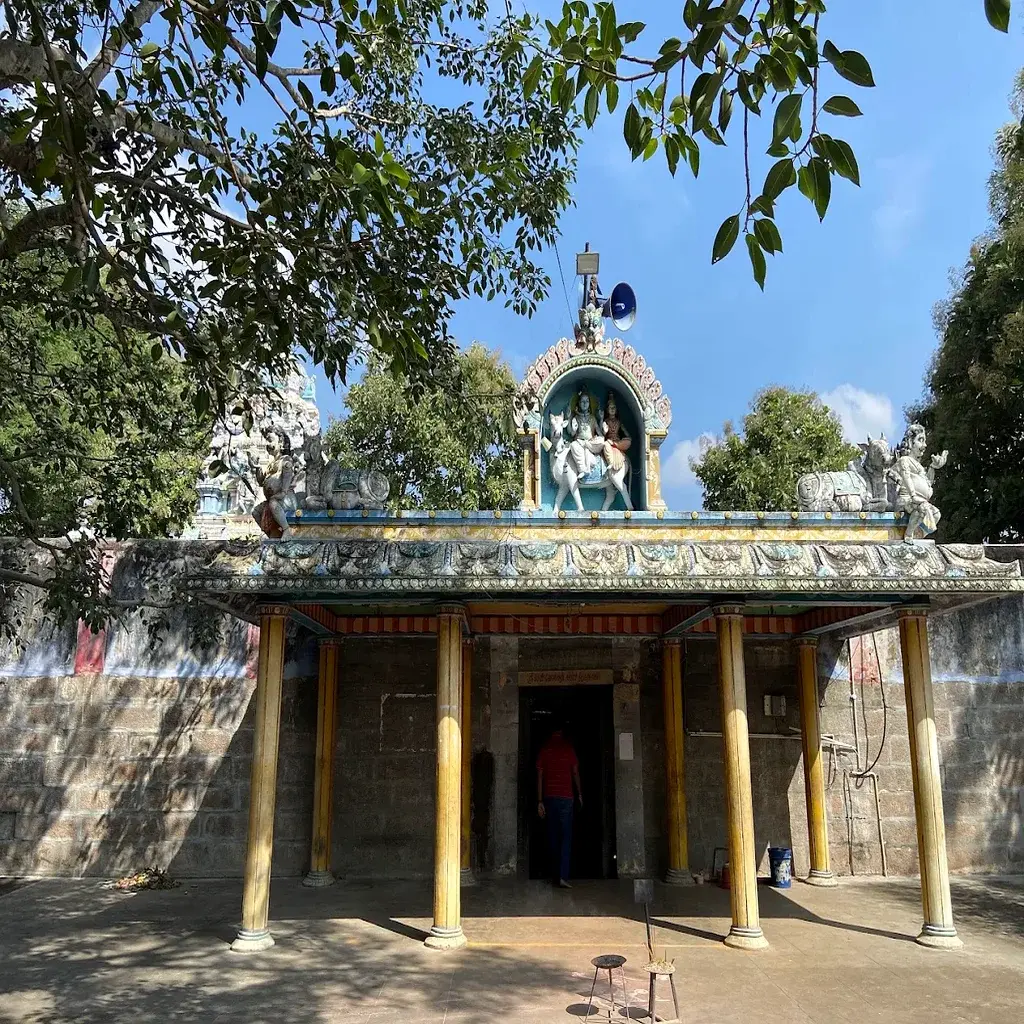
Penneshvaramadam Shiva Temple
பெண்ணேஸ்வரமடம் சிவன் திருக்கோயில்
Lord Shiva · Penneshwaramadam, Tamil Nadu
Ancient
About the temple
The historic riverfront spiritual citadel of Krishnagiri district; situated precisely on the northern bank of the sacred South Pennai (Ponnaiyar) River; famous for the leaning 12th-century stone Rajagopuram; houses priceless stone inscriptions detailing the boundary pacts between the Chola and Hoysala empires. Traditional belief: Cleansing of ancestral sins (Pitru Dosha) through Pennai river bath, relief from waterborne diseases, matrimonial harmony, and spiritual peace.
Temple information
- Darshan timings
- 06:00 – 20:00
- Established
- 12
- Best time to visit
- Early morning hours on mid-week non-festival days to experience a peaceful darshan atmosphere
Deity
Lord Shiva · ଶିବ (Shiva)Ganesha Family
- Deity form
- Ancient Swayambhu Shiva Lingam on circular granite pitha inside the inner stone sanctum overlooking the river
- Religious tradition
- Vedic Agamic Shaiva Siddhanta & South Pennai Riverfront Heritage
- Sanskrit name
- श्री पेण्णेश्वरमठ शिव मन्दिरम्
- Also known as
- Penneshwaramadam Shiva Temple, South Pennai River Temple, Pennagaram Shiva Temple
Darshan hours
- Daily
- 06:00 AM - 12:00 PM, 04:30 PM - 08:00 PM
- Break timings
- 12:00 PM - 04:30 PM
- Special days
- Maha Shivaratri, Pradosham: 05:00 AM - 09:30 PM
- Festival timings
- Open till 09:30 PM on Maha Shivaratri
Aarti & rituals
- Morning aarti
- 07:30 AM
- Midday aarti
- 11:45 AM
- Evening aarti
- 06:00 PM
- Night aarti
- 07:45 PM
- Special aarti days
- Every Monday, Pradosham, Maha Shivaratri, Chitra Pournami
- Ritual schedule
- Nitya Pooja, Rudrabhisheka, Pennai River Snana, Sandhya Deeparadhana by local hereditary archaka
- Pooja timings
- 06:30 AM - 11:45 AM, 04:30 PM - 07:45 PM
- Abhishek timings
- 07:00 AM - 08:30 AM
- Special poojas
- Available
- Online pooja booking
- No
History & heritage
- Historical period
- Ancient
- Built by
- Chola Emperor Kulothunga I; expanded by Hoysala King Vira Ballala II and Vijayanagara Kings
- Architect / builder
- Traditional Tamil stone sthapathis
- Construction materials
- Solid dressed dark granite stone blocks, brick-lime vimana, stone river ghats
- Historical events
- The temple served as a prominent monastic and educational center (Madam) on the South Pennai River under Chola and Hoysala patronage
- Renovations
- Renovated under Tamil Nadu HR&CE Department with new stone pathways, lighting, and restored river bathing steps
- Archaeological importance
- Priceless archaeological monument containing over 30 medieval stone inscriptions in Tamil and Kannada
- Legends
- Lord Shiva manifests as Pinakineeswarar (Lord of the Pinakini/Pennai river) to bestow water abundance and agricultural wealth upon the valley
- Inscriptions
- Stone inscriptions dating from 1150 CE detailing royal tax exemptions, village endowments, and agricultural dam constructions
Architecture
- Architectural style
- Dravidian
- Architectural period
- Circa 1120 - 1220 CE
- Structure
- Walled riverfront stone temple complex with entrance Rajagopuram, pillared navaranga, inner sanctum, Soundarambikai shrine, and Pennai river bathing steps
- Floors
- 1
- Gopuram
- Five-tiered entrance Rajagopuram decorated with stucco figures of Shaivite puranic legends
- Mandapa
- Pillared Navaranga hall supported by massive square granite columns depicting yalis, dancers, and Shaiva saints
- Sculptural features
- Ancient stone Shiva Lingam; graceful standing Soundarambikai Amman; stone Saptamatrikas; carved stone Nandi facing sanctum
- Artistic elements
- Traditional floral relief work on stone lintels, makara toranas, and brass oil lamps
- Construction technique
- Dry-stone interlocking granite block masonry of durable Chola execution along the riverbank
- Unique features
- The historic stone Rajagopuram exhibiting a subtle architectural tilt (resembling leaning towers) and its serene South Pennai riverfront setting
Festivals & events
- Festival calendar
- Magha Bahula Chaturdashi (Shivaratri)
- Special celebration days
- Every Monday, Pradosham
- Cultural events
- Devotional bhajans and classical music during Shivaratri
- Annual events
- Penneswarar Maha Shivaratri celebrations and annual river Theerthavari
- Peak crowd season
- October to February
Visitor information
- ✓ Parking
- ✓ Restrooms
- ✓ Drinking water
- ✓ Shoe keeping
- ✓ Prasadam counter
- Dress code
- Traditional
- Best time to visit
- Early morning hours on mid-week non-festival days to experience a peaceful darshan atmosphere
- Parking capacity
- 50+ vehicles
- Parking fees
- Approx. 20-50 INR
- Donation counters
- Yes
- Donation methods
- Cash, UPI, Bank Transfer
- Prasadam
- Vibhuti/Kumkum.