
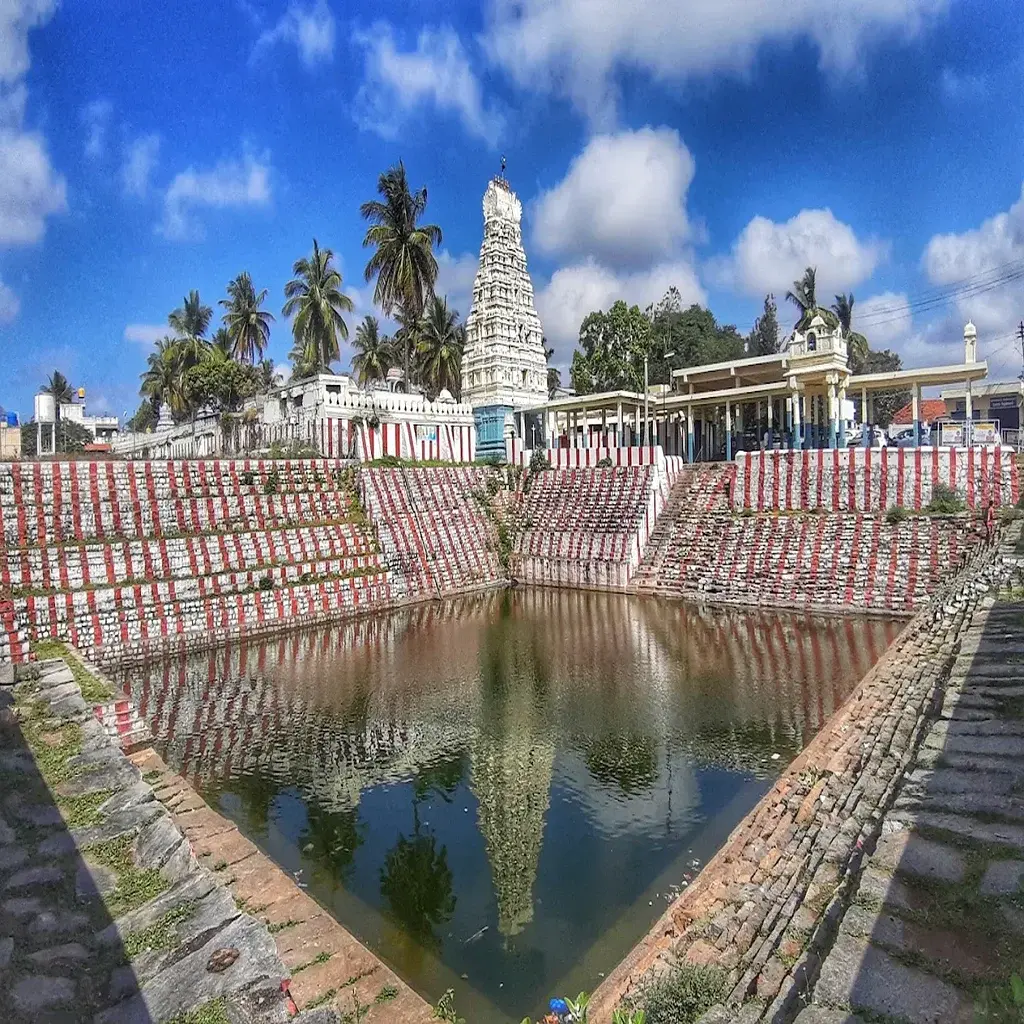
Sri Betaraya Swamy Temple
ஸ்ரீ பேட்டராய சுவாமி திருக்கோயில்
Lord Maha Vishnu · Denkanikottai, Tamil Nadu
Ancient
About the temple
The foremost historical temple of the picturesque Denkanikottai plateau; celebrated for the unique manifestation of Lord Vishnu as a hunter (Bettaraya) who protected sages in the dense forests from demonic beasts; renowned for its towering Vijayanagara Rajagopuram and the massive annual Panguni Chariot Festival attracting devotees from Tamil Nadu and Karnataka. Traditional belief: Total removal of fear of wild beasts and enemies, protection from evil spirits and black magic, grant of courage, and relief from chronic debts.
Temple information
- Darshan timings
- 06:00 – 20:30
- Established
- 13
- Best time to visit
- Early morning hours on mid-week non-festival days to experience a peaceful darshan atmosphere
Deity
Lord Maha Vishnu · തിരുനെല്ലിപ്പെരുമാൾ (Thirunelli Perumal)Rajyalakshmi Thayar
- Deity form
- Rare and majestic standing monolithic stone idol of Lord Vishnu holding hunting spear/bow, sword, conch, and discus in hunting hunter posture (Bettaraya / Vettairaya)
- Religious tradition
- Vedic Pancharatra Agamic Tradition & Hunting Deity Royal Heritage
- Sanskrit name
- श्री वेत्रराजस्वामी मन्दिरम्
- Also known as
- Denkanikottai Bettarayaswamy Temple, Hunting Lord Vishnu Temple, Kanakavalli Thayar Temple Denkanikottai
Darshan hours
- Daily
- 06:00 AM - 12:30 PM, 04:30 PM - 08:30 PM
- Break timings
- 12:30 PM - 04:30 PM (Monday to Thursday)
- Special days
- Panguni Brahmotsavam Car Festival, Vaikunta Ekadashi: 04:00 AM - 11:30 PM
- Festival timings
- Open continuously till 11:30 PM on Panguni festival days and Vaikunta Ekadashi
Aarti & rituals
- Morning aarti
- 07:00 AM
- Midday aarti
- 12:00 PM
- Evening aarti
- 06:00 PM
- Night aarti
- 8:15 PM
- Special aarti days
- Every Saturday, Panguni Therottam, Vaikunta Ekadashi, Purattasi Saturdays
- Ritual schedule
- Nitya Thiruvaradhana, Thulasi Archana, Sahasranamarchana, Veda Parayanam, Garuda Seva, Chariot procession
- Pooja timings
- 06:30 AM - 12:00 PM, 04:30 PM - 08:15 PM
- Abhishek timings
- Thirumanjanam performed on Saturdays at 07:00 AM
- Special poojas
- Available
- Online pooja booking
- No
History & heritage
- Historical period
- Ancient
- Built by
- Hoysalas; monumental expansions by Vijayanagara Emperor Achyuta Deva Raya (1530 CE) and Mysore Kings
- Architect / builder
- Master traditional Hoysala and Vijayanagara stone sculptors
- Construction materials
- Solid dressed dark granite, chlorite schist carved pillars, brick-mortar soaring Rajagopuram
- Historical events
- Sage Kanva and local ascetics were tormented by a wild boar demon; Lord Vishnu took the form of a majestic hunter (Bettaraya), slew the beast, and agreed to remain permanently to protect the regionThe temple served as a prominent royal fortress temple on the Karnataka-Tamil Nadu border plateau; royal inscriptions detail the hunting sport of the deity and victory over forest bandits
- Renovations
- Punarprathishta performed with a grand new five-tiered Rajagopuram, marble flooring, and modernized queue corridors under Tamil Nadu HR&CEPunarprathishta performed with a grand new five-tiered Rajagopuram, marble flooring, and modernized queue corridors under Tamil Nadu HR&CE
- Archaeological importance
- Sage Kanva and local ascetics were tormented by a wild boar demon; Lord Vishnu took the form of a majestic hunter (Bettaraya), slew the beast, and agreed to remain permanently to protect the regionCrucial heritage monument containing valuable Kannada and Tamil epigraphs of the Vijayanagara empire
- Legends
- Sage Kanva and local ascetics were tormented by a wild boar demon; Lord Vishnu took the form of a majestic hunter (Bettaraya), slew the beast, and agreed to remain permanently to protect the regionSage Kanva and local ascetics were tormented by a wild boar demon; Lord Vishnu took the form of a majestic hunter (Bettaraya), slew the beast, and agreed to remain permanently to protect the region
- Inscriptions
- More than 20 stone inscriptions in Kannada and Tamil recording grants of villages, diamond jewels, and chariots by Achyuta Raya and Mysore rulers
Architecture
- Architectural style
- Dravidian
- Architectural period
- Circa 1280 - 1540 CE
- Structure
- Large walled urban-plateau temple complex with five-tiered entrance Rajagopuram, pillared navaranga, inner sanctum, Soundaravalli Thayar shrine, and chariot shelter
- Floors
- 1
- Gopuram
- Five-tiered 75-foot entrance Rajagopuram embellished with stucco sculptures of hunting Vishnu legends, Dashavatara, and Garuda
- Mandapa
- Spacious Mukhamandapa supported by polished granite columns depicting horse-riders, yalis, and royal donors
- Sculptural features
- Unique monolithic stone idol of Lord Bettaraya Swamy holding hunting bow and spear; standing Soundaravalli Thayar; carved stone Garuda facing sanctum; Hanuman shrine
- Artistic elements
- Intricate ceiling medallions, embossed silver altar frames, gold-plated kalashas, and traditional brass oil lamps
- Construction technique
- Dry-stone interlocking granite block masonry of durable Vijayanagara design
- Unique features
- The rare iconographic manifestation of Vishnu as the divine hunter (Bettaraya / Vettairaya) carrying hunting bow and weapons
Festivals & events
- Festival calendar
- Panguni month (March/April Car Festival), Margashirsha Shukla Ekadashi
- Special celebration days
- Every Saturday, Shukla Ekadashi, Purattasi Saturdays
- Cultural events
- Folk dance, Nadaswaram, Carnatic classical concerts, and Harikatha during the annual Brahmotsavam
- Annual events
- The monumental Denkanikottai Bettarayaswamy Maha Rathotsavam drawing devotees from across Tamil Nadu and Karnataka
- Peak crowd season
- March to April (Panguni Car Festival), September to October (Purattasi), and winter months
Visitor information
- ✓ Parking
- ✓ Restrooms
- ✓ Drinking water
- ✓ Shoe keeping
- ✓ Prasadam counter
- Dress code
- Traditional
- Best time to visit
- Early morning hours on mid-week non-festival days to experience a peaceful darshan atmosphere
- Parking capacity
- 50+ vehicles
- Parking fees
- Approx. 20-50 INR
- Donation counters
- Yes
- Donation methods
- Cash, UPI, Bank Transfer
- Prasadam
- Vibhuti/Kumkum.