
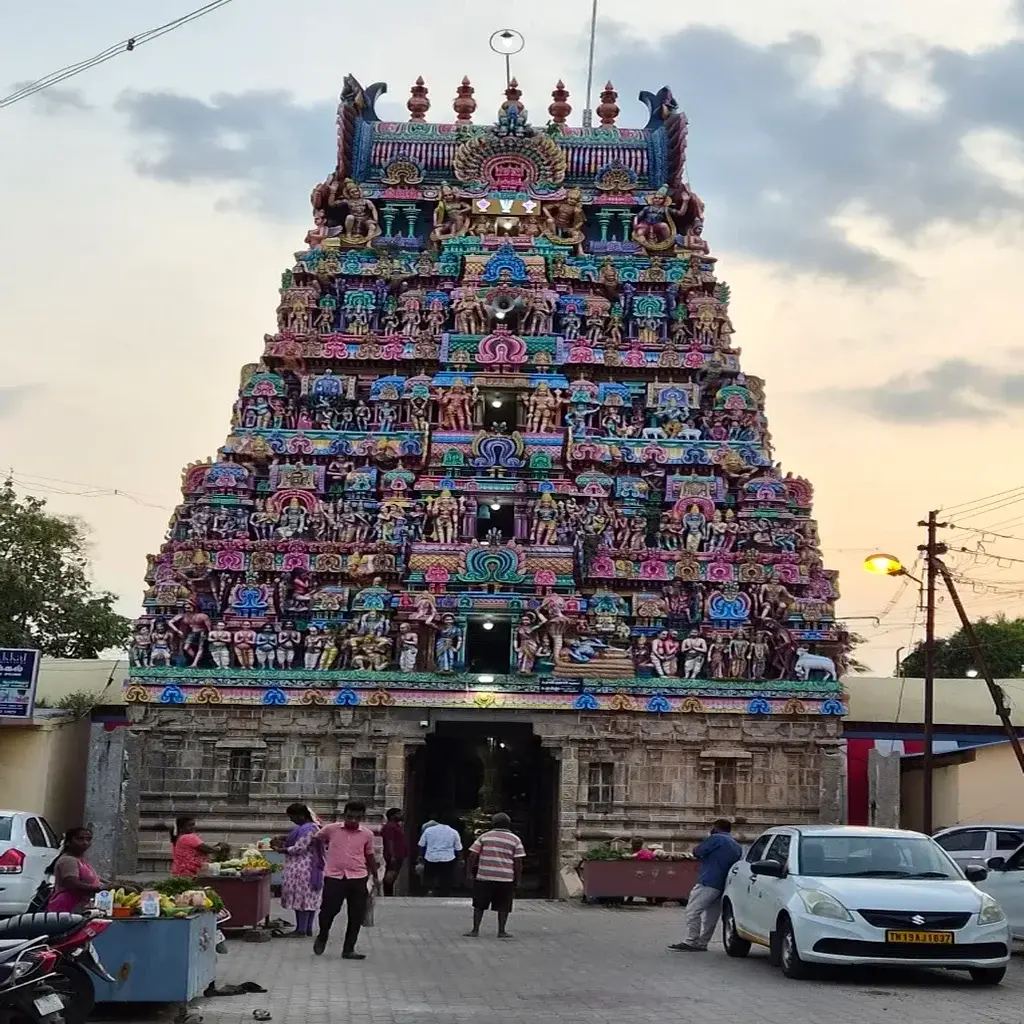
Arulmigu Parimala Ranganathar Temple
அருள்மிகு பரிமள ரங்கநாதர் திருக்கோயில்
Lord Shiva · Mayiladuthurai, Tamil Nadu
Ancient
About the temple
The 26th Divya Desam of Vishnu; the final and concluding shrine of the sacred "Pancha Ranga Sthalams" (along the course of the Kaveri River); where Lord Chandra (Moon God) performed penance and was cured of King Daksha’s wasting curse (Kshaya Roga), regaining his full radiance; famed for the 12-foot green stone reclining Ranganatha and the glorious Thula Utsavam (Aippasi month) when Kaveri holy water is brought for daily abhishekam. Traditional belief: Removal of severe Chandra Dosha (Moon afflictions), cure of mental disorders and respiratory illnesses, grant of inner radiance, and spiritual liberation.
Temple information
- Darshan timings
- 06:30 – 20:30
- Established
- 8
- Best time to visit
- Early morning hours on mid-week non-festival days to experience a peaceful darshan atmosphere
Deity
Lord Shiva · ଶିବ (Shiva)Ganesha Family
- Deity form
- Colossal 12-foot long monolithic stone idol of Lord Vishnu reclining on the serpent Adisesha sculpted out of green stone (Maragatha Kal), with Lord Brahma emerging from his navel
- Religious tradition
- Vedic Pancharatra Agamic Tradition & Pancha Ranga Kshetra Heritage
- Sanskrit name
- श्री परिमलरङ्गनाथ मन्दिरम्
- Also known as
- Thiruindalur Divya Desam, Sugandhavana Ranganatha Temple, Pancha Ranga Sthalam Thiruindalur
Darshan hours
- Daily
- 06:30 AM - 12:00 PM, 04:30 PM - 08:30 PM
- Break timings
- 12:00 PM - 04:30 PM (Monday to Thursday)
- Special days
- Vaikunta Ekadashi, Thula Utsavam (Aippasi), Panguni: 04:30 AM - 11:00 PM
- Festival timings
- Open continuously till 11:00 PM on Vaikunta Ekadashi and festival days
Aarti & rituals
- Morning aarti
- 07:00 AM
- Midday aarti
- 11:45 AM
- Evening aarti
- 06:00 PM
- Night aarti
- 8:15 PM
- Special aarti days
- Every Saturday, Shukla Ekadashi, Vaikunta Ekadashi, Purattasi Saturdays
- Ritual schedule
- Nitya Thiruvaradhana, Thulasi Archana, Divya Prabandham Parayanam, Thula Snana Kaveri Theerthavari, Garuda Seva, Mangala Harathi
- Pooja timings
- 06:30 AM - 11:45 AM, 04:30 PM - 08:15 PM
- Abhishek timings
- Thirumanjanam performed on Saturdays and festival days at 07:00 AM to bronze Utsava deities
- Special poojas
- Available
- Online pooja booking
- No
History & heritage
- Historical period
- Ancient
- Built by
- Medieval Cholas; expanded with towering five-tiered Rajagopuram and mandapas by Vijayanagara and Nayaka rulers
- Architect / builder
- Master traditional royal sthapathis of the Chola and Vijayanagara courts
- Construction materials
- Solid dressed dark granite, green stone (Maragatha Kal) reclining idol, brick-mortar soaring Rajagopuram
- Historical events
- Thirumangai Alvar sang 10 immortal pasurams here; when the temple doors were locked, Alwar engaged in a divine debate with the Lord through verse until the doors miraculously opened
- Renovations
- Punarprathishta performed with a grand new five-tiered Rajagopuram, marble flooring, and modernized queue corridors under Tamil Nadu HR&CE
- Archaeological importance
- Crucial Divya Desam monument preserving ancient Chola stone inscriptions detailing royal endowments of gardens and gold
- Legends
- Lord Chandra was cursed to lose his brilliance; he bathed in the holy Kaveri and meditated here; Lord Vishnu manifested surrounded by fragrant flowers (Parimala), curing Chandra and restoring his 16 kalas (phases)
- Inscriptions
- More than 30 stone inscriptions in Tamil dating from the 10th to 16th century recording grants of land, gold coins, and perpetual lamps by Chola and Vijayanagara kings
Architecture
- Architectural style
- Dravidian
- Architectural period
- Circa 1000 - 1550 CE
- Structure
- Walled urban temple complex spanning 3.5 acres with five-tiered entrance Rajagopuram, sculpted Mahamandapa, Parimala Ranganayaki Thayar shrine, and sacred temple tank
- Floors
- 1
- Gopuram
- Five-tiered 75-foot entrance Rajagopuram decorated with colorful stucco sculptures of Ranganatha, Dashavatara, and Garuda
- Mandapa
- Pillared Mahamandapa supported by carved granite columns depicting Vaishnava themes, yalis, and royal donors
- Sculptural features
- Colossal 12-foot long reclining green-stone idol of Lord Parimala Ranganatha on Adisesha; standing stone Parimala Ranganayaki Thayar; Lord Chandra; carved Garuda
- Artistic elements
- Intricate ceiling medallions, embossed silver sanctum frames, gold-plated kalashas, and traditional brass oil lamps
- Construction technique
- Dry-stone interlocking granite block masonry of durable Dravidian execution
- Unique features
- The final and concluding shrine of the sacred Pancha Ranga Sthalams; the 12-foot green-stone reclining Ranganatha; the legendary debate between Thirumangai Alvar and the Lord
Festivals & events
- Festival calendar
- Aippasi month (Thula Snana Festival), Margashirsha Shukla Ekadashi
- Special celebration days
- Every Saturday, Shukla Ekadashi, Purattasi Saturdays
- Cultural events
- Divya Prabandham goshti chanting, classical Carnatic concerts, and Harikatha during festivals
- Annual events
- Parimala Ranganatha Swamy Maha Rathotsavam and Kaveri Thula Theerthavari drawing over 100,000 devotees
- Peak crowd season
- October to November (Thula Utsavam season), December to January, and Purattasi Saturdays
Visitor information
- ✓ Parking
- ✓ Restrooms
- ✓ Drinking water
- ✓ Shoe keeping
- ✓ Prasadam counter
- Dress code
- Traditional
- Best time to visit
- Early morning hours on mid-week non-festival days to experience a peaceful darshan atmosphere
- Parking capacity
- 50+ vehicles
- Parking fees
- Approx. 20-50 INR
- Donation counters
- Yes
- Donation methods
- Cash, UPI, Bank Transfer
- Prasadam
- Vibhuti/Kumkum.